


About Prepping Expert
Preparedness without panic. Built by a veteran. Written for everyday families, with the number first and the cheap version.
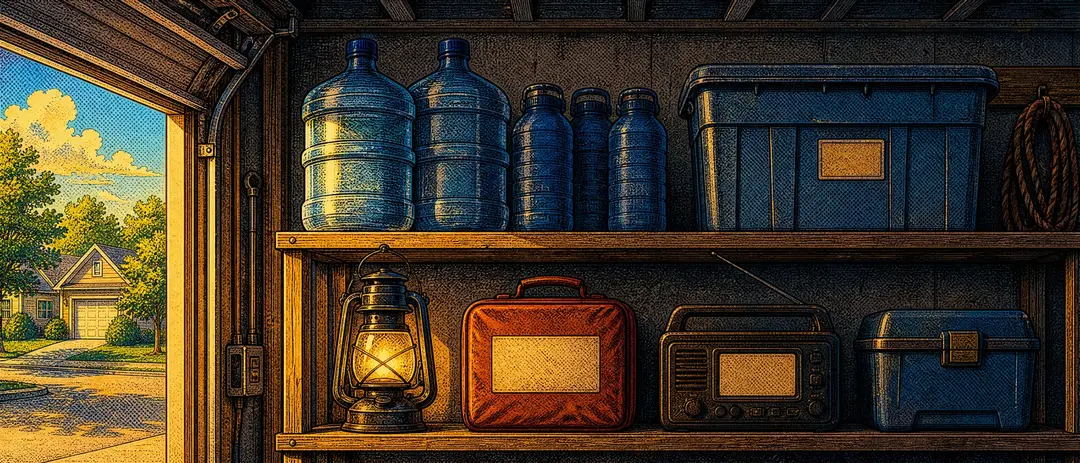
Why this site exists
I grew up poor, and I know what it feels like to go hungry. That left me with one habit for life: don't run out of the things that matter.
The Army taught me the rest. As a 19K M1A1 armor crewman I learned that a plan you've practiced beats gear you haven't. After the service I built a career in technology and then in manufacturing supply chains, which during COVID meant watching shelves empty in real time and figuring out what runs short first.
At home it's me, my wife Heather, our three kids, a dog and a cat in Northeast Texas. We've had tornado warnings, the February 2021 freeze, the 2026 floods and outages that lasted days. None of it needed a bunker. It needed water, light, heat, medicine and a plan everyone in the house knew.
As a disabled veteran, I also know preparedness has to fit the body and the budget you actually have. Not everyone can haul a 40-pound (18 kg) water jug or spend $500 on a generator. So that's how we write here: the number first, the cheap version, and an honest word on what's worth buying and what isn't.
No doomsday talk. Just the next sensible step.
“I didn't start Prepping Expert to scare anyone. I started it because I've seen what a simple plan does for a family when the power goes out or the water rises. Preparedness looks different in every house, for every body and every budget, and everyone deserves the knowledge to start.” Shane Richard, founder
How we work
We start from what a household needs, in the order it needs it, and only then ask whether a product helps. Every guide puts the number or the action first, takes its facts from primary sources (FEMA and Ready.gov, the CDC, the Red Cross, NOAA, the USDA) and says plainly what's worth buying and what isn't. We don't take free products or paid placements, and we don't call anything tested until we've used it. When we get something wrong, we fix the page and add a dated note. The full rules are in our editorial policy.
What we cover
- Water, food, light, heat and power for a week at home
- Storms, outages, floods, freezes and evacuations
- First aid, sanitation and keeping a household healthy
- Prepping on a budget, in an apartment, with kids, seniors and pets
- Honest buying advice and printable checklists for the fridge
What we don't
- Doomsday timelines and "collapse" scenarios
- Bunkers, second properties or $10,000 kits
- Fear as a reason to buy anything
- Sponsored posts or paid placements
- Medical or legal advice for your situation (we point you to who can help)
Milestones
Who writes this

Questions we get asked
Do I need to spend a lot to get started?
No. Most of the first month is water, food you already eat, a flashlight and a written plan. Our first-30-days guide and the household checklist show what to do in order, and many weeks cost nothing. When something is worth buying, we say why and roughly what it costs.
Is this a survivalist site?
No. We write for families with jobs, kids and a normal-sized garage who want to get through a week-long outage, a bad storm or a job loss without it becoming a crisis. No bunkers, no doomsday timelines, no fear.
Have you tested the products you link to?
Not all of them yet, and we say so. The "Gear for this guide" picks match the specs in each guide and come from makers with a track record. When we've bought and used something ourselves, its review says how long, where and how, and we won't call anything tested until it has been.
How does the site make money?
Mainly through affiliate links: if you buy through some of our links, the store pays us a small commission at no extra cost to you. It never decides what we recommend. The details are on our affiliate disclosure page.
Can I print and share the checklists?
Yes. Print them for your household and share copies with family, neighbors, a church or a community group, free. Please don't sell them or remove our name. They're all on the checklist library page.
Corrections, pitches, questions.
Spotted a mistake, have a question, or want to suggest a guide? Use the contact form or email us. A person reads every message, and safety corrections go to the top of the pile.
Use the contact form.