Bug in vs bug out: the decision tree
Bug in vs bug out: staying home is the right call most of the time. Four questions settle the rest: the order, the house, the route and where you’d go.
Most emergencies are ridden out at home; decide in advance what would make you leave.
A relative's spare room or a motel two counties away is a real bug out location.
Keep the car you already own maintained, half full and stocked for a night on the shoulder.
Bug in vs bug out: staying home is the right call most of the time. Four questions settle the rest: the order, the house, the route and where you’d go.
Day by day through a week-long power outage at home: what runs out when, what the five basics do at each stage, and the two mistakes that make it dangerous.
Bug out locations without a cabin: three places in three directions at three distances, with the people at the other end expecting you. How to set them up.
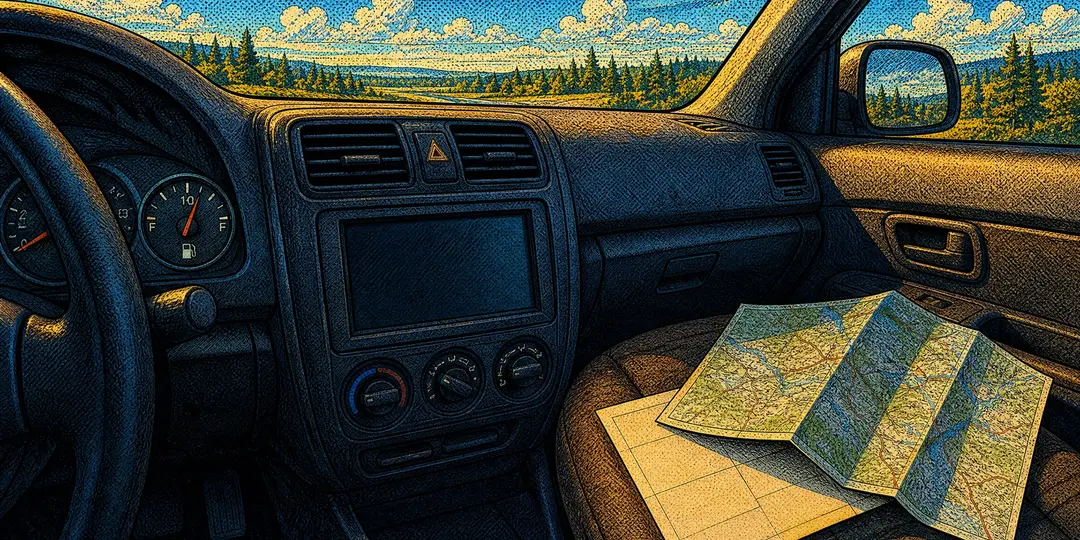
Evacuation route planning on one tank: the range math for half a tank in heavy traffic, two printed routes, and a supply bin waiting at the other end.
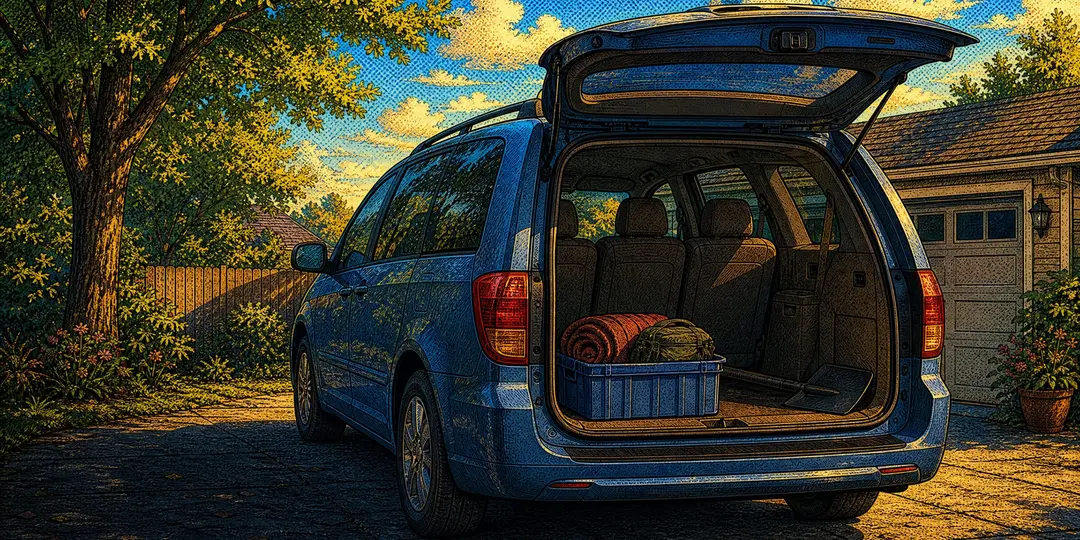
The best bug out vehicle is the family car you already own, serviced and never below half a tank. The habits, checks and $100–200 kit that make it ready.
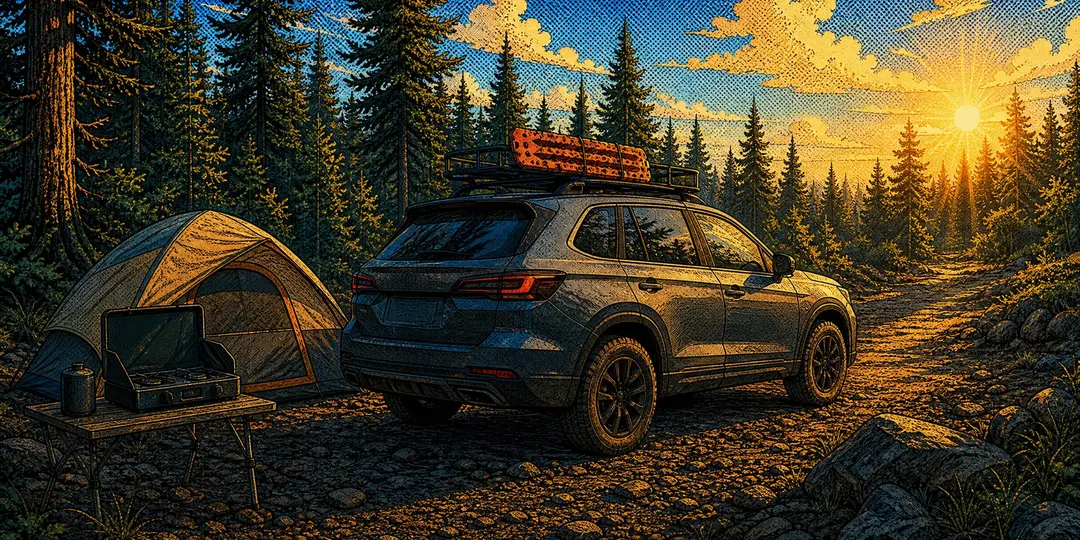
Overlanding for beginners in the SUV you already own: tires, a $200–400 recovery kit, what not to attempt, and a first trip the family will enjoy.
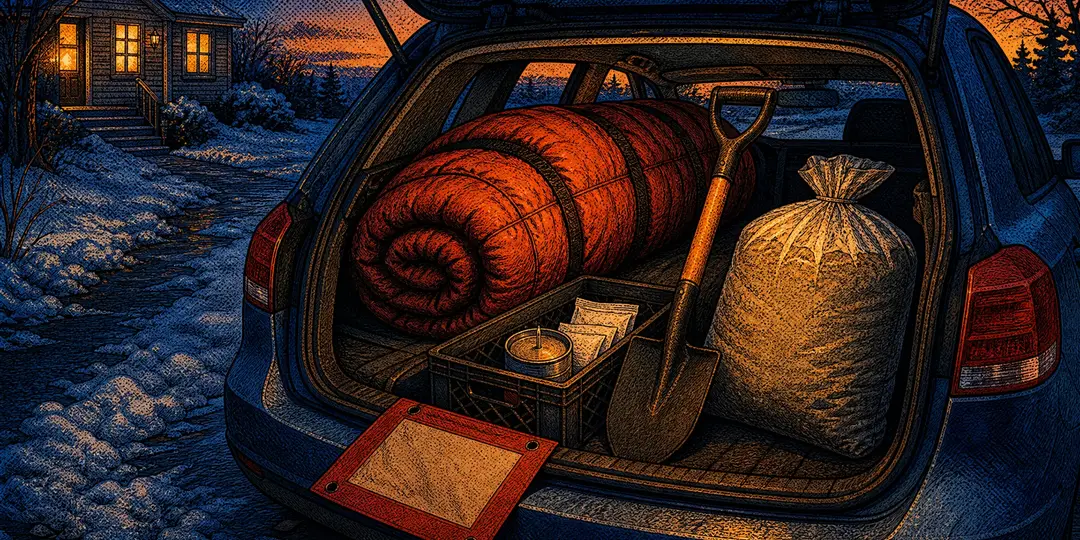
The winter car emergency kit, item by item: what to carry from November to March, how many of each, why, and what the whole crate costs, about $120–250.
What to do if stranded in snow in your car: the first ten minutes, the exhaust rule, keeping warm between engine runs, and when walking is right.