How to start prepping: the first 30 days
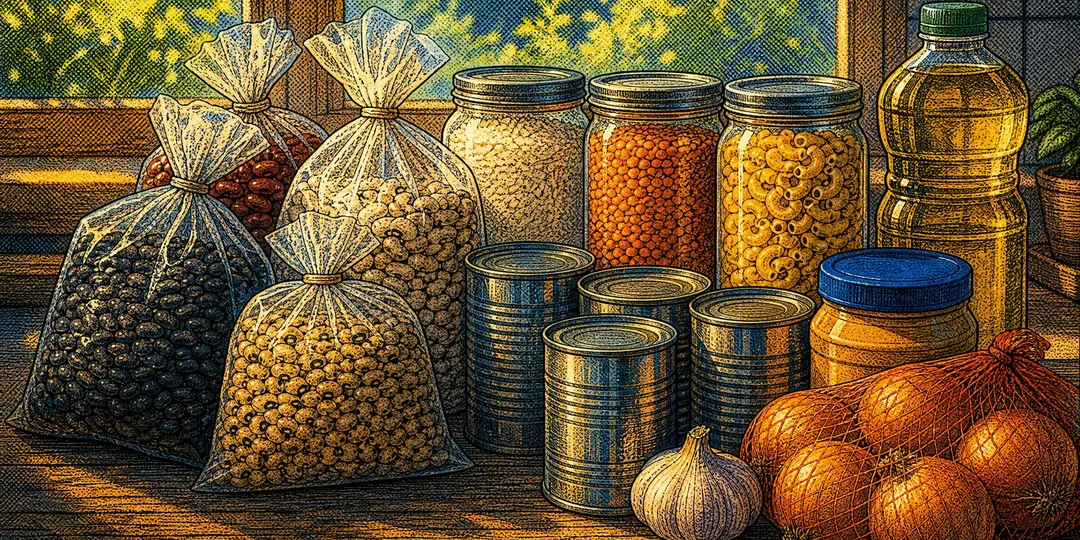
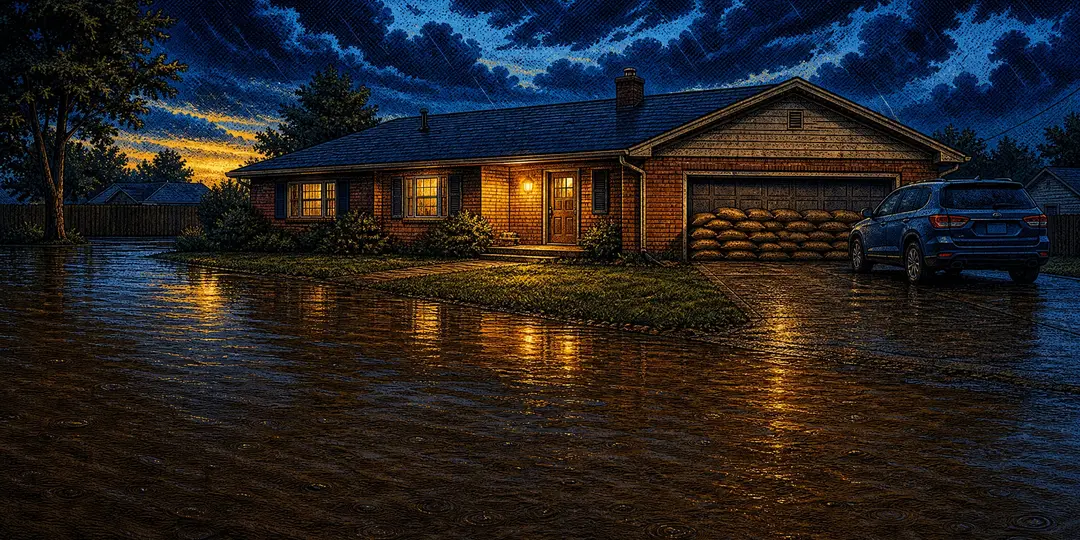
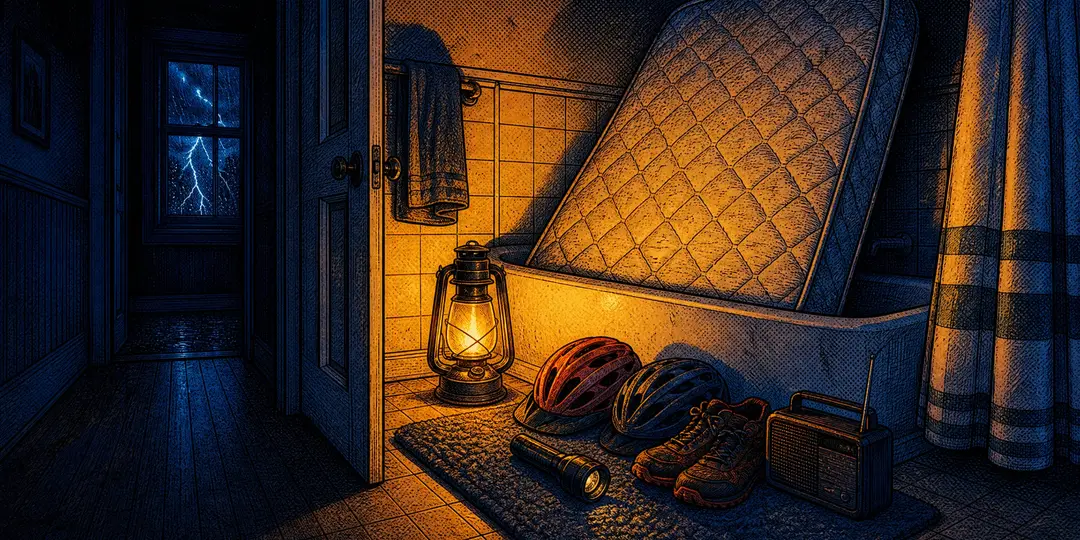
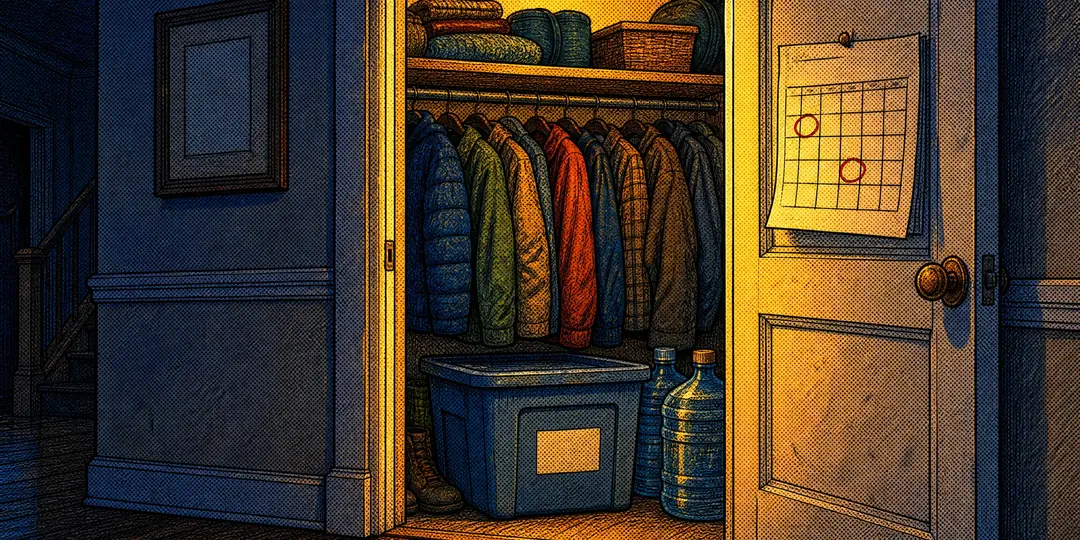
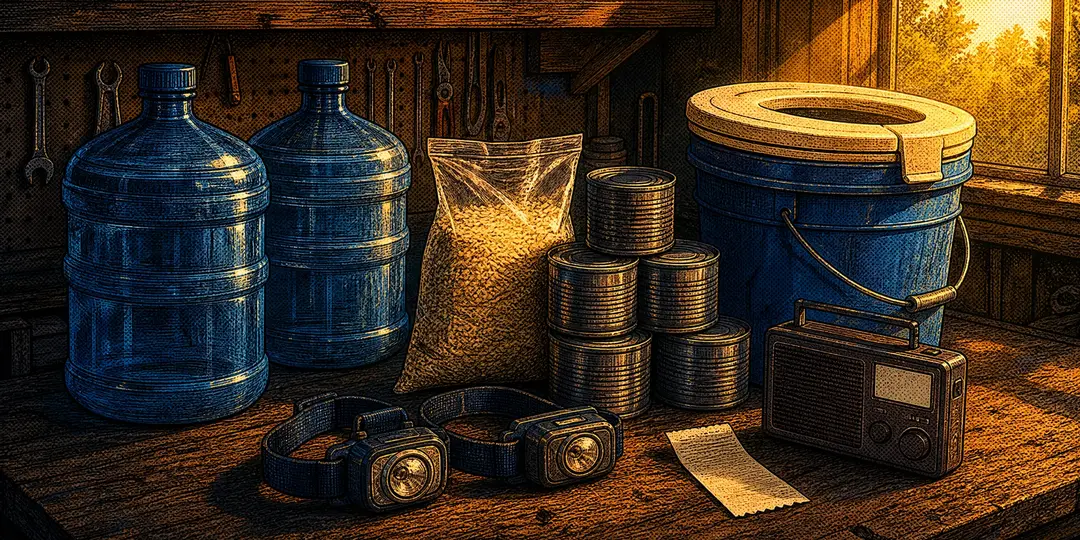
How to start prepping in four weeks, one job a week: water, food, light and heat, then the plan. By day 30 a household can sit out a week-long outage.

Founder and editor
Shane is a disabled US Army veteran who served as an M1A1 tank crewman, then spent his career in technology and manufacturing supply chains, keeping parts moving through COVID. He, his wife Heather and their three kids have ridden out tornadoes, the February 2021 Texas freeze, the 2026 floods in Northeast Texas and power outages that lasted days. He started Prepping Expert to give families the plain, affordable, step-by-step version he wished he'd had.
How to start prepping in four weeks, one job a week: water, food, light and heat, then the plan. By day 30 a household can sit out a week-long outage.
Prepping on $25 a week: twelve weeks, $300 total, in the order that closes the biggest gap first, and a household that can sit out a week by week 8.
Disaster risk where you live fits on a short list: three hazards every US home shares, two or three regional ones, and a twenty-minute way to rank them.
How to prepare for grid-down: real outages last hours to days, occasionally weeks, and five preparations cover them all. What EMP is, and what to ignore.
What to do in a flood: move valuables up, never drive into water, and photograph everything before you clean. The order that keeps people safe and the claim intact.
Where to shelter in a tornado: the lowest floor, the smallest interior room, no windows, heads covered. Pick the spot, stock it and practice it before spring.
How to stay cool without power: block the sun, cool the body with water, and know when to leave for a cooling center. Fans alone won't prevent heat illness.
Hurricane preparedness starts with your evacuation zone: look it up, decide where you'd go, and leave early when told. Then the house, the car and the week after.
Wildfire smoke protection at home: one clean-air room, a box fan with a MERV 13 filter, N95s for going out, and a car packed to leave before you're told to.
Earthquake preparedness for a normal house: Drop, Cover, then Hold On, strap the water heater and tall furniture, and know what to check once the shaking stops.
How to shelter in place for a chemical spill: get inside, shut off the air, seal one room with plastic and tape, and wait for the all clear. The kit costs about $30.
Going home after a disaster: wait for the all clear, check for gas and power, photograph every room before cleanup, then file the insurance and FEMA claims.
Prepping works as a habit, not an identity: a maintenance schedule of five calendar reminders, one test before every purchase, and nothing to prove.
Talking to family about prepping starts with the last outage, not the next disaster: three talks, for a partner, kids and older parents, that land as care.
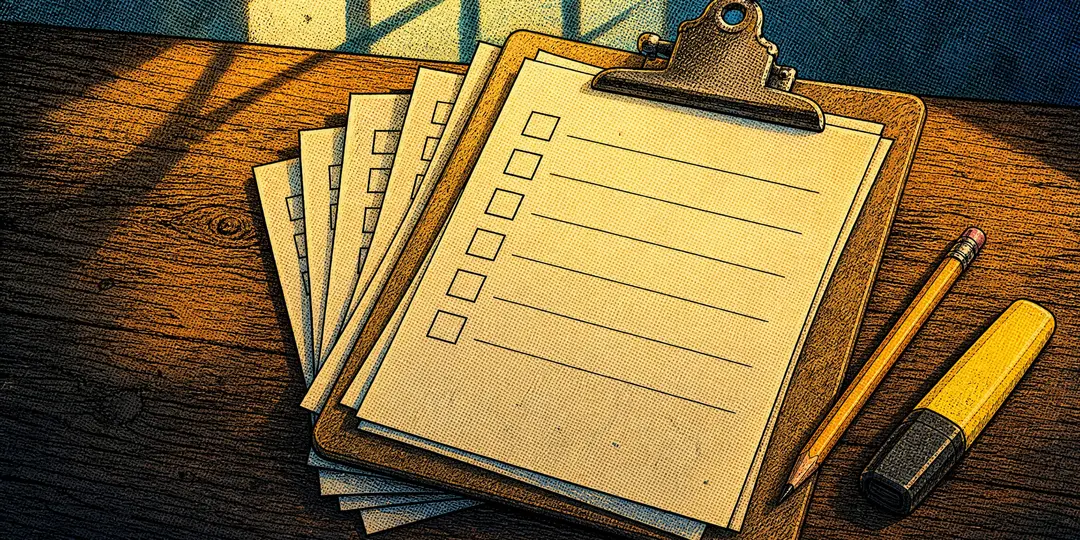
A one-page emergency preparedness checklist: 40 lines for water, food, light, medical, documents and the plan. Check, circle, date, and redo it in six months.
A prepping checklist order for beginners: all twelve printables in sequence, what each is for, how long it takes, and which ones your household can skip.
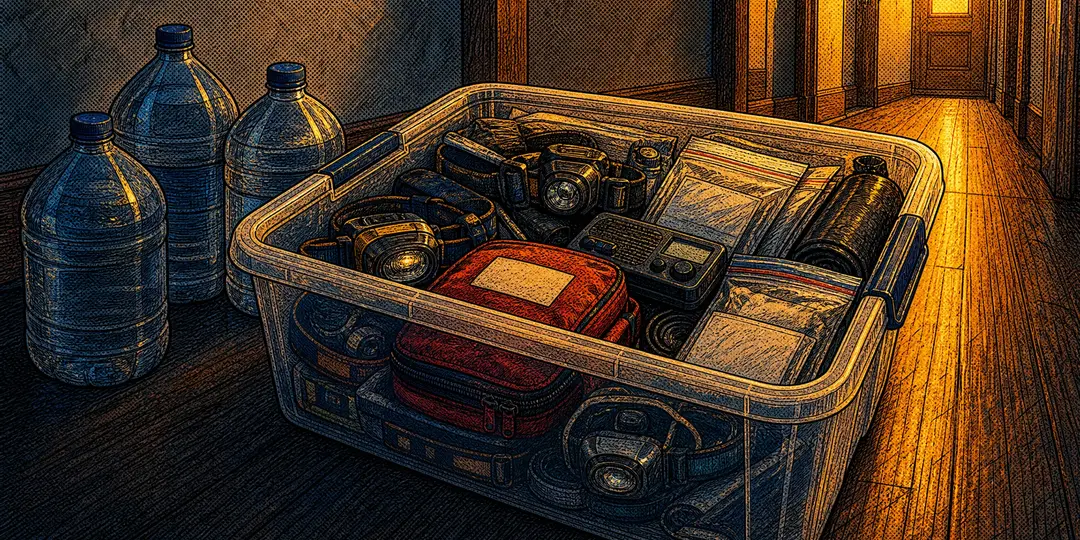
A 72-hour emergency kit in one labeled tote: light, news, first aid, papers and what you can’t find in the dark. What goes in, what stays out, and the cost.
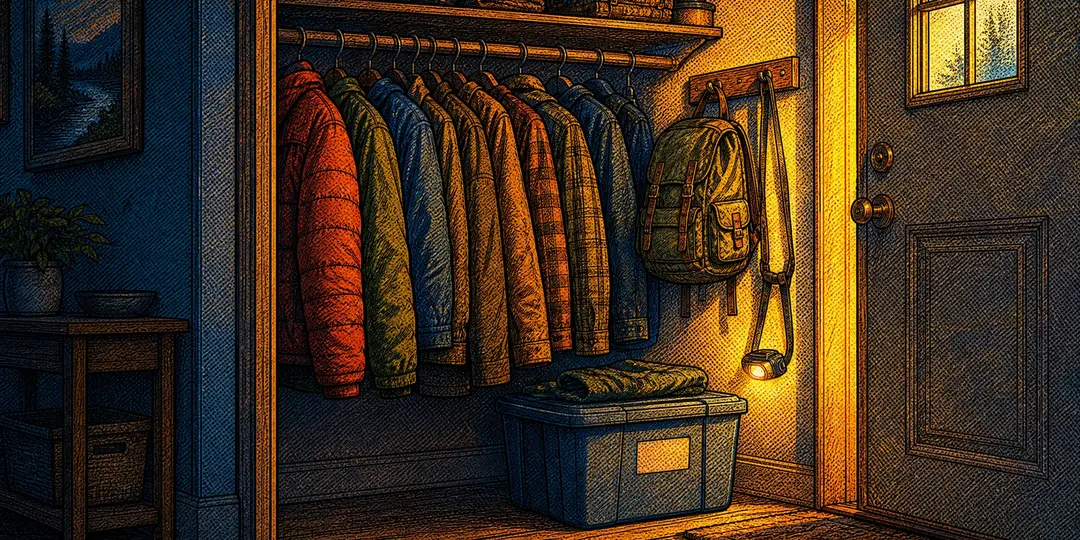
Where to store an emergency kit so you can reach it in the dark: three tests, the best and worst place in three kinds of home, and a two-layer split.
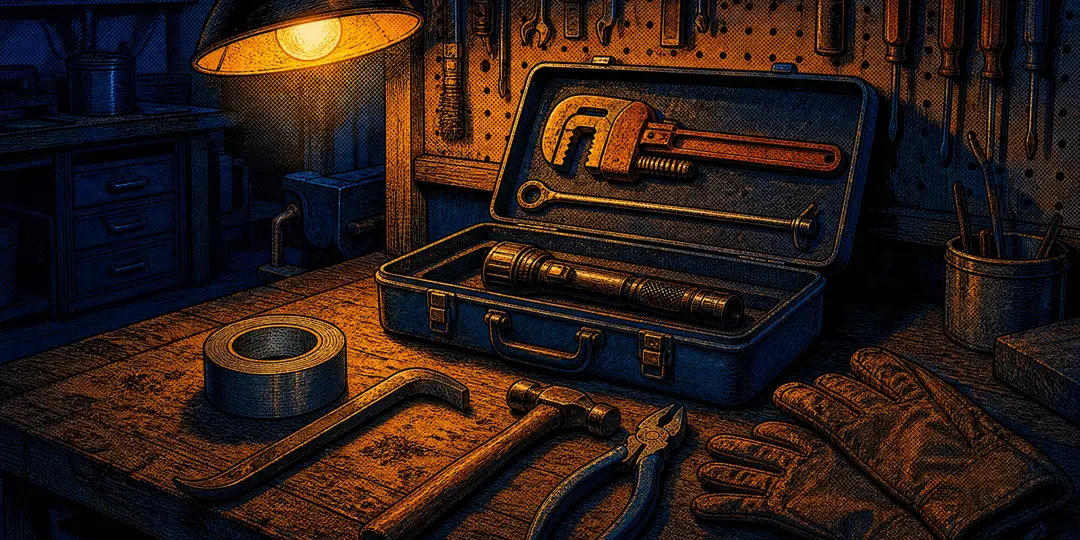
A home emergency tool kit is mostly about shutoffs: find the water, gas and electric shutoffs now, hang the right wrench beside each, and add a short list of tools.
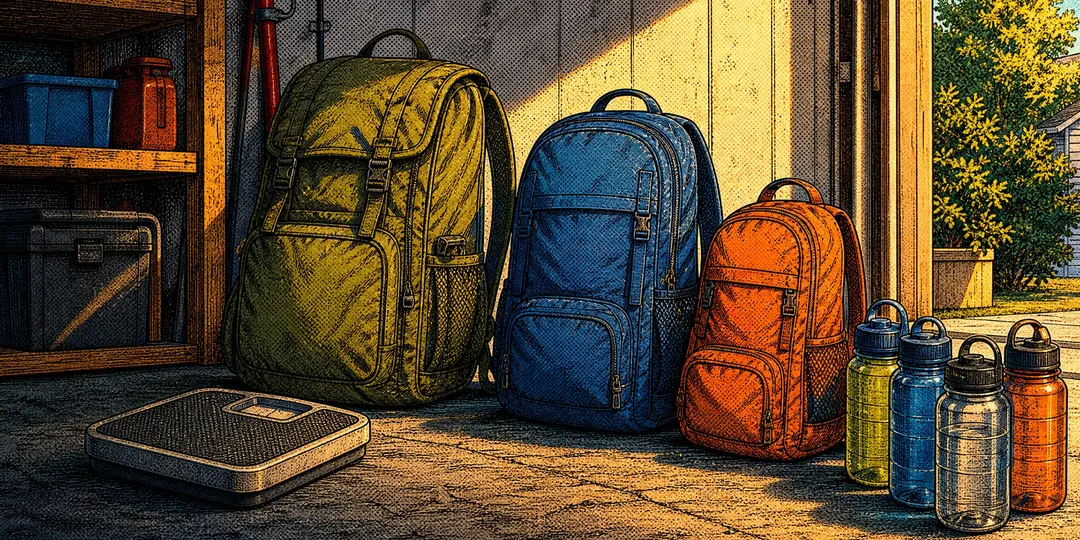
A bug out bag list for an adult: about 15 lb for 72 hours, packed for a motel or a relative’s spare room rather than the woods. Every item, with its weight.
What a bug out bag under $150 should do: carry 15 lb on the hips, stay dry, look ordinary. The specs to shop by, what to skip and a five-minute store check.
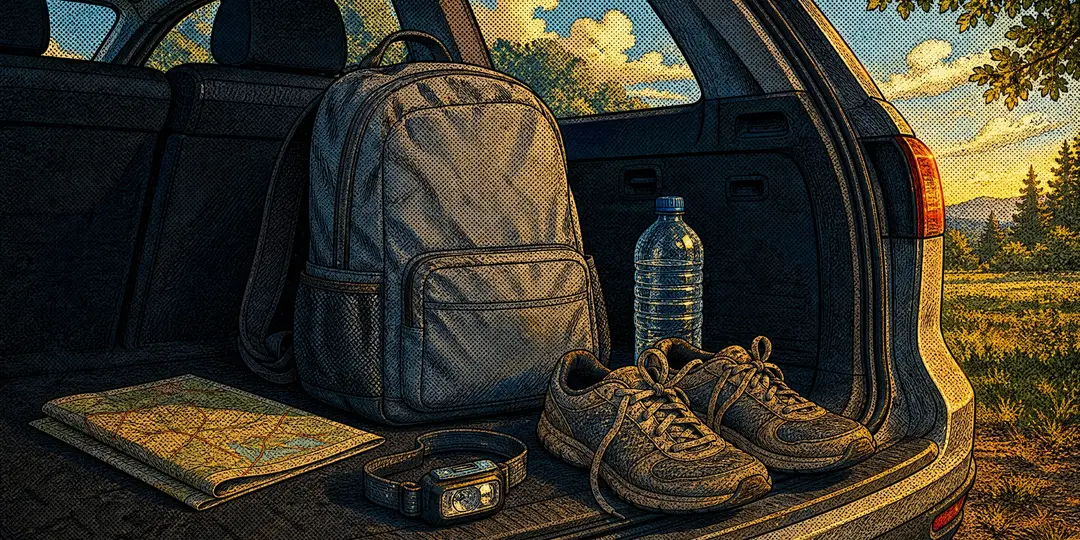
A get-home bag list for a 20-mile commute: about seven hours on foot in the shoes you’re wearing. Every item and its weight, for the car or under the desk.
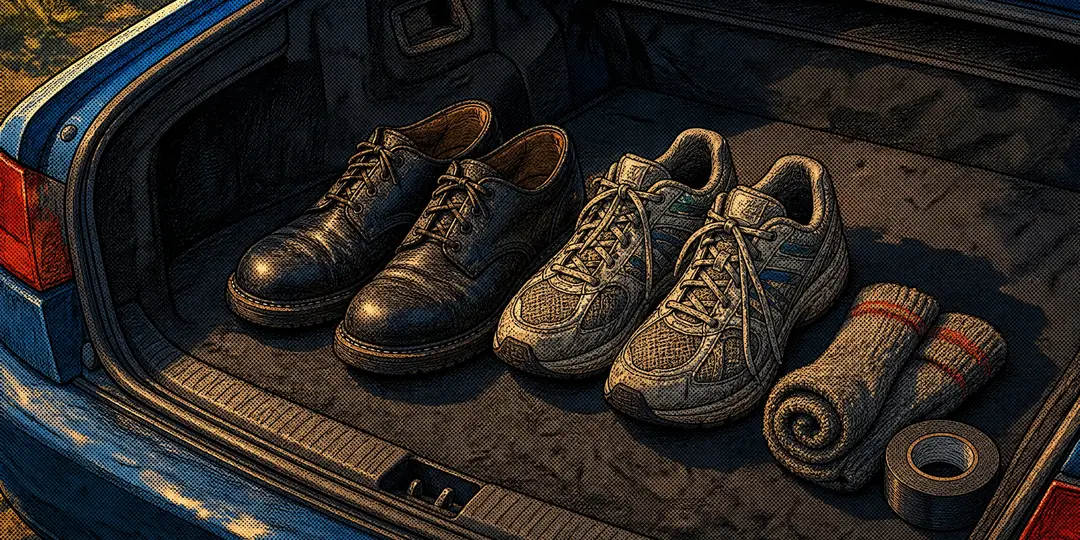
Long walks home end because of feet. Which work shoes fail by mile three, the get-home bag shoes and socks to keep, and the 2 oz blister kit that saves the walk.
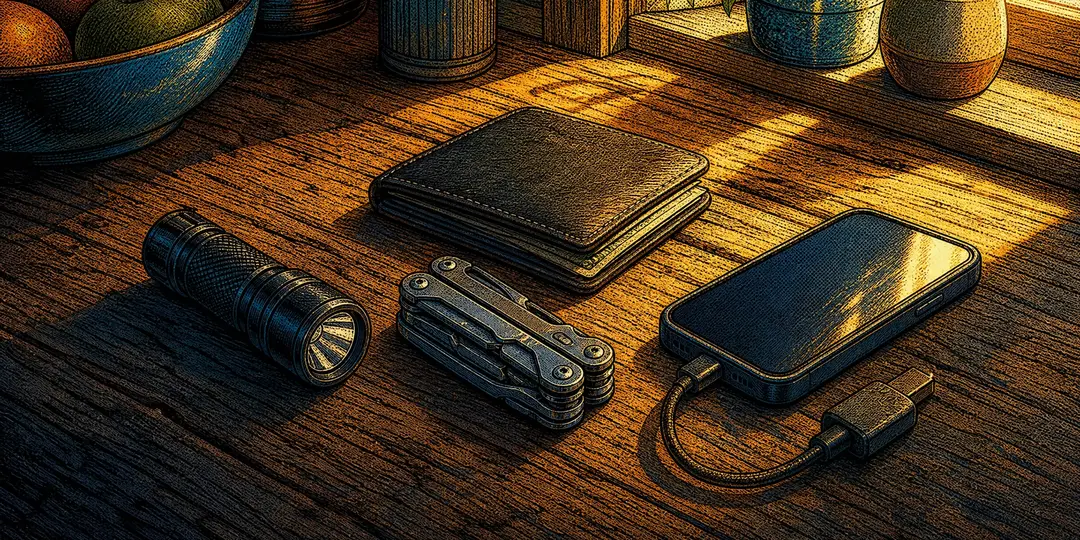
An everyday carry list that fits in a normal pocket: a light, a small blade or multitool, a way to pay and a way to call. Everything past that is a hobby.
Choosing an EDC flashlight comes down to low-mode runtime, the clip and the switch, not lumens. The battery types compared, what to skip and how to check one.
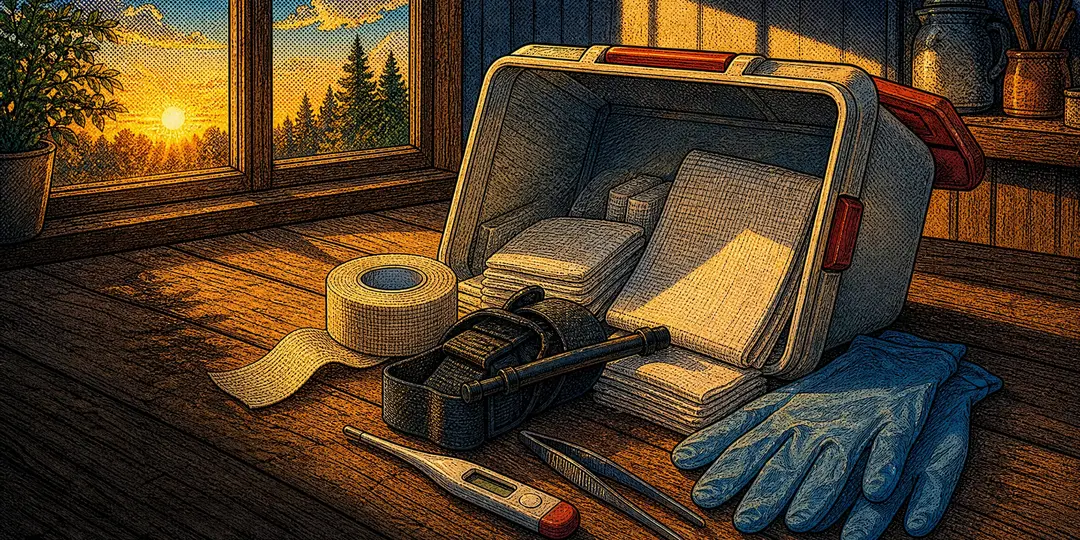
IFAK vs first aid kit: a household needs both, a boo-boo kit for weekly scrapes and an IFAK for bleeding. Both lists, priced, and where each lives.
What to add to a first aid kit from the store: ten additions for about $90–140, the five items you can stop counting on, and what each household needs on top.
A two-week emergency food supply for a family of four for about $150: ordinary supermarket food, no fridge needed, priced item by item, plus the rotation habit.
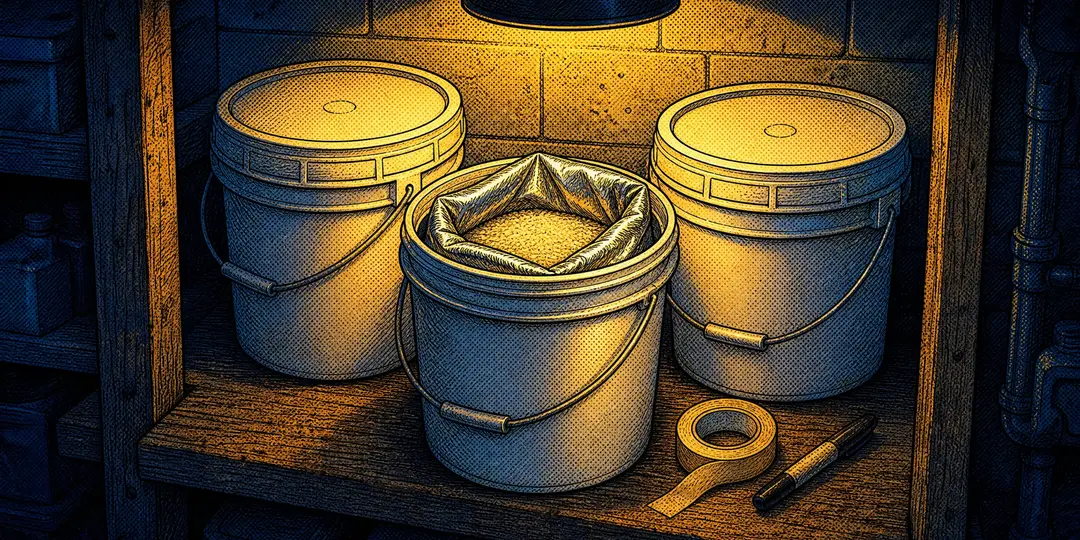
Long-term food storage, honestly: which dry foods really keep 25 years, which go rancid in months, and why DIY buckets cost far less per calorie.
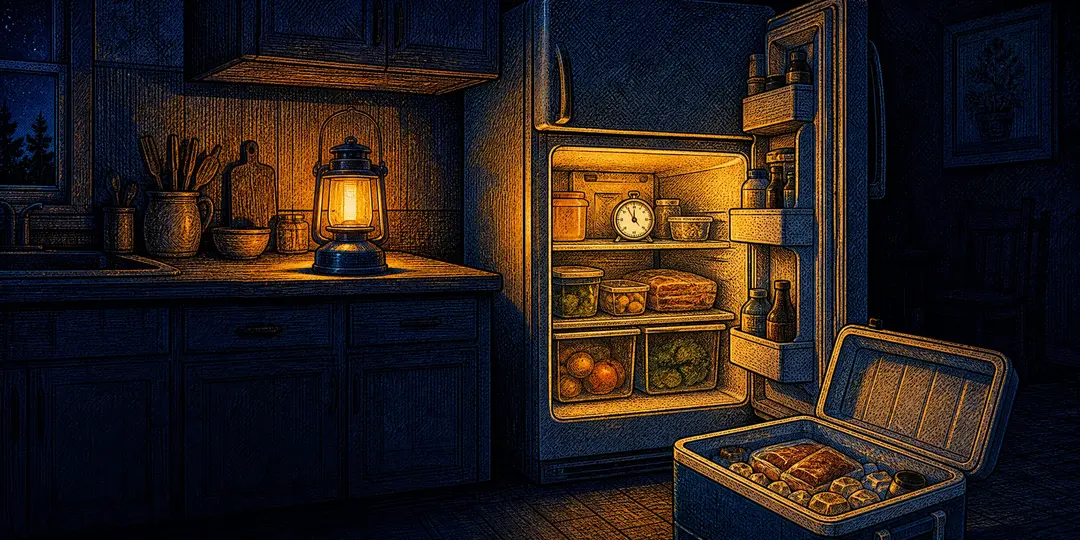
How long food lasts in the fridge without power: 4 hours, door closed. A full freezer holds 48 hours. The numbers, the thermometer trick and what to throw out.
Ten one-pot emergency pantry meals for four, made entirely from the two-week shelf, each with a no-cook fallback and a fuel cost you can count in canisters.
How to cook without power using what you already own: which stove first, the thermos trick that halves the fuel, what to eat in what order, and the CO rule.
Pressure canning for beginners: what the pressure does, the gear and its $150–250 cost, a first batch of green beans, and how to tell a jar is wrong.
Water bath vs pressure canning comes down to pH 4.6. Which side 25 foods fall on, the time each needs, why tomatoes are awkward, and how to check old recipes.
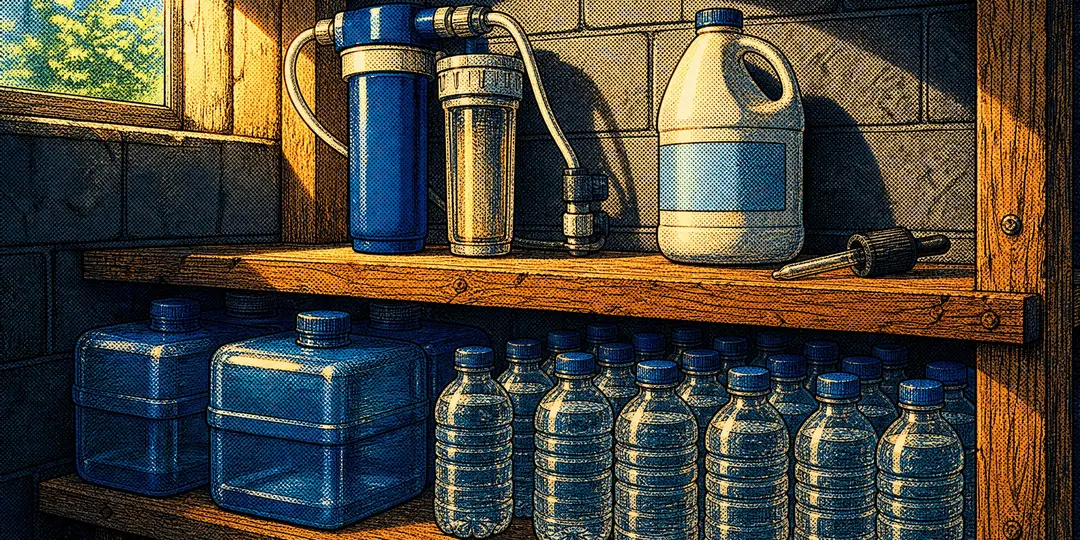
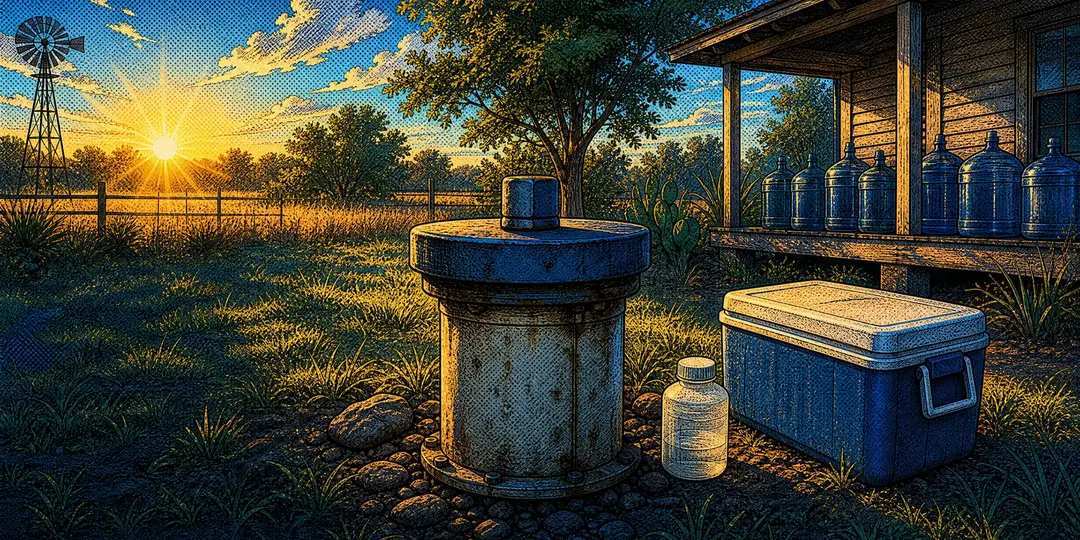
Emergency water storage in one guide: the 1-gallon, 14-day rule, the 30–80 gallons in your water heater, treating doubtful water, and what never to drink.
How much water to store per person: one gallon a day for fourteen days, in food-grade containers somewhere cool and dark. The numbers, containers and shelf.
How often to test well water: once a year for coliform bacteria, nitrates, pH and dissolved solids, and again after any flood. Plus how to check stored water.
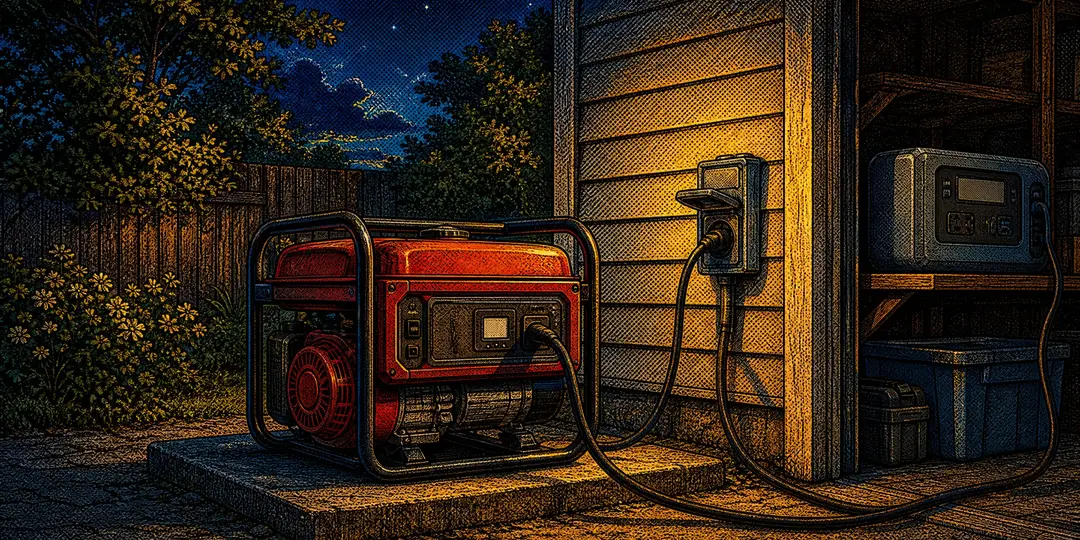
Generator vs power station: list the five things that must keep running, add up the watts, and the answer picks itself, often a small one of each.
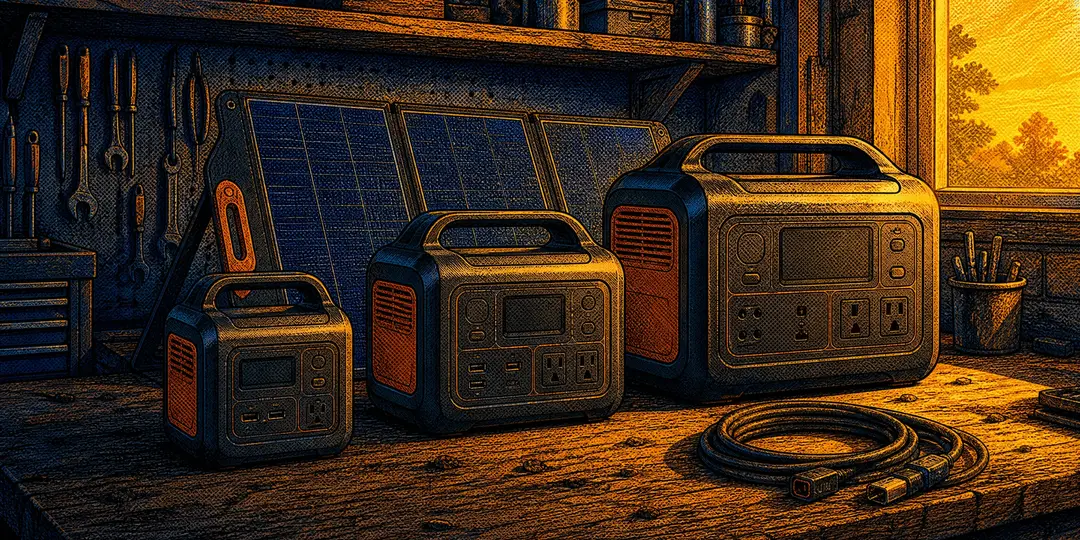
How to choose a power station: watt-hours, inverter output and battery chemistry decide what it runs in an outage. Three tiers, priced $300 to $1,500.
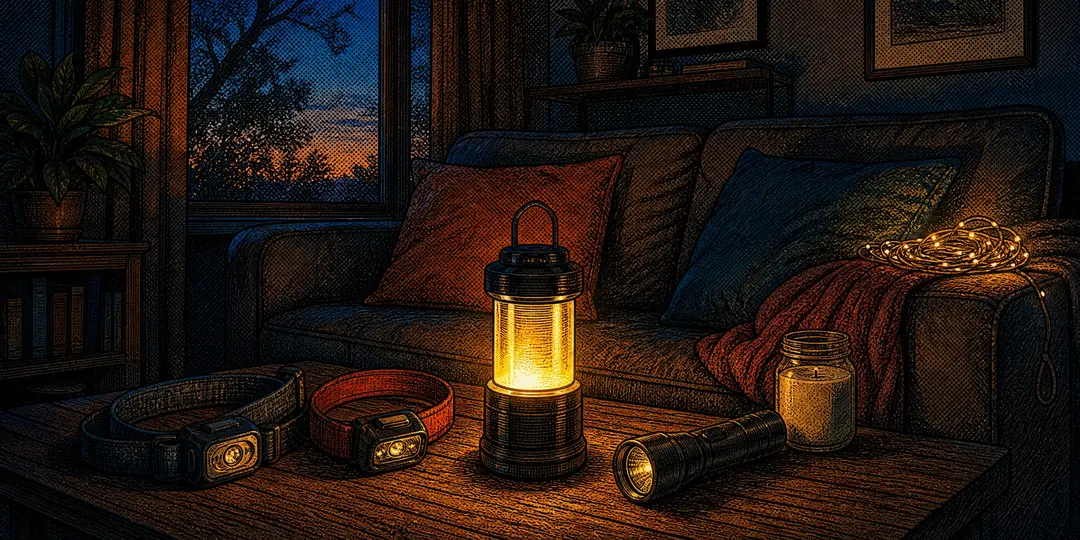
Emergency lighting for power outages: six kinds compared on useful runtime and daily use. The answer is a headlamp each, a lantern per room, no candles.
Every outage task needs two hands. The best headlamp for emergencies costs $15–30, and five features matter more than the lumens printed on the box.
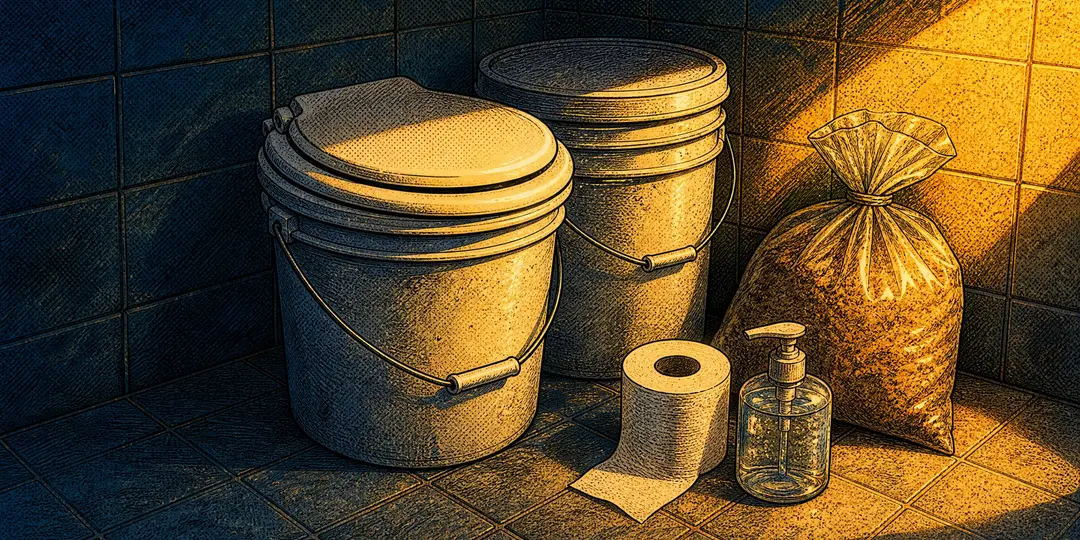
An emergency bucket toilet for $25, a handwashing station and a few bleach rules keep a household healthy for a week when the water’s off.
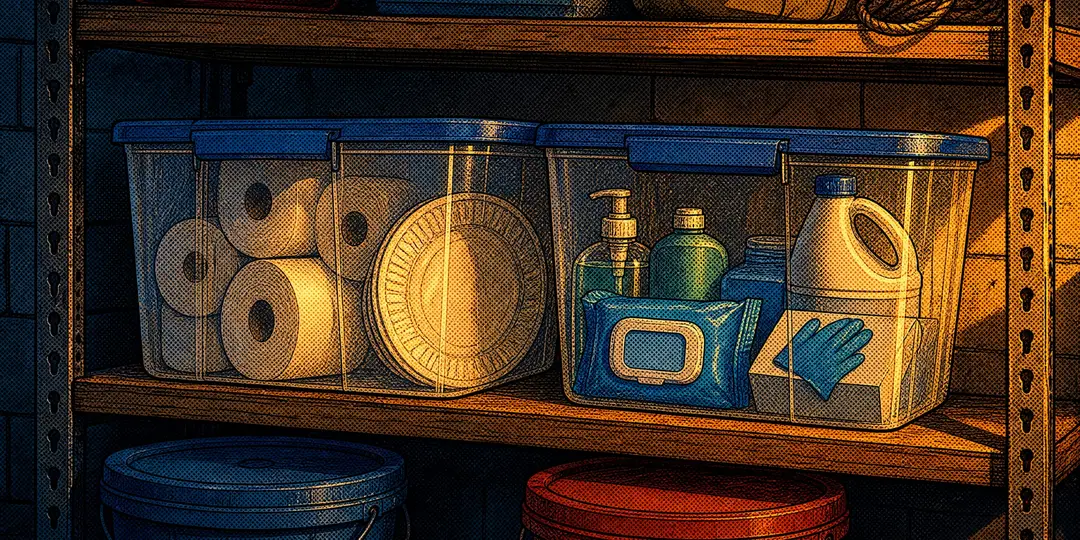
The emergency hygiene supplies a household of four gets through in fourteen days without running water, with quantities, prices and the shelf space they take.
Hot water without power: what your water heater still does, how to heat wash water safely on a stove, and the 40 gallons already sitting in the tank.
Thirty non-food items to stockpile that run out before the food does, from batteries to cash, each with a two-week quantity for a family of four.
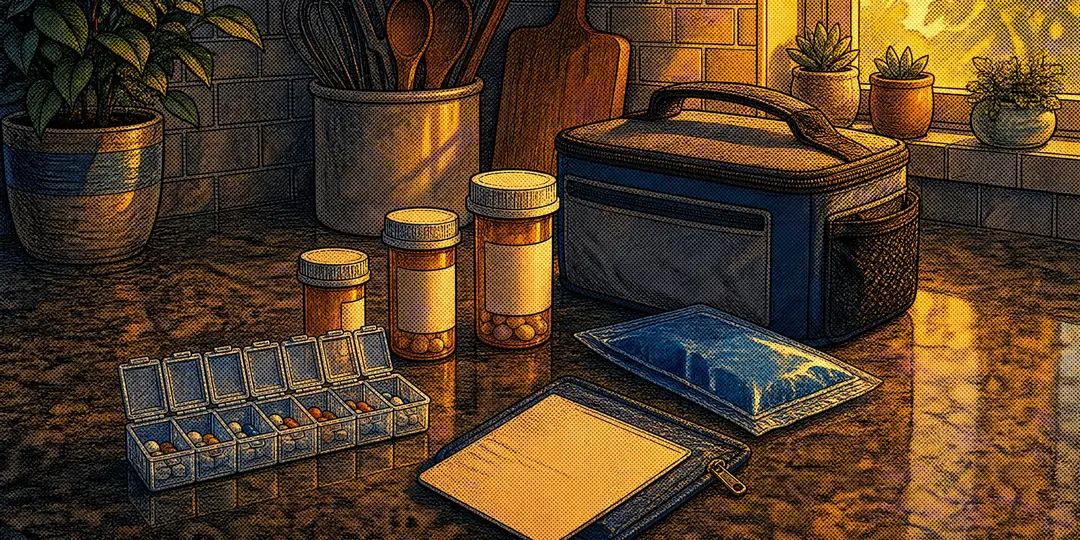
How to build a 90-day supply of medication legally: 90-day fills, early-refill windows, emergency rules, and storing it when the power goes out.
Three rules pick what goes on our deals list, and the same three show how to spot a fake discount: an inflated “was” price, a countdown or a bargain that isn’t.
The best time to buy prepping supplies, month by month: when generators, batteries, camping gear, canning jars and pantry staples tend to go on sale.
How we test gear for every review: we pay retail, use it for a stated period in the conditions it’s sold for, and break it where that’s safe. The rules in full.
Buy-it-for-life gear for a normal household: nine categories, the spec that makes each one last, a price band, and what isn’t worth paying extra for.
How to choose a survival knife: the blade length, steel, grind and sheath that cover camp chores and outage jobs for a household, and why $40–80 is enough.
What a fixed blade knife under $60 gets you: the steels, grinds and sheaths at this price, what to skip, and ten minutes of checks before you keep one.
How to choose a flashlight: runtime, battery type, a real low mode, a cold-hands switch and the right beam all matter more than lumens. Three budgets included.
How to choose an AA flashlight for emergencies: the low-mode runtime, battery, switch and cold behavior to check, with price bands from $5 to $60.
Sleeping bag temperature ratings explained: comfort, limit and extreme, why the pad matters as much as the bag, and how a family sleeps warm in a cold house.
Sleeping pad R-value explained for a cold floor: foam, self-inflating and air pads compared, what R 5 means, and price bands from $20 to $250.
Paracord vs bank line vs real rope: what each cord is for, how much a household needs (about $55–105 in all), and how to store it untangled.
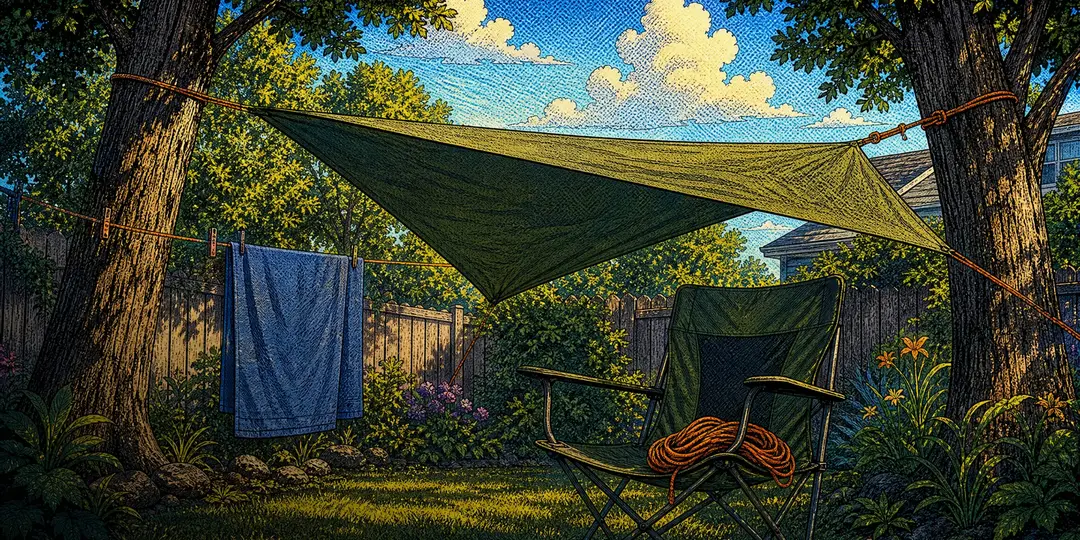
Eight practical paracord uses, each with the length you need, the knot it takes and the steps, from a clothesline to a tarp ridgeline. No bracelets.
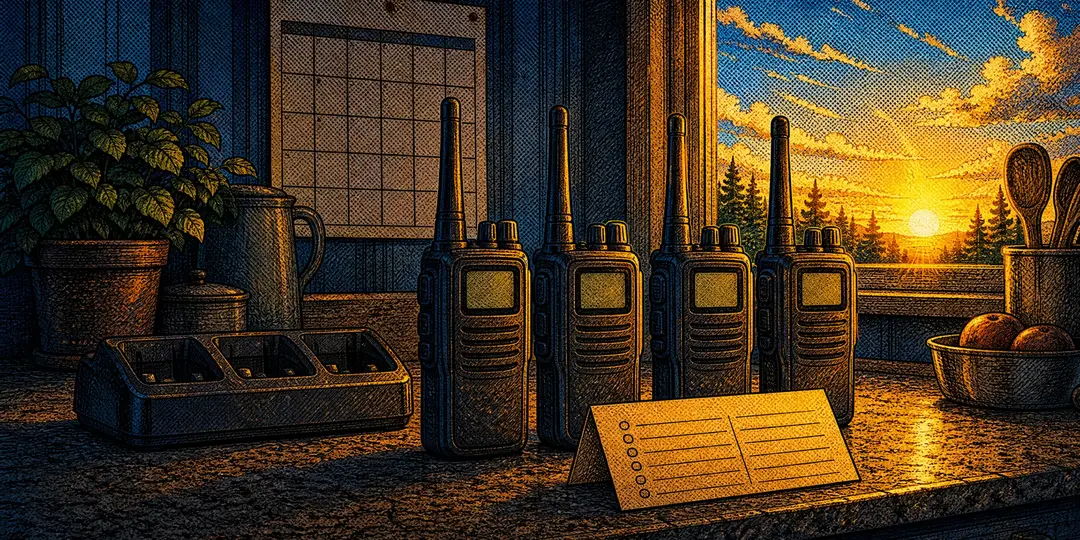
GMRS vs ham radio vs Meshtastic for a family: what each costs, how far it really reaches in a suburb, and why most households should start with GMRS.
The ham radio Technician exam is 35 questions from a public pool. Four weeks of evenings, a $15 exam and a $35 FCC fee gets most people licensed.
Download offline maps tonight, put two paper maps in the bag, and learn to use a map and compass in three steps. Enough to get home when the phone dies.
Handheld GPS vs phone: for most households a phone, offline maps, a $20–40 power bank and a paper map do the job. Here’s when a $100–600 unit earns its place.
Four kinds of emergency cooking stove compared on boil time, fuel cost, wind and simmer: which one a household should own, and why the rest are for hobbyists.
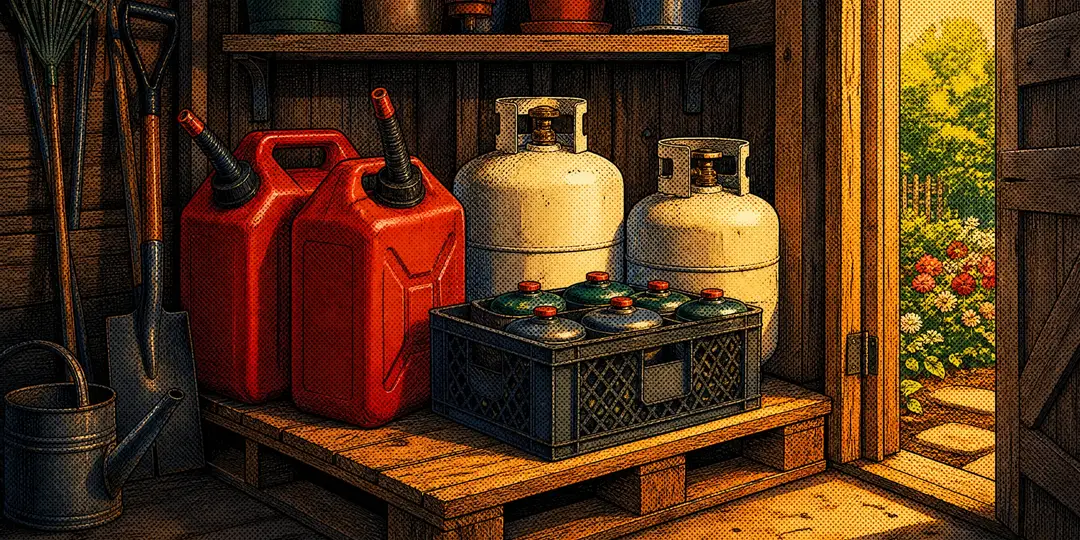
Emergency fuel storage for two weeks: how much propane, gasoline and stove fuel a household needs, how long each keeps, and where the fire code lets it live.
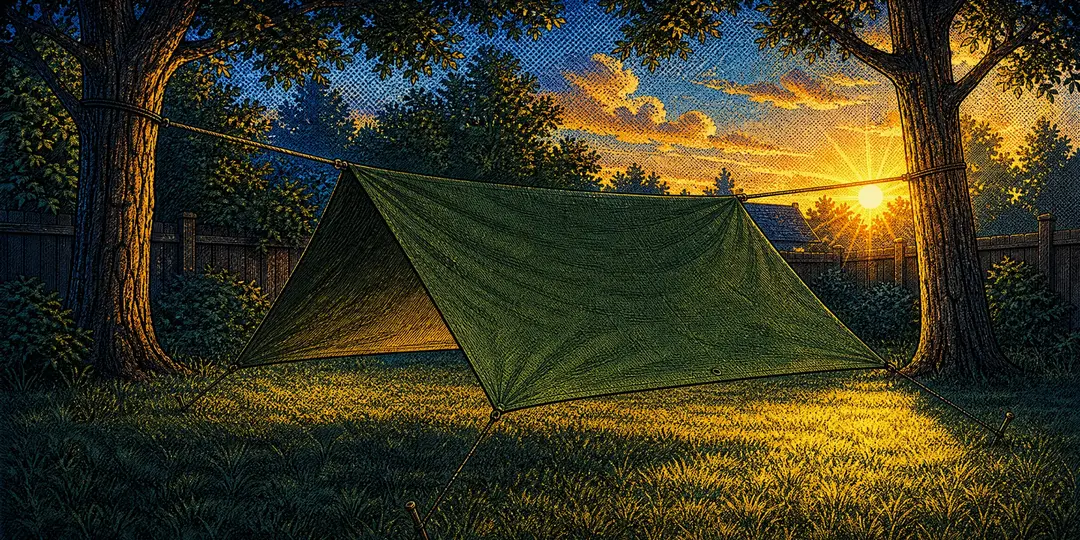
How to pitch a tarp five ways with an 8×10 tarp, 50 feet of cord and six stakes: which weather each pitch suits, and the household jobs a tarp does.
How to choose a tarp for emergency shelter under $80: poly vs camping tarps, bivies and foil blankets compared, what fails first, and five home checks.
The ten most important survival skills, ranked by how often a normal household uses them, with how long each takes and the free or cheap way to learn it.
A survival skills practice plan for beginners: six skills in two days in a backyard, from water and stove cooking to a tarp pitch. Hour by hour, under $100.
Wilderness survival basics in five steps: stop, shelter, water, fire, signal. What each involves, the 1½ lb pocket kit, and why staying put usually wins.
The survival rule of threes: three minutes without air, three hours without shelter, three days without water, three weeks without food. A memory aid only.
How to start a fire that keeps going: the three-size fuel ladder, the tinder that works when it’s wet, and why a lighter and matches come before the ferro rod.
How to use a ferro rod when it throws sparks but won’t light: the five reasons it fails, the fix for each, and a drill that gets you to fire in five strikes.
Foraging for beginners: three hard-to-mistake edibles to learn first, ten poisonous plants and lookalikes to leave alone, and where you may legally pick.
Wild edibles by season for six US regions: a handful of common plants each, an honest confusion-risk rating, and the regional field guide to check against.
Small-game hunting for beginners: the license, the hunter-ed course, what it costs, how much food it really yields, and why it is a skill, not a food plan.
Trapping laws by state, as a checklist: ten questions to answer from your wildlife agency before you set any trap, from license and season to check interval.
Which primitive skills are worth learning: cordage and simple tools earn their time, the bow drill builds confidence, and flint knapping is a hobby.
How to make a bow drill set, two-ply cordage and a fire-dried digging stick in one afternoon, with honest times and how often beginners get an ember.
Six basic knots everyone should know, from the bowline to the sheet bend: what each is for, the one mistake people make with each, and a practice routine.
How to tie a trucker’s hitch for roof racks and tarp ridgelines: seven steps, two loop variants, how tight is enough, and how to release it.
Twelve DIY emergency preparedness projects ranked by readiness per hour of work, with time, cost and difficulty, plus the ones to skip without a workshop.
A DIY bucket water filter from two food-grade buckets and one element: $30–40 in parts, an hour to build. Steps, flow, upkeep, and what it won’t remove.
The six first aid skills to learn, ranked by how often they save a life at home, where to learn each in a weekend and what it costs, and what to carry for each.
How to stop severe bleeding in the first three minutes: call, press, pack, tourniquet, and the free course that teaches it with your hands.
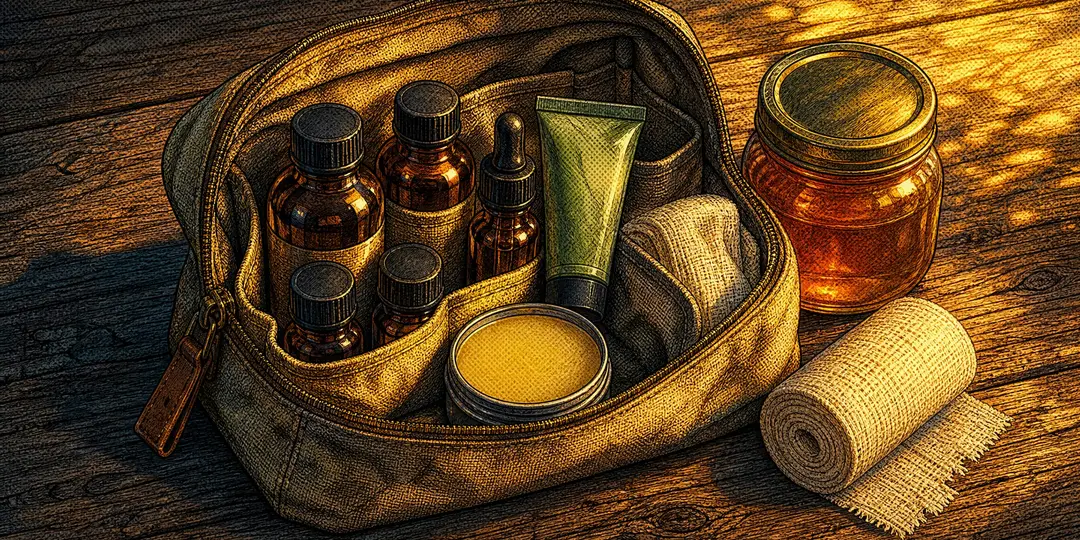
Do natural remedies work? Twenty common ones graded supported, plausible or unsupported, with safe use, who should skip each, and where they stop.
Item by item through the herbal first aid kits sold online: what helps minor problems, what is filler, and what to swap for the cheaper pharmacy version.
Self-defense basics for ordinary people: avoidance, awareness and de-escalation come first, cost almost nothing, and prevent most trouble a family meets.
How to choose a self-defense class that isn’t sold on fear: the red flags, prices, what a weekend can realistically do, and seven questions to ask before you pay.
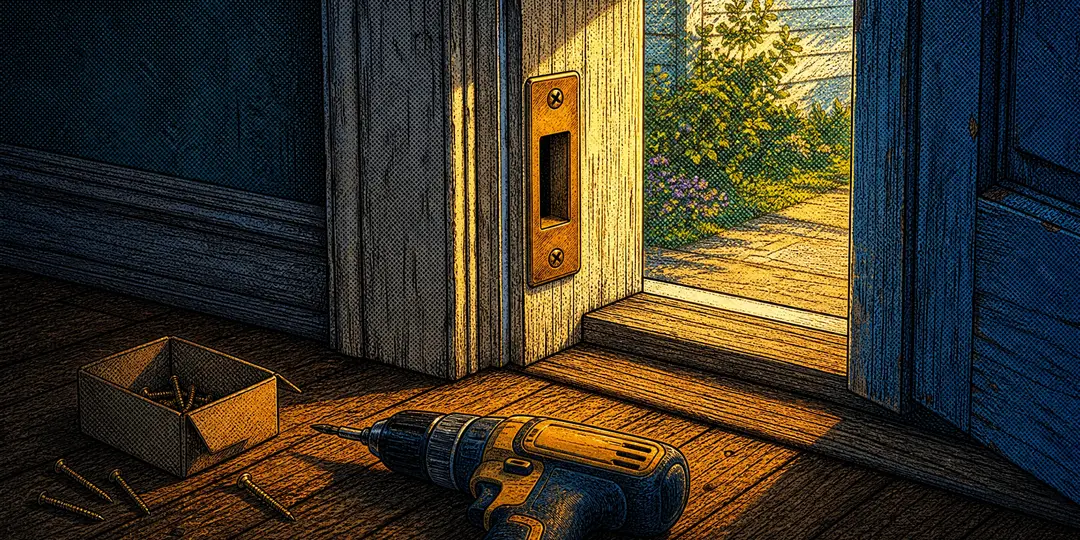
A budget home security checklist: about $200 of screws, bars and lights for how most break-ins actually happen, with prices, install notes and a renter version.
How to deter burglars without a weapon: motion lights at the doors, a dog that barks and a street that notices, with rough costs and the order to do it.
Buying your first firearm in the right order: training, storage and your state’s law before the purchase, with the costs and the risks at home stated plainly.
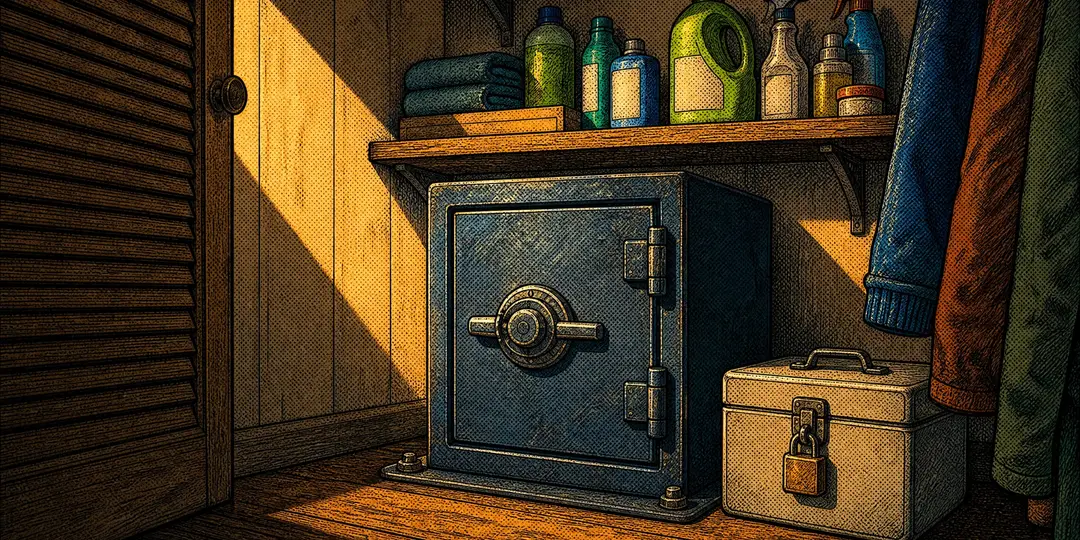
Safe gun storage with kids in the house: locks and safes with prices, the same rule for medicines and chemicals, and the question to ask before a playdate.
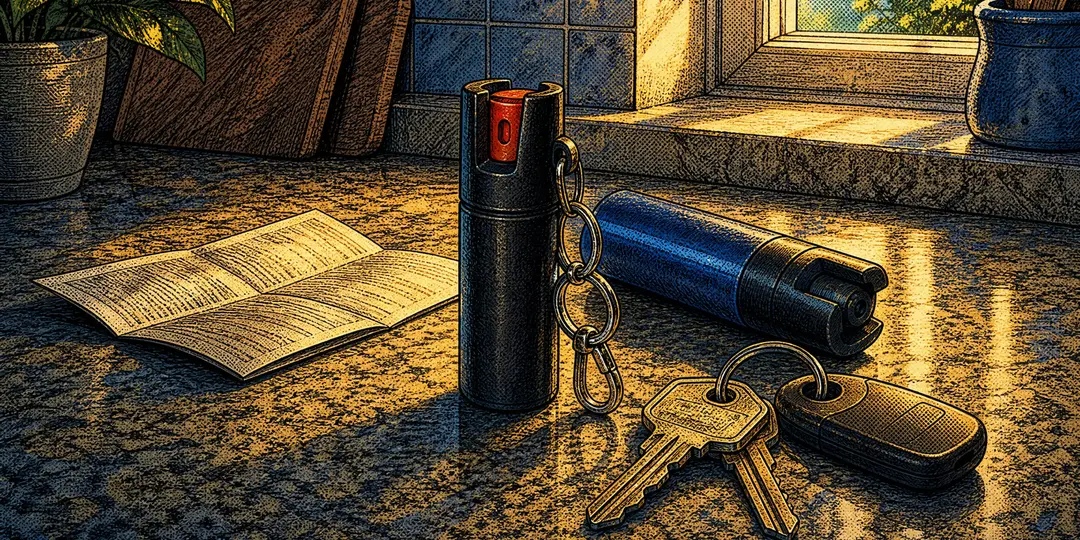
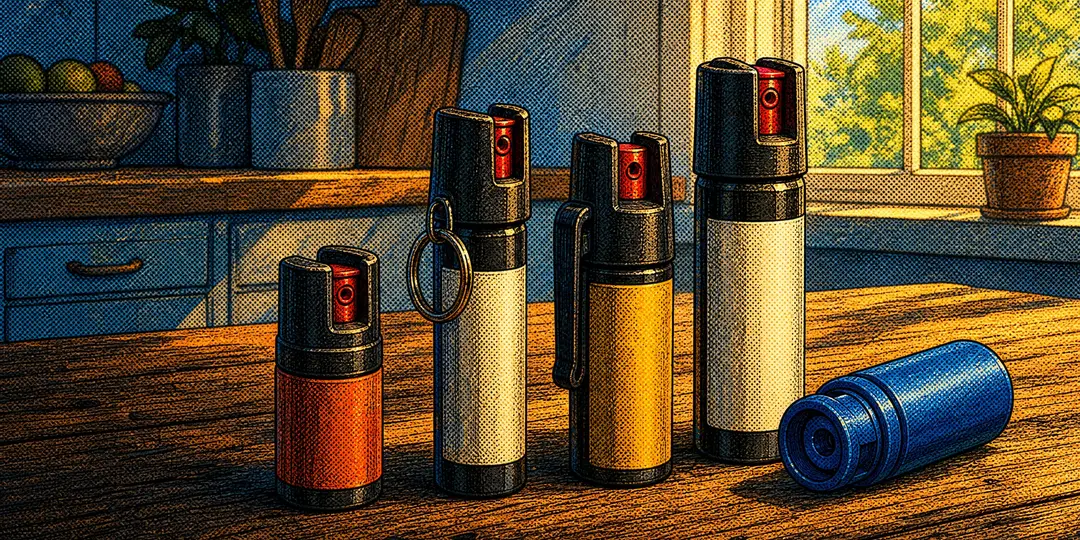
Pepper spray vs taser vs body armor: what each actually does, where the law draws lines, and why a $15–30 canister is the one most households need.
How to choose pepper spray by the three things that decide whether it works: reach, spray pattern and wind. Plus size, strength, price and the law.
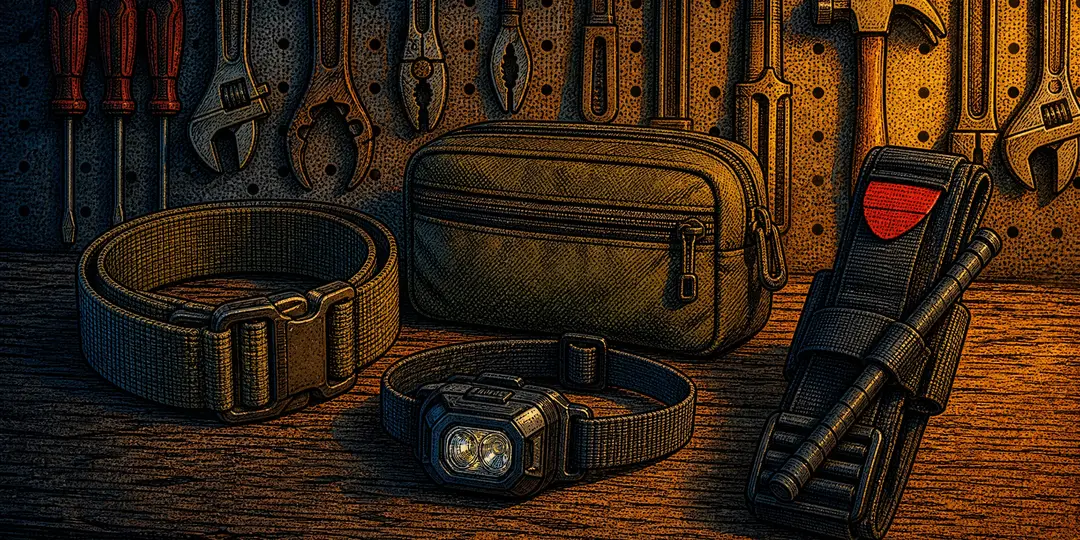
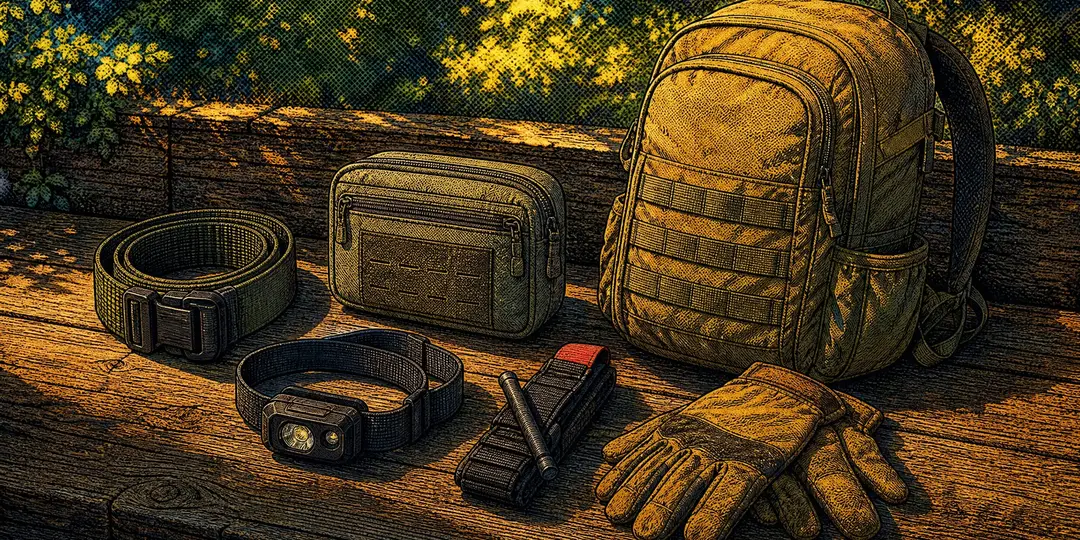
What is tactical gear? Mostly a costume with a markup. The useful part is durable, organized kit; here is the one-question test and what this section skips.
The six pieces of tactical gear worth it for civilians in a normal household, what to look for and pay for each, and the much longer list that is costume.
Self-defense laws by state: the five areas that vary, what each means, and where to read the current official text for all 50 states and DC.
Knife carry laws by state turn on five variables. The states and cities where they bite hardest, the safest everyday knife, and where to read each law.
Everyday situational awareness is four small habits: know the exits, notice the normal, notice who is noticing you, and act when something feels off.
Travel safety tips that cover most real trouble: which hotel room to ask for, a $10–20 door wedge alarm, a five-minute rental check and a rideshare plate match.
Five settings secure your online accounts in about five minutes each: password manager, two-factor on email and bank, printed recovery codes and a credit freeze.
Important documents for evacuation: which to copy now, how to store the scans safely in two places, and the paper set that lives in a zip bag in the go-bag.
Bug in vs bug out: staying home is the right call most of the time. Four questions settle the rest: the order, the house, the route and where you’d go.
Day by day through a week-long power outage at home: what runs out when, what the five basics do at each stage, and the two mistakes that make it dangerous.
Bug out locations without a cabin: three places in three directions at three distances, with the people at the other end expecting you. How to set them up.
Evacuation route planning on one tank: the range math for half a tank in heavy traffic, two printed routes, and a supply bin waiting at the other end.
The best bug out vehicle is the family car you already own, serviced and never below half a tank. The habits, checks and $100–200 kit that make it ready.
Overlanding for beginners in the SUV you already own: tires, a $200–400 recovery kit, what not to attempt, and a first trip the family will enjoy.
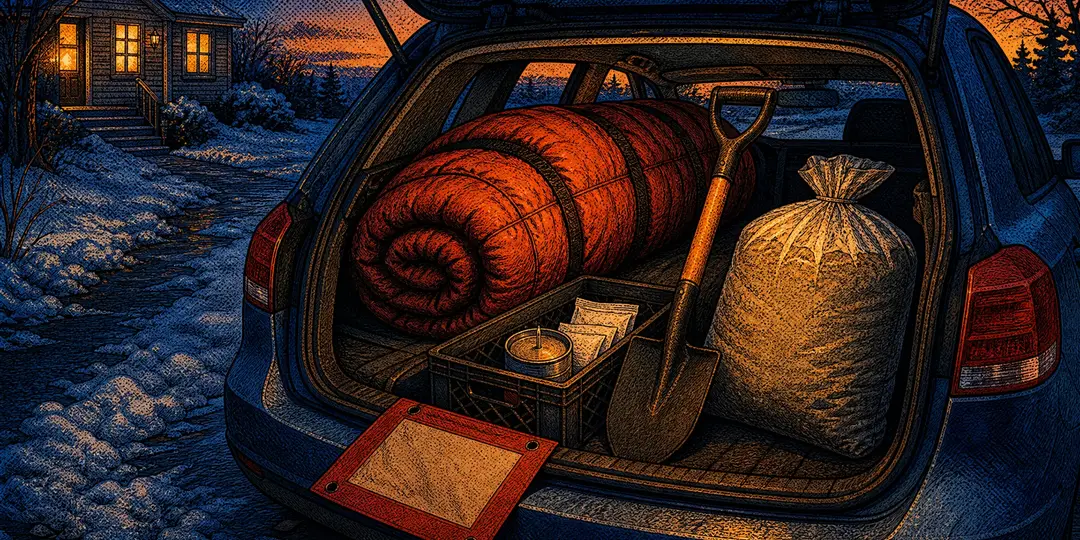
The winter car emergency kit, item by item: what to carry from November to March, how many of each, why, and what the whole crate costs, about $120–250.
What to do if stranded in snow in your car: the first ten minutes, the exhaust rule, keeping warm between engine runs, and when walking is right.
Homesteading on a quarter acre: what a suburban lot really produces in vegetables, eggs, fruit and rainwater, what it costs, and what cuts grocery bills.
Homesteading for beginners: start a bed, a barrel and a compost bin; skip goats, an orchard and bees. A month-by-month first year on a normal lot, with costs.
Off-grid living costs for a family house: power, water, septic, heat and internet priced system by system, with lifespans, chores and resale reality.
Partial off-grid for a suburban house: a solar battery, a wood stove and a rain barrel, what each costs and what it actually does when the power goes out.
High-calorie garden crops for a small yard: potatoes, sweet potatoes, squash, dry beans and corn. What 200 sq ft really yields, and how to grow and store it.
How to save seeds: beans, peas and tomatoes are easy, squash needs care. Drying, storage, how long seed keeps, and why a seed vault isn’t the shortcut.
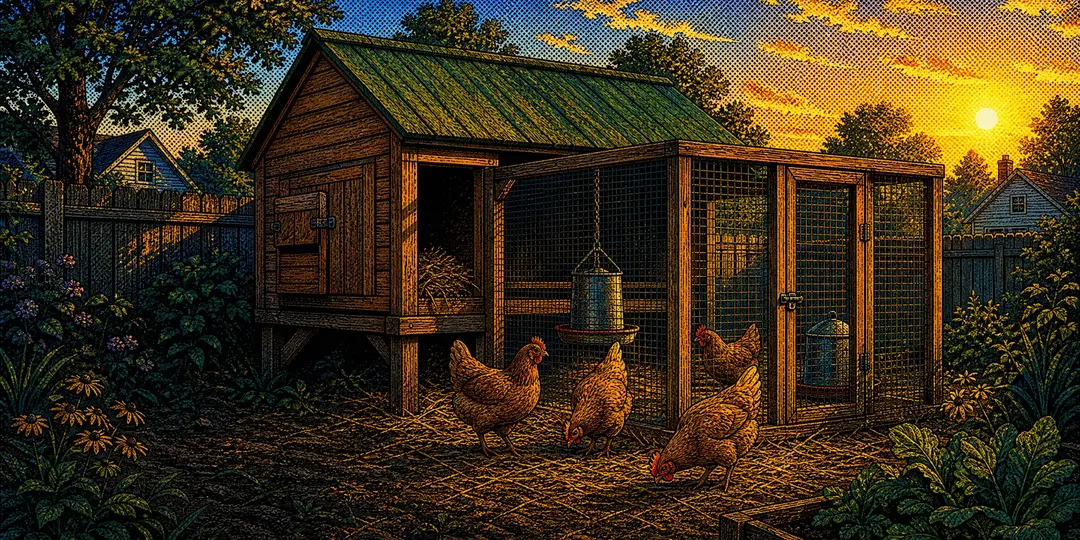
The real cost of backyard chickens: a one-year ledger for four hens, from coop and feed to eggs by season and vet bills, and whether it saves money.
Backyard livestock for beginners: hens, rabbits, goats and bees compared on space, cost, daily time, yield, rules and neighbors. Start with hens.
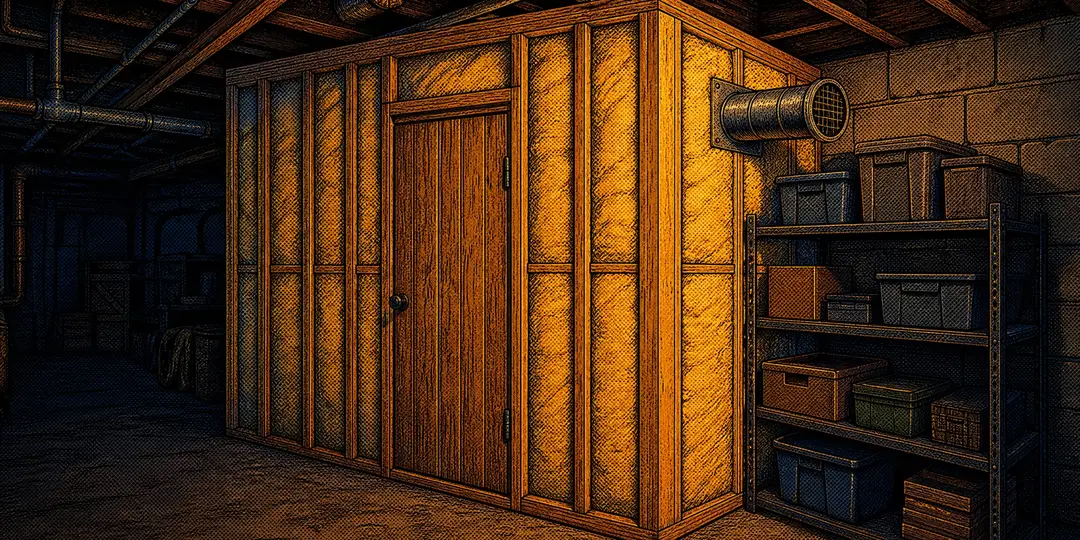
A basement root cellar in the coldest corner: two insulated walls, a door, two vents and slatted shelves for $400–1,200. Parts, steps and the first-winter log.
A root cellar storage chart for 13 crops: the temperature, humidity and months each keeps, how to cure them first, and which ones spoil their neighbors.
How to collect rainwater: what your roof sheds, a barrel with a first-flush diverter, keeping mosquitoes out, and the steps that make it drinkable.
Rainwater collection laws by state: barrels are legal everywhere, but a few western states cap them and most regulate drinking it. Who to check with.
Most emergencies are solved with money, not supplies. How to build an emergency fund in three steps, where to keep it, and how much cash to keep at home.
Prepping on a budget: the first $100, $250 and $500, item by item with prices, plus the kits, subscriptions and cheap generators to walk past.
Apartment prepping for two: 14 days of water and food in a one-bedroom. Where it goes, what to skip, and the building risks a house never faces.
An apartment evacuation plan solves three problems: the stairwell, the neighbors and the meeting point. The plan for each, and the bag that sits by the door.
One dinner, five questions, two pieces of paper. The family emergency plan is a conversation about meeting points, one distant contact, school pickup and pets.
When your partner isn’t interested in prepping, the argument is rarely about emergencies. It’s money, space or identity, and each has its own fix.
Helping kids cope after a disaster: keep routines, limit the news, answer questions plainly, and expect a few weeks of clinginess. When to call for help, and who.
Emergency preparedness for medical needs: daily medication, severe allergies and limited mobility, condition by condition, with the people to ask.
Emergency preparedness for elderly parents living alone: what to set up on your next visit, from medication and a daily check-in to heat, a go-bag and papers.
Emergency food for special diets: ready-to-feed formula for babies, safe foods for allergies and celiac, and a diabetes plan for a week without power or stores.
Our editorial statement on prepping for families: who the site is for, the three things we refuse to do, how we make money, and how we fix our mistakes.
Opinion: storm coverage repeats the same four mistakes every season. Here is how to prepare for a storm using only the parts of the forecast that matter.
The best local preparedness group is usually CERT, a ham club or the Red Cross, and it mostly trains and drills. Where to find one, and the signs to walk away.
CERT training is free disaster-response training from local fire departments: first aid, fire safety, search and rescue. What it covers and how to find a course.
The five best preparedness books for a household, about $100 in all and more use in a bad week than any gear list. What each gives you, and who it is for.
Six emergency preparedness courses worth paying for, from a free 90-minute Stop the Bleed class to a 16-hour wilderness first aid weekend, with cost and hours.
The best prepping podcasts for a household: one weekly family show, public-radio series on earthquakes, wildfire and Katrina, and the shows to skip.
The prepping podcast episodes to start with: fifteen, grouped by topic, seven to eight hours in all, with show, date, length and one takeaway for each.
Opinion: five books and films of realistic survival fiction that get outages, shortages and people right, and what a household can take from each.
Opinion: are survival shows real? How four shows are produced, the safety rules the camera rarely shows, and the habits they teach that would hurt you.
Thirteen free preparedness manuals from FEMA, the CDC, the EPA, the USDA and the Red Cross: what each covers, how current it is, and how to keep it offline.
All twelve free emergency preparedness printables on one page: what each PDF is for, how many copies to print, and the order to work through them.