A kitchen table with a navy backpack, a steel water bottle, jars of oats and rice, a row of tin cans, a roll of toilet paper, a small first aid kit, a flashlight, a folded map and a notebook.
How to start prepping in four weeks, one job a week: water, food, light and heat, then the plan. By day 30 a household can sit out a week-long outage.
Shane RichardOct 6, 20269 min readGuide · Complete guide
Thirty days of work on one table: the bag, the water, the food, the light, the first aid kit and the plan.
Most prepping advice starts with the disaster. This guide to how to start prepping starts with your calendar. You have a job, a household and maybe a garage, and the question that matters is not “what if the grid goes down for a year” but “what happens in this house when the power is off for four days and the roads are bad.” Thirty days is enough to answer that properly, for a few hundred dollars, without buying anything you’ll regret.
The order below is deliberate. Water first because nothing else works without it and it costs almost nothing. Food second because you already buy it. Light, heat and news third because they are what make an outage feel like an emergency. The plan last, because by then you know what you own and where it is.
How to start prepping: decide what you’re preparing for
Spend twenty minutes, not a weekend. Write down the three things most likely to go wrong where you live in the next five years. For most US households that list is some version of: a multi-day power outage, a storm or wildfire that closes roads or forces you out, and a boil-water notice. Add one personal one, such as a job loss or a family member who needs medication, if it applies.
That list is your filter for everything that follows. If an item on a shopping list doesn’t help with one of your three, skip it. If you want help building the list, which emergencies actually apply to where you live walks through it by region.
Week
The job
What you’ll have at the end
Typical spend
1
Water and documents
14 days of drinking water, copies of the paperwork that matters
$30–80
2
Food
Two weeks of meals that need no power to make
$100–150
3
Light, heat, news
A headlamp each, a way to cook, a radio, phones that stay charged
$60–150
4
Kit and plan
One tote you can carry, a first aid kit, a meeting point everyone knows
$40–100
The spend column is for a household of four starting from an ordinary kitchen. If money is tight, the $25-a-week buying order stretches the same list over twelve weeks.
Week 1: water, then paperwork
The rule is one gallon (3.8 L) per person per day, and the honest minimum is fourteen days. For four people that is 56 gallons, which sounds like a lot until you see it: sixteen 3.5-gallon stackable containers fit under a queen bed, and eight 7-gallon jugs fit on a closet floor. Tap water in a clean, food-grade container should be emptied and refilled every six months, which is the CDC’s advice. Fill it this week and put a reminder in your calendar for April.
Week 1: water in whatever rigid containers you can lift, lined up where they are out of the sun. Write the date on each one before it goes in the closet.
The second half of the week is paperwork, because an evacuation is the moment you discover the deed is in a drawer you can’t reach. Photograph or scan: ID and passports, insurance policies and the agent’s phone number, prescriptions, the deed or lease, vehicle titles, and a recent photo of each family member and pet. Put the files on a cloud drive you can reach from a phone, and print one paper set into a zip bag. It takes an evening. Backing up your documents for an evacuation has the full list.
Week 2: two weeks of food you already eat
The mistake here is buying food for an imaginary camping trip. Buy what your household eats on an ordinary Tuesday, in shelf-stable form, and enough of it for fourteen days. Rice, pasta, oats, canned beans, canned tomatoes, peanut butter, tuna or chicken, crackers, dried fruit, a jar of something your kids will eat without a fight. Coffee or tea if the lack of it would make you worse company than the outage.
Two rules make this work:
Everything must be edible with no power at all. Canned food is cooked; it can be eaten cold. Pasta and rice need a stove, which is next week’s job, so lean on cans and ready-to-eat items for the first three days’ worth.
Rotate, don’t store. Put the new food at the back of the shelf, eat from the front, and replace what you use on the regular grocery run. Nothing expires, nothing gets thrown away, and the pantry pays for itself.
The two-week pantry: a shopping list under $150 is the printable version, priced. If you have a baby, a pet, or someone on a restricted diet, their fourteen days go on the list first, not last.
"Buy the food you already eat, in a form that doesn’t need the fridge. The pantry pays for itself; a crate of survival rations doesn’t."
Week 2, in one sentence
Week 3: light, heat and news
An outage after dark with no light is frightening; the same outage with a headlamp on every head is a camping trip. This week covers the three things that make the difference.
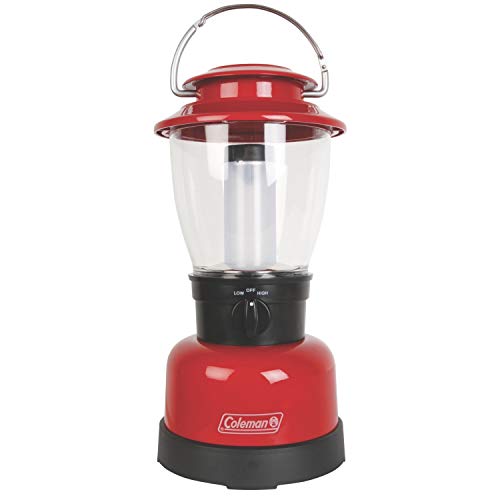
Light. One headlamp per person, plus one lantern for the room you’ll gather in. Headlamps leave your hands free, which matters when you are carrying a child or a pan. Skip candles for now; they are a fire risk in a house full of people who are anxious and in the dark. Our pick of what to buy is in the headlamp is the only emergency light you’ll actually use. Buy batteries for everything you own, and buy them in one size if you can.
Heat and cooking. If you have a gas grill, you already have a stove; make sure the tank is full and you have a second one. If you don’t, a small canister camp stove costs about the price of a takeout dinner and boils water in four minutes. Both are for use outdoors only, away from doors and windows; never indoors, in a garage or in a doorway. For staying warm, the answer is usually not a heater but a plan: one room, closed doors, everyone in it, sleeping bags or extra blankets. Cooking when the power’s out covers the stove choices.
News and charging. A battery or hand-crank radio that receives weather alerts is the only reliable way to hear an evacuation order when the cell network is down or overloaded. Add a power bank big enough to charge every phone in the house twice. Charge it monthly; put it on the same calendar reminder as the water.
Week 3 on the table: one lantern, a headlamp, a handful of batteries, the power bank and the weather radio. This is what an outage looks like once the lights are handled.
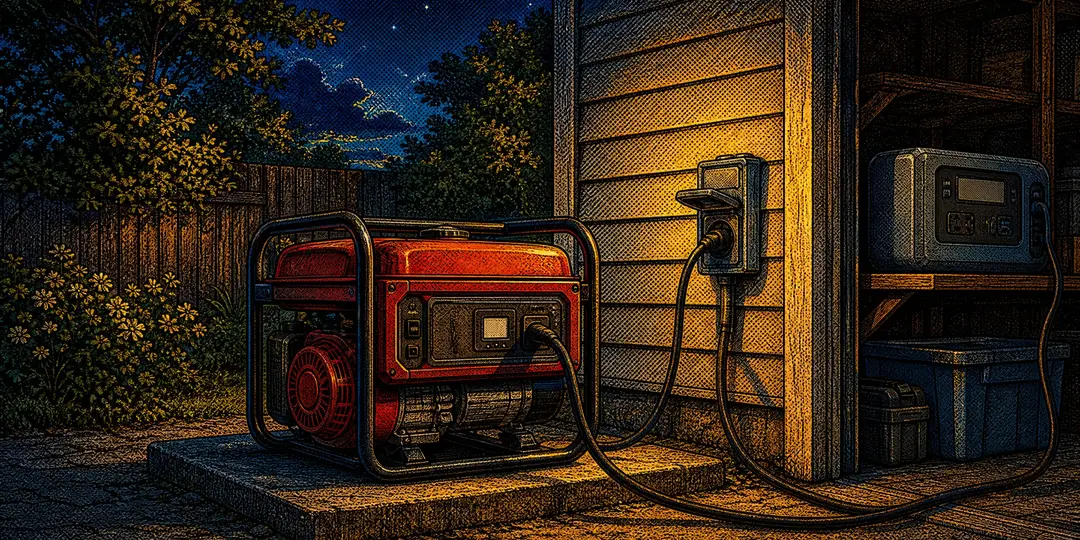
If you’re wondering about a generator: not yet. A generator is a later purchase, for a household that has already done all four weeks, and it is the most expensive, most often misused item on any list. When you’re ready, backup power for a normal house is the place to start.
Week 4: the kit and the plan
By now the supplies exist. This week makes them reachable and makes sure everyone in the house knows what to do.
Put the 72-hour supplies in one tote. Not everything you own, just what you would want in the first three days of an outage or the first hour of an evacuation: the paper documents, a headlamp, the radio, the power bank, a first aid kit, three days of ready-to-eat food, and a few gallons of water next to it. Label it. Put it where you can reach it in the dark, which is usually a hall closet, not the garage. The home survival kit is the full packing list.
Build the first aid kit you’ll actually use. Most households need a “boo-boo kit” for scrapes and headaches and a small bleeding-control kit for the one bad day. IFAK vs boo-boo kit: build both explains the difference, and a store-bought kit plus a few additions is fine.
Have the conversation. Where does everyone meet if the house isn’t safe? Who picks up the kids if the phones are down? Which neighbor has a key? This takes one dinner and is the single most valuable thing on this page. Family emergency planning: the meeting-point conversation gives you the script.
What you should not have bought yet
A long list of things sells well to beginners and does nothing for your three scenarios. In the first thirty days, skip: freeze-dried food buckets, a generator, a bug out bag for the wilderness, body armor, a second property, night-vision anything, and any subscription box. Some of those have a place later. None of them come before water, food, light and a plan.
The other thing to skip is urgency. The first thirty days are boring by design, and the goal is a household that is quietly fine, not one that is braced. If you finish the month with a closet that looks like the photo at the top of this page, you are better prepared than most people on your street. The calm, boring, consistent version of prepping is the longer argument for that.
Day 30: check it off, then put it on the calendar
Print the one-page checklist, check off what you have, circle what you don’t. Then set two reminders: one every six months to eat through and replace the pantry and to empty and refill the water, one in a year for the drill. That is the whole maintenance schedule. Everything after this is improvement, not emergency.
Quick answers
What should I buy first when I start prepping?
Water containers. Water comes first because nothing else works without it and it costs almost nothing: store one gallon (3.8 L) per person per day for fourteen days, filled from the tap in clean, food-grade containers. For a family of four that is 56 gallons. Empty and refill self-stored tap water every six months, as the CDC advises.
How much does it cost to start prepping?
For a household of four starting from an ordinary kitchen, the first 30 days of prepping cost roughly $230–480: $30–80 for water containers, $100–150 for two weeks of food, $60–150 for light, cooking and a radio, and $40–100 for the kit and first aid. If money is tight, the same list can be spread over twelve weeks at $25 a week.
Do I need a generator to start prepping?
No. A generator is a later purchase for a household that has already stored water and food, taken care of light and cooking, and made a family plan. It is the most expensive and most often misused item on most prepping lists. When you do buy one, it runs outdoors only, never in a house, garage or doorway.
What should a beginner prepper not buy?
In the first thirty days of prepping, skip freeze-dried food buckets, a generator, a wilderness bug out bag, body armor, a second property, night-vision gear and subscription boxes. Some have a place later, but none comes before two weeks of water, two weeks of food you already eat, light, a way to cook and a family plan.
How often should I check my emergency supplies?
Check emergency supplies every six months and run a household drill once a year. At each six-month check, eat through and replace the pantry and empty and refill stored water; the spring and fall clock changes make easy reminders. Charge the power bank monthly. That is the whole maintenance schedule for a household that has finished its first 30 days.
Printable
The one-page household readiness checklist (PDF, 1 page). Forty lines, one for each item in this guide, with a box to check and a line for the date.
Picks that match the specs in this guide, from makers with a track record. We haven't tested them yet. As an Amazon Associate we earn from qualifying purchases, at no cost to you. Add what you need to my list, then send the whole list to your Amazon cart all at once. Prices and availability are accurate as of the date and time shown and are subject to change. The price and availability shown on Amazon.com at the time of purchase will apply.
Black Diamond
Black Diamond Astro 300 Headlamp (AAA)
Runs on AAA, dimmable. Maker specs this model with red night-vision mode, lock mode, tilting head and IPX4.
No price from Amazon right now (checked Nov 24, 6:06 a.m. CT)
Shane is a disabled US Army veteran who served as an M1A1 tank crewman, then spent his career in technology and manufacturing supply chains, keeping parts moving through COVID. He, his wife Heather and their three kids have ridden out tornadoes, the February 2021 Texas freeze, the 2026 floods in Northeast Texas and power outages that lasted days. He started Prepping Expert to give families the plain, affordable, step-by-step version he wished he'd had.
Disaster risk where you live fits on a short list: three hazards every US home shares, two or three regional ones, and a twenty-minute way to rank them.
How to prepare for grid-down: real outages last hours to days, occasionally weeks, and five preparations cover them all. What EMP is, and what to ignore.
We use Google Analytics cookies to count visits and see which guides help. No ads, nothing sold. Cookie policy








 3
 4



Comments
No comments yet. Read the comment guidelines before posting.