Which emergencies actually apply to where you live
Disaster risk where you live fits on a short list: three hazards every US home shares, two or three regional ones, and a twenty-minute way to rank them.
Shane RichardOct 15, 202610 min readGuide · Complete guide
The emergency that applies to you is the one that arrives on an ordinary Tuesday, on this street, and most of them are on a list you can write in twenty minutes.
Every prepping list you will ever read was written for someone else’s address. A hurricane kit is useless in Denver, a wildfire go-bag is theater in Buffalo, and the earthquake advice that matters in Portland is a footnote in Atlanta. The first job, before a single purchase, is to figure out the disaster risk where you live: what actually happens, and how often. It takes about twenty minutes, it is mostly free, and it is the filter for every other page on this site.
This guide gives you the three risks almost every US household shares, the regional ones to add, a way to rank them that doesn’t depend on how frightening they are, and the public maps that settle arguments.
Start with the three everyone has
Wherever you live, three things are near-certain to happen to your household in the next five years, and they cover most of what preparedness is for.
A multi-day power outage. The average US customer has lost power for somewhere between five and eight hours a year recently, once major storms are counted, and the average hides the point: most years nothing happens, then one storm takes a neighborhood out for two to five days. Ice, wind, heat, a transformer, a squirrel. It does not matter which. The house goes dark, the fridge warms, the furnace fan or the air conditioner stops, and after day two the question is water and food.
A storm that closes roads. Snow, flooding, a tornado track, a wildfire closure or a hurricane evacuation order: something will make the drive to the supermarket impossible or unwise for a day or three. That is why the pantry is measured in weeks, not days.
A boil-water notice. A main breaks, a treatment plant floods or loses power, a test comes back wrong. Boil-water notices are routine in every state and they usually last two to five days. Stored water turns a notice into a mild inconvenience.
If you prepare for only those three, you have covered the first three days of nearly every regional hazard below as well, because almost all of them arrive as a power outage with something else attached.
The regional list
Add two or three of these, based on where the house is. The durations are what a normal household experiences, not the record.
Where
Add to the list
What it does to a house
How long it lasts
Gulf and Atlantic coasts, Florida to the Carolinas
Hurricane, storm surge, flooding
Evacuation order or days sheltering; power out for days to weeks; water and fuel shortages before and after
3 days to 3 weeks
Plains and the South, Texas to Ohio
Tornado, severe thunderstorm, derecho
Minutes of danger, then days without power and roads blocked by debris
2 to 7 days
Northeast, upper Midwest, mountain states
Ice storm, blizzard, extended cold
Power out while it is below freezing; pipes freeze; roads closed; heating is the problem, not food
Air conditioning off during a heat wave; dangerous for older people within a day
Hours to 3 days
West Coast, Alaska, the New Madrid zone (Memphis to St. Louis), Charleston
Earthquake
No warning; gas and water mains broken; roads and bridges damaged; days to weeks of disruption
3 days to several weeks
California, the interior West, Texas Hill Country, increasingly the Southeast
Wildfire, smoke, planned power shut-offs
Evacuation with an hour's notice; smoke for weeks; pre-emptive outages of 1 to 5 days in fire weather
1 day to 3 weeks
Any river valley, any coast, any low street
Flooding
The most common and most underestimated; cars and basements first, then the whole ground floor
1 to 7 days, months to repair
Within 50 miles of a nuclear plant, a rail line or a chemical plant
Shelter-in-place or evacuation order
Rare; a day or two indoors with windows shut, or a short evacuation
Hours to 2 days
A house in Houston therefore has: outage, road closure, boil-water, hurricane, flood, extreme heat. A house in Minneapolis has: outage, road closure, boil-water, ice storm and cold, tornado. A house in Sacramento has: outage, road closure, boil-water, wildfire and smoke, earthquake, planned shut-offs. Five or six items, and the first three are the same everywhere.
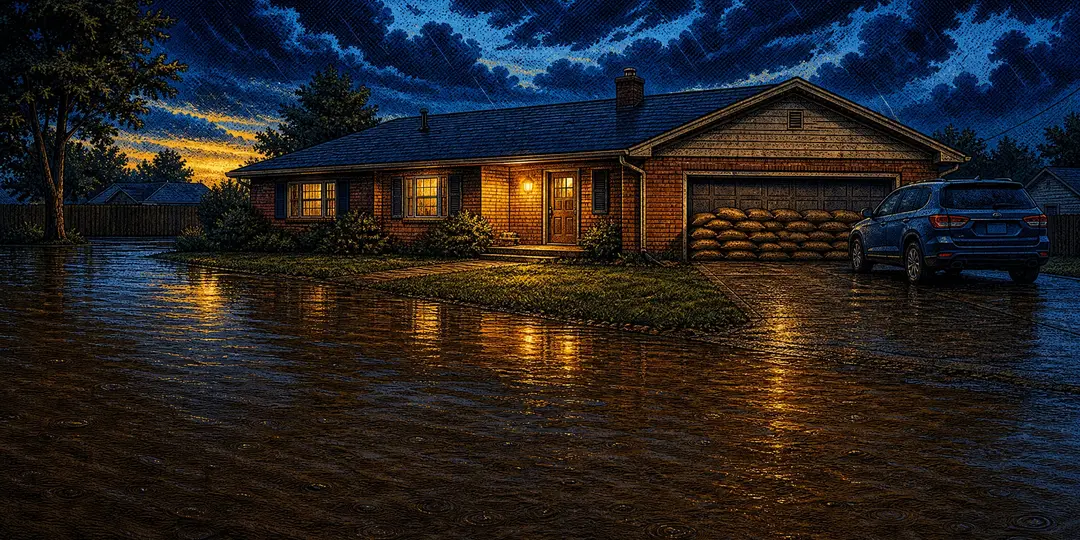
Flooding is the hazard most households leave off the list, and the one the maps are best at predicting. Most of it happens on streets that have never flooded before, which is why the map matters more than memory.
Rank by how often, not how bad
The mistake that sells most prepping gear is ranking by consequence. An earthquake is worse than an ice storm, so the earthquake gets the attention and the money, and the household goes into its fourth ice storm of the decade with no way to heat one room.
Rank by frequency instead. For each item on your list, ask: has this happened to this house, this street or this town in the last ten years? If yes, it is a frequent hazard and it comes first. If it has happened in your state in the last thirty years, it is plausible and it comes second. If it would need a chain of events that has not happened in living memory, it is remote: note it, do not shop for it. Grid-down, EMP and the difference between plausible and movie plot takes the most-marketed remote scenarios apart one at a time.
The useful thing about this ranking is that the frequent hazards almost always need the same five preparations: two weeks of water, two weeks of food, a way to make light and heat, a way to hear news, and a plan for where everyone meets. The plausible ones add one or two items each (window film and a wrench for earthquakes, a go-bag packed in August for hurricanes). The remote ones add nothing a normal household should buy.
"Prepare for the thing that happened last winter before the thing that happened in a movie. The ice storm has a schedule; the asteroid does not."
The one rule of risk assessment
Check the maps for disaster risk where you live
Memory is a poor hazard map. Floods in particular happen to people who were sure their street was dry, and wildfire risk has moved into suburbs that had none a generation ago. Four sources, all free, settle the regional list in a quarter of an hour.
FEMA’s National Risk Index (hazards.fema.gov/nri) scores every US county and census tract for eighteen hazards, from hurricane to heat wave, and ranks them against the rest of the country. Search your county, read the top five, and you have the regional half of your list without guessing.
The FEMA flood map (msc.fema.gov) shows whether your lot is in a mapped flood zone. Two things to know: the maps are old in many places and understate current risk, and “not in a zone” is not “will not flood.” More than a fifth of federal flood-insurance claims come from outside the high-risk zones. If the lot is low, near water or at the bottom of a slope, treat flooding as plausible whatever the map says.
Your state and county emergency management office. Every county has one, most have a hazard mitigation plan on their website listing exactly which hazards they plan for, and most run a free alert sign-up by text. Sign up; it is the fastest way to hear an evacuation order or a boil-water notice. A battery weather radio is the backup for when the phone network is down, which is covered in the first 30 days.
Earthquake and wildfire maps. The USGS seismic hazard map shows where the ground shakes, including the zones east of the Rockies that surprise people. For wildfire, most Western states publish a risk map by address, and your utility will say whether your line is in a planned-shut-off area.
Check them once a year. Maps get updated, houses get bought, and the risk at the new address is not the risk at the old one.
Wildfire smoke now reaches suburbs hundreds of miles from any fire. It is on the list for far more households than it was ten years ago, which is why the list is rewritten every year, not once.
The personal ones
Regional hazards get the attention, but the emergencies most likely to hit a particular household are personal, and they belong on the same list.
Loss of income. A job loss or a long illness is far more likely in any given year than any natural hazard, and it is the one preparedness problem no closet can solve. The emergency fund is the first prep explains why it comes before the second water jug.
Medication. If anyone in the house depends on a daily prescription, insulin, oxygen or a powered medical device, a four-day outage or a closed pharmacy is a medical emergency, not an inconvenience. Put it at the top of the list and read how to build a 90-day medication buffer legally.
Mobility and age. An older parent two hours away, a family member who cannot manage stairs, a baby, a large dog: each one changes the evacuation plan more than the hazard does. Preparedness for older parents covers the first of those.
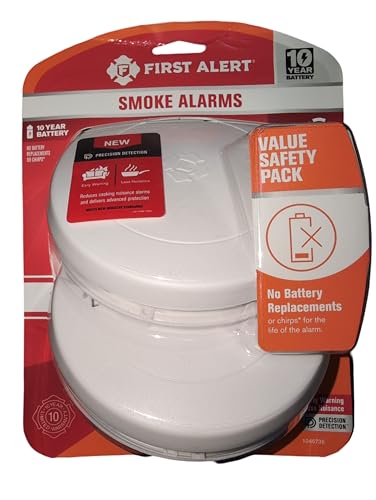
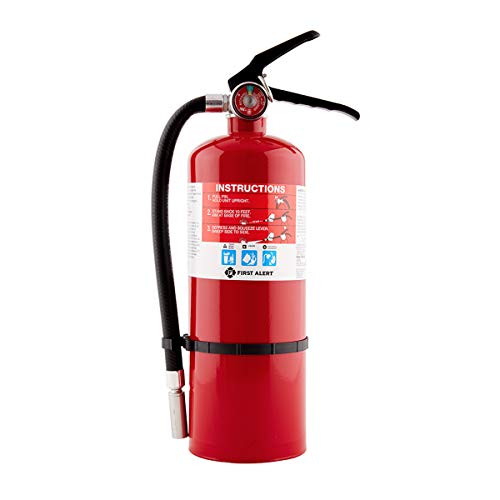
A house fire. Not regional, not rare, and the one emergency where the right preparation is three items: working smoke alarms, an extinguisher by the kitchen, and a drill so the kids know the way out and the meeting point.
Write the list
Take a sheet of paper. Four lines at the top: outage, road closure, boil-water notice, house fire. Two or three regional lines from the table. One or two personal lines. Beside each, one word: frequent, plausible or remote. Date it and put it on the inside of the pantry door.
That is your risk assessment. It is not a document, it is a filter: when a checklist on this site or anywhere else offers you an item, ask which line it serves. If it serves a frequent line, buy it in the order the first 30 days suggests. If it serves a plausible line, buy it after the frequent lines are covered. If it serves nothing on the sheet, it is somebody else’s emergency, however well it is marketed.
What the list changes
The list rarely changes what a household stores; the five basics are the same in every region. It changes the order, the quantities and a handful of extras:
Hurricane and wildfire households keep a packed go-bag and copies of their documents ready from the start of the season, because the hazard arrives with an evacuation order. Backing up your documents for an evacuation is the first job.
Cold-climate households put a way to heat one room above the stove on the shopping list, and store more water than the rule of thumb because frozen pipes are an outage within an outage.
Heat-climate households plan for where to go, not what to store: a cooled library, a relative’s house, a car with fuel. Older people and babies cannot wait out a 100 °F (38 °C) house.
Earthquake households strap the water heater and bookcases, keep shoes and a flashlight by every bed, and know where the gas shut-off is and which wrench turns it.
Flood-plausible households keep nothing irreplaceable in the basement and know the two routes out that do not cross low ground.
What emergencies should every household prepare for?
Nearly every US household shares three likely emergencies: a multi-day power outage, a storm that closes roads for a day or three, and a boil-water notice, which usually lasts two to five days. A house fire belongs on the same list. Preparing for those covers the first three days of most regional hazards, because they usually arrive as a power outage with something attached.
How do I find out which natural disasters affect my area?
Start with FEMA’s National Risk Index at hazards.fema.gov/nri, which scores every US county and census tract for eighteen hazards. Then check the FEMA flood map for your lot, your county emergency management office’s hazard plan and text alerts, and the USGS seismic hazard map or your state’s wildfire map. All are free and take about a quarter of an hour.
Should I prepare for the worst disaster or the most likely one?
Prepare for the most likely one first. Rank each hazard by how often it happens: if it has hit your house, street or town in the last ten years, it is frequent and comes first; if it has happened in your state in the last thirty years, it is plausible and comes second. Anything that needs events unseen in living memory is remote: note it, don’t shop for it.
Can a house outside a FEMA flood zone still flood?
Yes. FEMA flood maps are old in many places and understate current risk, and more than a fifth of federal flood-insurance claims come from outside the high-risk zones. If your lot is low, near water or at the bottom of a slope, treat flooding as plausible whatever the map says, and keep nothing irreplaceable in the basement.
Printable
The one-page household readiness checklist (PDF, 1 page). Forty lines covering the five basics; write your hazard list in the margin and check off what each line serves.
Picks that match the specs in this guide, from makers with a track record. We haven't tested them yet. As an Amazon Associate we earn from qualifying purchases, at no cost to you. Add what you need to my list, then send the whole list to your Amazon cart all at once. Prices and availability are accurate as of the date and time shown and are subject to change. The price and availability shown on Amazon.com at the time of purchase will apply.
First Alert
First Alert 10-Year photoelectric smoke alarm, 2 pack
10-year photoelectric smoke detector, no battery replacements, 2 pack.
No price from Amazon right now (checked Nov 24, 6:06 a.m. CT)
Shane is a disabled US Army veteran who served as an M1A1 tank crewman, then spent his career in technology and manufacturing supply chains, keeping parts moving through COVID. He, his wife Heather and their three kids have ridden out tornadoes, the February 2021 Texas freeze, the 2026 floods in Northeast Texas and power outages that lasted days. He started Prepping Expert to give families the plain, affordable, step-by-step version he wished he'd had.
How to prepare for grid-down: real outages last hours to days, occasionally weeks, and five preparations cover them all. What EMP is, and what to ignore.
What to do in a flood: move valuables up, never drive into water, and photograph everything before you clean. The order that keeps people safe and the claim intact.
Where to shelter in a tornado: the lowest floor, the smallest interior room, no windows, heads covered. Pick the spot, stock it and practice it before spring.
We use Google Analytics cookies to count visits and see which guides help. No ads, nothing sold. Cookie policy









 4
Comments
No comments yet. Read the comment guidelines before posting.