A gas grill on a back patio in late afternoon light with a lidded pot on the side burner, a spare propane tank beside it and a steel thermos and a camp stove on the patio table.
Cooking when the power's out: stove, grill, thermos and no-cook meals
How to cook without power using what you already own: which stove first, the thermos trick that halves the fuel, what to eat in what order, and the CO rule.
The stove most households forget they own is on the patio. Check the tank before the forecast turns.
When you need to cook without power, the stove you need is usually already in the house or on the patio. The order is: the gas range if it will light, the gas grill, then a canister camp stove, then a rocket or twig stove if you have one. Each of them works. The thing that turns an outage into a tragedy is not the lack of a stove; it is running the wrong one indoors.
This guide ranks the options by what most households already own, covers the carbon-monoxide rule that is not negotiable, shows the thermos method that saves most of the fuel, and sets the order in which to eat what is in the house.
How to cook without power: rank the stoves you own
Option
Who has it
Where it can run
Fuel to keep
Main catch
Gas range (natural gas or propane)
Close to 4 in 10 US homes
Indoors, as designed, with a window cracked
Nothing extra if gas service continues
Burners usually light with a match; most gas ovens do not work without power
Gas grill with side burner
Many houses with a yard
Outdoors only, away from doors and windows
A spare 20 lb tank
Weather, and the temptation to bring it into the garage
Canister camp stove
Campers; cheap to add ($25–60)
Outdoors only
Eight to twelve 8 oz canisters for two weeks
Weak below freezing
Two-burner propane camp stove
Campers ($50–120)
Outdoors only
1 lb cylinders, or an adapter hose to a 20 lb tank
Bulky; the small cylinders run out quickly
Rocket or twig stove
Few; $30–100 or homemade
Outdoors only
Dry sticks, a supply kept under cover
Smoke, soot, constant feeding
Charcoal grill
Many
Outdoors only, well away from the house
A bag of charcoal
Slow, and the worst CO source of all if used indoors
The gas range. If gas service continues, most gas cooktops with electronic ignition can be lit with a long match or a lighter held to the burner while the knob is turned on. Check your owner’s manual first; it will say whether yours can. Gas ovens are different: most use an electric igniter that also acts as a safety valve, so without power they will not light, and you should not try to force them. Never use the range or oven to heat the house.
The gas grill. A full 20 lb tank is commonly quoted at around 18–20 hours of cooking on a medium grill, which is weeks of meals. The side burner takes a pot; the grill itself does flatbreads, canned food in the can (lid off, label off) and anything you would cook on a pan. Keep a second tank and swap the empty one for a full one the week a storm is forecast. Gas storage rules are in fuel storage: how much, and how safely.
The canister stove. The cheapest serious addition to a kitchen that has none of the above. A small stove and a few canisters cost $40–80 and fit in a shoebox. Survival stoves compared goes through canister, alcohol, twig and solid-fuel stoves by type.
Carbon monoxide: outdoors, every time
Carbon monoxide has no smell and no color. It comes from anything that burns fuel, and a grill, a camp stove, a generator or a car in an attached garage can raise it to a lethal level in a closed space within minutes. The first symptoms (headache, dizziness, nausea, sleepiness) look like the flu or exhaustion, and people asleep may never feel them at all.
The February 2021 Texas winter storm is the clearest recent example. The state’s final count put 246 deaths on that storm, and carbon monoxide poisoning accounted for about 8% of them. The pattern is the one public-health agencies see in every big outage: generators, cars and grills run inside or too close to a cold house. Almost every one of those deaths was preventable.
The rules are short:
Grills, camp stoves, rocket stoves and generators run outdoors only. Not in the garage with the door up, not on a screened porch, not in the basement, not in an open doorway. Put the stove on the back step or a patio table, cook, and carry the pot in.
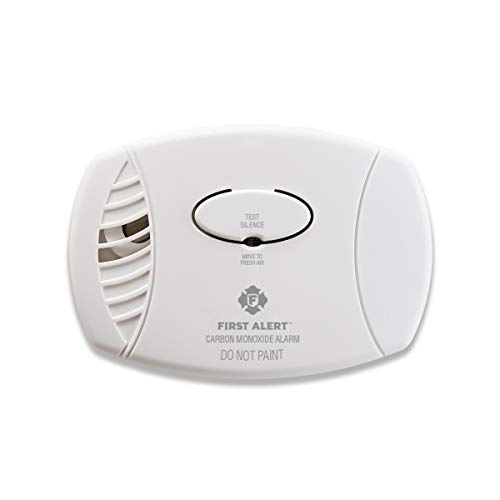
Have a battery-powered or battery-backup CO alarm on every level of the house and outside sleeping areas, which is what fire departments recommend. A plug-in alarm without a battery does nothing in an outage. Alarms cost $20–50; test them when you change the clocks.
If the alarm sounds or anyone feels ill, get everyone outside into fresh air and call 911. Do not go back in to find the cause.
"The grill is the best stove you own. It is also the one that kills people when it comes inside."
The carbon-monoxide rule, in one line
The thermos method: cook with heat you already made
Most of the fuel in a pot of rice is spent keeping it at a simmer, not getting it hot. Retained-heat cooking skips the simmer: bring food to a boil, then hold it hot in an insulated container while it finishes. It roughly halves the fuel for grains and makes a single canister go much further.
Oats. Put ½ cup rolled oats per person in a preheated wide-mouth vacuum flask, add boiling water to cover by an inch, close it and leave it 20–30 minutes, or overnight for steel-cut oats.
Rice. Bring rice and its normal water to a full boil in the pot for two minutes, then pour it all into a preheated flask, or lid the pot and wrap it in towels inside a cooler. White rice is usually done in 40–60 minutes. Brown rice takes longer and may need a second boil.
Pasta. Small shapes (macaroni, orzo, ditalini) work best: add to boiling water, boil two minutes, lid and wrap for 15–20 minutes. Long spaghetti is awkward in a flask; use the towel-wrapped pot.
Two cautions. Preheat the flask with boiling water first, or it steals the heat. And eat what you cook within a couple of hours: cooked rice and other starches left warm for a long time are a recognized food-poisoning risk. Hot food stays safe above 140°F (60°C); lukewarm food left all afternoon does not.
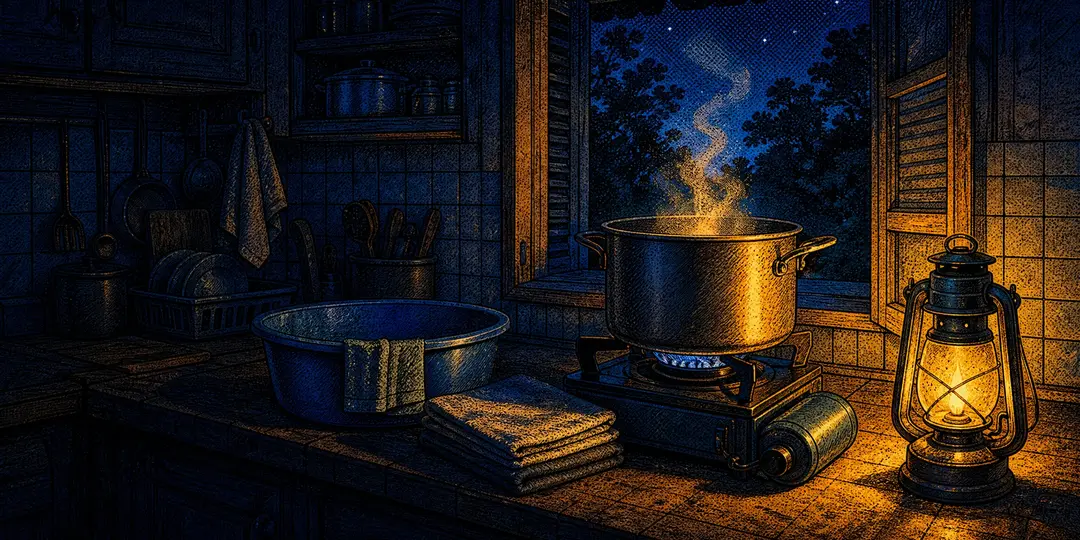
Retained heat in two forms: a wide-mouth flask for oats and a towel-wrapped pot in a cooler for rice. Both finish the cooking after the flame is off.
The first 48 hours: fridge, then freezer, then pantry
The order you eat in matters more than the stove. Perishable food is already paid for and has a clock on it; the pantry does not. USDA guidance is the reference:
A closed refrigerator keeps food safe for about 4 hours. Keep the door shut. After that, perishable food (meat, fish, dairy, cooked leftovers, cut fruit) that has been above 40°F (4°C) for more than two hours should be thrown out.
A full freezer holds its temperature for about 48 hours, a half-full one for about 24, if the door stays closed. Food that still has ice crystals or is at 40°F or below can be cooked or refrozen.
The pantry waits. Canned and dry food keeps for months. Do not open a can while there is meat thawing in the freezer.
So the plan for a forecast outage is: day one, eat the fridge (the milk, the leftovers, the open cheese) and cook the meat that is thawing first. Day two, cook from the freezer in the order it thaws, which is the grill’s moment. From day three, start the pantry. An appliance thermometer in the fridge and the freezer ($5–10 each) ends the arguments about whether something is still safe. When in doubt, throw it out.
When cooking is not worth it: the no-cook plan
Some days the weather, the hour or the toddler means no stove at all. Canned food is already cooked and can be eaten cold from the can. A sensible no-cook day for four is: cereal with powdered milk or shelf-stable milk, peanut butter and crackers or tortillas, canned tuna or chicken with mayonnaise from single-serve packets, canned fruit, beans and corn with salsa, and dried fruit and nuts as snacks.
Keep enough no-cook food for the first three days of the pantry so that a cold, dark first night needs nothing lit at all. Ten meals from a single shelf gives every meal a no-cook version and costs out the fuel for the ones that need the stove.
Before the next outage
Find out whether your gas cooktop lights with a match, and try it once.
Fill the spare grill tank and check the hose for cracks.
Buy a canister stove and eight canisters if you have no gas at all, and cook one dinner on it on the back step.
Put battery-backed CO alarms on every level and test them.
Put a fridge thermometer and a freezer thermometer in now, not during the outage.
Quick answers
Can you use a gas stove when the power is out?
Usually the cooktop, yes. If gas service continues, most gas cooktops with electronic ignition can be lit with a long match or lighter while the knob is turned on; check the owner’s manual first. Most gas ovens will not light without power, because the electric igniter is also a safety valve. Never use the range or oven to heat the house.
Is it safe to use a grill or camp stove indoors?
No. Grills, camp stoves, rocket stoves and generators produce carbon monoxide and must run outdoors only: not in the garage with the door up, not on a screened porch, not in an open doorway. Carbon monoxide has no smell and can reach a lethal level in a closed space within minutes. Keep battery-backed CO alarms on every level of the house.
How long is fridge food safe when the power goes out?
About 4 hours in a closed refrigerator, according to USDA guidance. After that, perishable food such as meat, fish, dairy and leftovers that has been above 40°F (4°C) for more than two hours should be thrown out. A full, closed freezer holds its temperature for about 48 hours and a half-full one for about 24.
How much camp stove fuel do I need for two weeks?
Eight to twelve 8 oz canisters cover two weeks of cooking on a canister camp stove, or keep a spare 20 lb propane tank for a gas grill, which is commonly quoted at around 18–20 hours of cooking. Retained-heat cooking in a thermos or a towel-wrapped pot roughly halves the fuel needed for rice, oats and pasta.
What can you eat in an outage without cooking?
Canned food is already cooked and can be eaten cold from the can. A no-cook day for a family can be cereal with shelf-stable milk, peanut butter on crackers or tortillas, canned tuna or chicken, canned fruit, beans and corn with salsa, and dried fruit and nuts. Keep three days of no-cook food so the first night needs nothing lit.
Read next
Ten meals from a single shelf. One-pot recipes for four from the two-week pantry, each with a no-cook version and a fuel budget.
Gear for this guide
Picks that match the specs in this guide, from makers with a track record. We haven't tested them yet. As an Amazon Associate we earn from qualifying purchases, at no cost to you. Add what you need to my list, then send the whole list to your Amazon cart all at once. Prices and availability are accurate as of the date and time shown and are subject to change. The price and availability shown on Amazon.com at the time of purchase will apply.
First Alert
First Alert CO400 battery CO alarm
Battery-operated carbon monoxide detector, single pack.
$21.99 on Amazon as of Nov 24, 6:06 a.m. CT
Good to know: Put one on every level and outside sleeping areas.
Shane is a disabled US Army veteran who served as an M1A1 tank crewman, then spent his career in technology and manufacturing supply chains, keeping parts moving through COVID. He, his wife Heather and their three kids have ridden out tornadoes, the February 2021 Texas freeze, the 2026 floods in Northeast Texas and power outages that lasted days. He started Prepping Expert to give families the plain, affordable, step-by-step version he wished he'd had.
Ten one-pot emergency pantry meals for four, made entirely from the two-week shelf, each with a no-cook fallback and a fuel cost you can count in canisters.







 4
Comments
No comments yet. Read the comment guidelines before posting.