Prepper Black Friday Deals
A kitchen table with a paper road map unfolded, three destinations circled in pen in different directions, a set of spare keys on a labeled ring and a notebook with phone numbers.
Bug out locations & retreats

Bug out locations for people without a second property

Bug out locations without a cabin: three places in three directions at three distances, with the people at the other end expecting you. How to set them up.

Shane RichardOct 16, 20267 min readGuide · Complete guide
Three circles on a map, three phone numbers in a notebook and one spare key. That is a bug out location plan for a family without a second property.

The bug out location in most preparedness writing is a cabin in the woods, stocked and waiting. Almost nobody has one, and the few who do often can’t reach it when it matters. A normal household’s real destinations are already in its phone: a sister two hours inland, a friend across the county, a chain hotel off the interstate, a campground you’ve been to before. The work is turning those into places that will actually take you, with an agreement, a key and a little stock, before you need them.

This is the pillar for where to go. Bug in vs bug out: the decision tree covers whether to go at all, and the answer there is usually no. When it is yes, “where?” is the question that turns a stressful departure into a drive.

The three-destination rule

Plan three places, chosen so that no single event closes all of them.

Three distances. One close (across town or the next town, 5 to 20 miles), for a house fire, a gas leak, a local flood or a neighborhood outage. One regional (about one to three hours away), for a hurricane, a wildfire or a long outage that covers your whole area. One far (a different region, or at least a different direction), for the rare event that takes out the regional one too.

Three directions. A hurricane evacuation runs inland, a wildfire runs away from the fire, a chemical release runs crosswind. If all three of your destinations are north, one event and one jammed highway can take them all out. Spread them so at least two lie in different directions from home.

Agreed in advance. This is the part most people skip, and it is the only part that matters. A destination is a place where someone has said, out loud, “yes, if you have to leave, come here.” Have that conversation over dinner, not on the phone at 2 a.m. while the fire is in the hills.

Destination typeGood forCostWatch out for
Relative or friend nearbyHouse fire, gas leak, local flood, outageFree; a contributionSame outage or flood zone as you
Relative or friend 1–3 hours awayHurricane, wildfire, long outageFree; fuel; a contributionSpace, pets, how long you can stay
Hotel or motel inlandHurricane, wildfire, any short evacuation$100–250 a night, more in a surgeFills early; pet policy; card limit
Campground you knowSummer evacuations, a family who camps$20–60 a nightWeather, smoke, booking, sanitation
Official shelterWhen nothing else worksFreeCrowded; pet rules vary; bring bedding and medication

Choosing your three bug out locations

Start with the people you already know. Write down every relative and close friend within about 300 miles, then cross off anyone in your flood zone, fire zone or hurricane surge zone, and anyone who couldn’t realistically take four people and a dog for a week. Most families end up with one or two names. That is enough for two of the three slots.

Fill the gap with a hotel. Pick a town one to three hours inland or upwind, outside your hazard zones, and note two or three hotels there, including one that takes pets if you have them. In a hurricane evacuation, rooms within easy reach of the coast go fast, so the rule is to book at the warning, not the order. A refundable booking you cancel costs nothing; a sold-out town costs you a night in the car.

The close destination can be a neighbor or a friend in the next town. It covers the most common reasons a family has to leave its house, which are house fires, gas leaks and burst pipes, not regional disasters.

What the destination needs from you

A host who agrees to take you is doing you a favor that may last days. Make it easy for them to say yes and to mean it.

A way in. If they might not be home, agree on how you get in: a key on your ring, a lockbox code, a neighbor who holds one. Test it once.

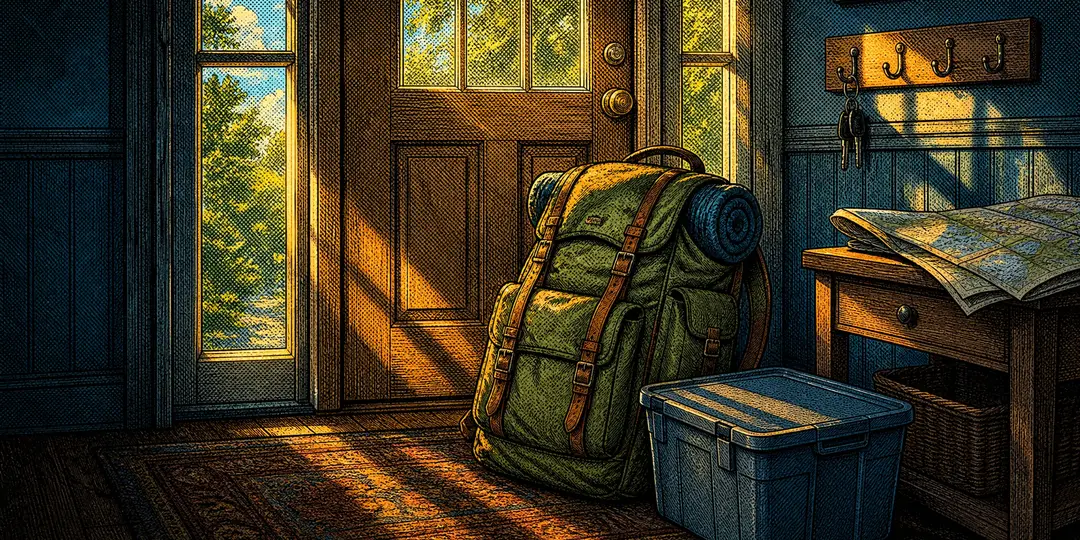
A bin of your own supplies. A labeled plastic tote in their garage or closet with what your household would need for three days there: water, shelf-stable food, a change of clothes each, a towel each, toiletries, phone chargers, pet food, a copy of your documents in a zip bag. It means you arrive without stripping their pantry. A retreat you can reach on one tank has the full contents and who checks it.

A contribution. Offer to pay for fuel and groceries while you’re there, and mean it. Bring something useful when you visit normally.

The return offer. The best arrangements are mutual: you are their destination if the hazard runs the other way. A sister inland and a sister on the coast are each other’s plan.

The details. How many people and animals, how long you’d expect to stay, any medication that needs a fridge, who has allergies. Write it on one sheet and give them a copy.

A labeled gray plastic storage tote on a shelf in someone else’s tidy garage, next to garden tools and paint cans, a dated index card taped to its lid.
Your bin on their shelf. It is the difference between arriving as a guest and arriving as a burden.

Why the cabin fantasy fails

The remote retreat sells well, and for most households it is the wrong answer, for reasons that have nothing to do with how good the cabin is.

Distance. A retreat that is far enough to be safe from your local disaster is usually several hours away, on the same jammed roads as everyone else, and possibly past the point your fuel will reach. A one-tank destination is a much better bet; see a retreat you can reach on one tank.

Fuel. In an evacuation, gas stations run dry or lose power. If the cabin needs more than the fuel you leave with, you are betting on finding pumps that work.

Maintenance. A place you visit twice a year has mice in the bedding, a well pump that won’t prime and stored food that expired last spring. Somebody has to keep it running, and it is usually the weekends you don’t have.

Everyone else’s plan. The rural county your cabin sits in is also the destination for many other people with the same idea, and its roads, stores and gas stations aren’t built for the surge.

Cost. A second property is a second mortgage, tax bill, insurance policy and roof. If you want a cabin because you’ll use it as a vacation home, buy one for that. Don’t buy one as a preparedness item.

"A spare room two hours inland, with your bin in the garage, beats a cabin you can’t reach." The rule, in one line

Getting there

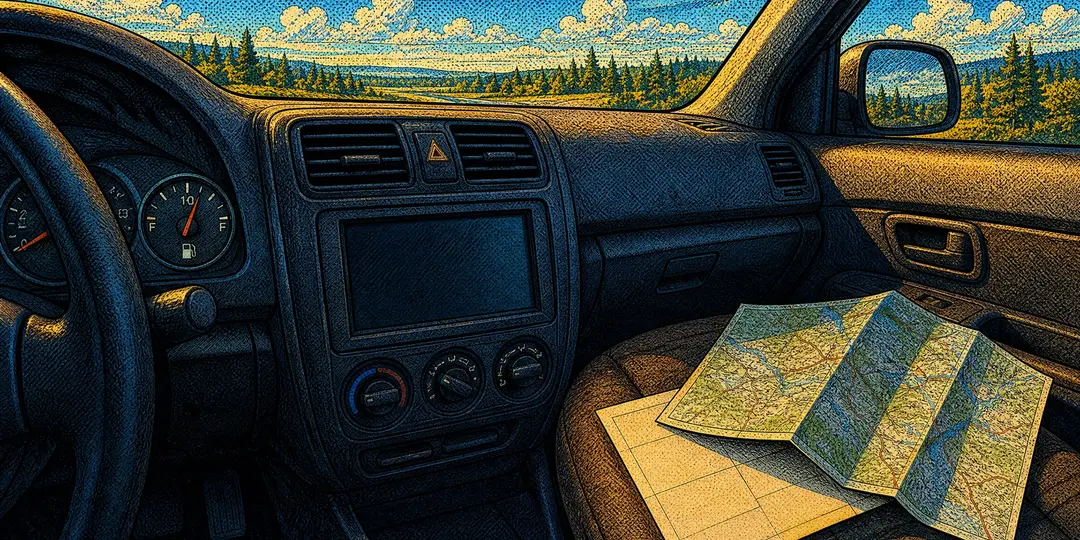
A destination is only useful if you can reach it. Keep the car above half a tank (the reasons are in the best bug out vehicle is the one you own), print two routes to each destination, and keep a paper map in the car, because phone navigation fails when networks are congested. Compass and map for people who rely on their phone covers enough map reading to use it. Pack one bag per person you can grab in five minutes; the 15 lb bug out bag is the list.

Write it down

One sheet of paper per household, kept with the trigger list and in each adult’s phone:

  • Close: name, address, phone, how you get in, the route.
  • Regional: name, address, phone, how you get in, two routes, where the bin is.
  • Far: name or hotel, address, phone, two routes, pet policy.
  • Meeting point if the family is separated, and who calls whom; the meeting-point conversation has the script.

Review it at least once a year, on one of your twice-yearly water checks. People move, hotels close and relatives get dogs that don’t get along with yours. Three places, agreed and written down, are worth more than any property you could buy for the purpose.

Quick answers

Do I need a cabin or second property to bug out?

No. Most households are better served by three agreed destinations: a relative or friend across town, someone about one to three hours away, and a hotel or contact in another direction. A remote cabin often fails on distance, fuel, upkeep and other people having the same idea, and it brings a second mortgage, tax bill, insurance policy and roof.

How far away should a bug out location be?

Plan three distances. One close, 5 to 20 miles away, for a house fire, gas leak or local flood; one regional, about one to three hours away, for a hurricane, wildfire or long outage; and one far, in a different region or direction. Spread them so at least two lie in different directions from home.

When should I book a hotel for a hurricane evacuation?

At the warning, not the order. Rooms within easy reach of the coast go fast once an evacuation begins, so book a refundable room one to three hours inland as soon as a warning is issued, and note one hotel that takes pets. Canceling a refundable booking costs nothing; a sold-out town can mean a night in the car.

What should I leave at a bug out location?

A labeled tote with three days of supplies for your household: water, shelf-stable food, a change of clothes and a towel each, toiletries, phone chargers, pet food and a copy of your documents in a zip bag. Agree on a way in with the host, such as a key or lockbox code, and offer to cover fuel and groceries while you stay.

Printable

Bugging out & mobility inventory checklist (PDF, 1 page). Space for three destinations, two routes each, and what is in each bin.

Gear for this guide

Picks that match the specs in this guide, from makers with a track record. We haven't tested them yet. As an Amazon Associate we earn from qualifying purchases, at no cost to you. Add what you need to my list, then send the whole list to your Amazon cart all at once. Prices and availability are accurate as of the date and time shown and are subject to change. The price and availability shown on Amazon.com at the time of purchase will apply.

  • Sterilite

    Sterilite 64 Qt Latching Box, Clear, 4 pack

    Clear 64-quart totes with latching lids: the size the home kit calls for, and one spare for a destination bin.

    $56.99 ($14.25 / count) on Amazon as of Nov 24, 7:06 a.m. CT

    Sold by Spreetail, not Amazon

    Good to know: Keep water jugs beside the tote, not in it; a full tote of water is too heavy to lift.

    View on Amazon
  • Rand McNally

    Rand McNally 2026 Road Atlas & National Park Guide

    A paper US road atlas to highlight two evacuation routes on and keep in the car.

    No price from Amazon right now (checked Nov 24, 7:06 a.m. CT)

    See buying options
  • Master Lock

    Master Lock 5400D Portable Key Lock Box

    A set-your-own-combination key box with a shackle, so you can get into a host's house if they're out.

    No price from Amazon right now (checked Nov 24, 7:06 a.m. CT)

    Good to know: Agree with the host on where it hangs, and test the code once.

    See buying options
Tagged

Share this with someone who’d use it

Some links on this page may be affiliate links; see our affiliate disclosure. Nothing here is medical or legal advice; check your local regulations.

Corrections

None yet.

Shane Richard

Written by

Shane Richard

Shane is a disabled US Army veteran who served as an M1A1 tank crewman, then spent his career in technology and manufacturing supply chains, keeping parts moving through COVID. He, his wife Heather and their three kids have ridden out tornadoes, the February 2021 Texas freeze, the 2026 floods in Northeast Texas and power outages that lasted days. He started Prepping Expert to give families the plain, affordable, step-by-step version he wished he'd had.

Comments

No comments yet. Read the comment guidelines before posting.

Popular guides

Topics

Tags

The weekly checklist

One preparedness job by email every Sunday. Five minutes.

The weekly checklist

One thing to do this week. Five minutes, every Sunday.

A single preparedness task by email, in the order we'd do them. No launches, no discounts, unsubscribe in one click.

Before you go

Take the one-page household checklist with you.

Forty lines. Check off what you have, circle what you don't, do one circled item a week. We'll email the PDF and the Sunday checklist; drop either any time.

Done

You're on the list.

First email lands Sunday. Check your spam folder once, then it'll behave.

We store your address and nothing else. Privacy