A hallway by a front door with a packed backpack and a plastic tote on the floor, car keys on a hook and a folded paper map on a side table, in daylight.
Bug in vs bug out: staying home is the right call most of the time. Four questions settle the rest: the order, the house, the route and where you’d go.
Shane RichardOct 16, 20269 min readGuide · Complete guide
Most of the time the bag stays by the door and the household stays home. The decision tree is for the few times it shouldn’t.
For a normal household, the answer to “bug in or bug out” is “stay” far more often than the phrase suggests. The house has your water, your food, your beds, your medication and your neighbors. The road has traffic, closed gas stations and everyone else who left at the same moment. Leaving is right in a short list of situations, and in most of them it is not really a judgment call, because someone official has already told you to go.
This guide turns that into four questions you can answer in a minute, in the dark, with a child asking what’s happening. Then it gives you the trigger list to write tonight, so that on the day you are following a decision rather than making one.
Bug in vs bug out: the tree in four questions
The whole tree fits on one sheet. Tape it where you keep the radio, next to the trigger list.
Work down the questions in order. The first one that gives a firm answer wins.
1. Is there an order? If officials have issued an evacuation order for your zone, you go, by the route they name, now. If they have issued a shelter-in-place order, you stay, close the windows and doors and listen for updates. Most counties also use an intermediate step, usually called an evacuation warning or a voluntary evacuation. Treat a warning as “pack the car and be ready,” and as “go now” if anyone in the house uses powered medical equipment, can’t manage stairs or a long wait in a car, or if you have large animals to move. The exact terms vary by state and county, so check the words your emergency management office uses.
2. Is the house safe to stay in? No order, but the house itself may have decided for you. Leave if you smell gas, if there is structural damage, if water is coming in and still rising, or if smoke is reaching the house. Leave, or at least move, if you can’t keep one room above about 50 °F (10 °C) in a cold outage or below dangerous heat in a summer one and someone in the house is old, very young or ill.
3. Is the route open? Leaving onto a closed or flooded road is worse than staying in a damaged house. If the way out crosses water over the road, downed power lines, active fire or a highway in a whiteout, the answer is to stay in the safest part of the house and call 911 if you are in danger. In a flood, that means going up to a higher floor, not into an attic you can’t get out of.
4. Where to? “Away” is not a destination. You need a named place with a person expecting you, a shelter you know is open, or a hotel you have already booked. If you don’t have one, the honest answer is that you are not ready to leave unless one of the first three questions forced it. Bug out locations for people without a second property covers how to set three of them up in advance.
If you get to the bottom with no order, a safe house and no reason to move, you stay. That is the usual result, and it is a good one.
When leaving is the right call
A handful of hazards are reliably worse if you stay. They share one feature: the danger is coming to the house, and the house can’t stop it.
Hazard
Usual right answer
Why
Wildfire
Leave early, at the warning
Roads clog and close fast; smoke cuts visibility; waiting for the order puts you in the traffic
Hurricane storm surge
Leave if you are in an evacuation zone
Water, not wind, causes most hurricane deaths, and surge is historically the biggest single killer; zones are drawn around it
Chemical or industrial release
Follow the order exactly
Sometimes evacuate, often shelter in place; the order depends on wind and distance
Riverine flood
Leave before the water reaches the road
Once it does, the route is the danger
Ice storm, blizzard
Stay
The roads are worse than a cold house with one heated room
Tornado warning
Stay; go to the lowest interior room
A car in town is one of the worst places to be
Earthquake
Stay unless the house is damaged
Roads and bridges may be broken; aftershocks
Multi-day power outage
Stay
The house is where the supplies are
Wildfire is the clearest case for leaving early. Fire agencies’ “ready, set, go” advice exists because the households that get into trouble are the ones that wait for flames or an order, then meet everyone else on a two-lane road with smoke across it. If your area has a wildfire warning and you have somewhere to go, go.
Storm surge is why hurricane evacuation zones exist. The National Hurricane Center’s line is “run from water, hide from wind”: if you are in a surge zone you leave, and if you are inland and well built you usually shelter. Many coastal counties publish zones by address; look yours up before the season, not during it.
Chemical releases are the exception that proves the rule. Officials often tell people near a release to shelter in place, because a closed house is safer than a cloud on the road. If they order an evacuation, go immediately and follow their route, which will be chosen with the wind in mind.
When leaving is what kills people
The other half of the table matters more, because it is where people make the fatal mistake of leaving.
Flood water on the road. The National Weather Service’s guidance is blunt: about 12 inches (30 cm) of moving water can float most cars, and 2 feet (60 cm) can carry off SUVs and pickups. More than half of flood drownings happen in vehicles. You cannot judge depth or current from the driver’s seat, and the road under the water may be gone. Turn around. If every route out crosses water, you are staying, and you go upstairs.
Snow and ice. Driving into a blizzard to get somewhere warmer is how households end up stranded in a car at night instead of cold in a house. A house with one closed-off room, blankets and a stove used outdoors is better than a car in a drift. If you are caught on the road anyway, stuck in snow: the hour-by-hour plan is the plan.
Driving to look. Not evacuation, but the same mistake: getting in the car to see how bad it is. Downed lines, flooded underpasses and blocked crews are the result.
"Leaving onto a flooded road is worse than staying in a damaged house. The route is part of the decision."
Question three, in one line
Default to staying, and make staying easy
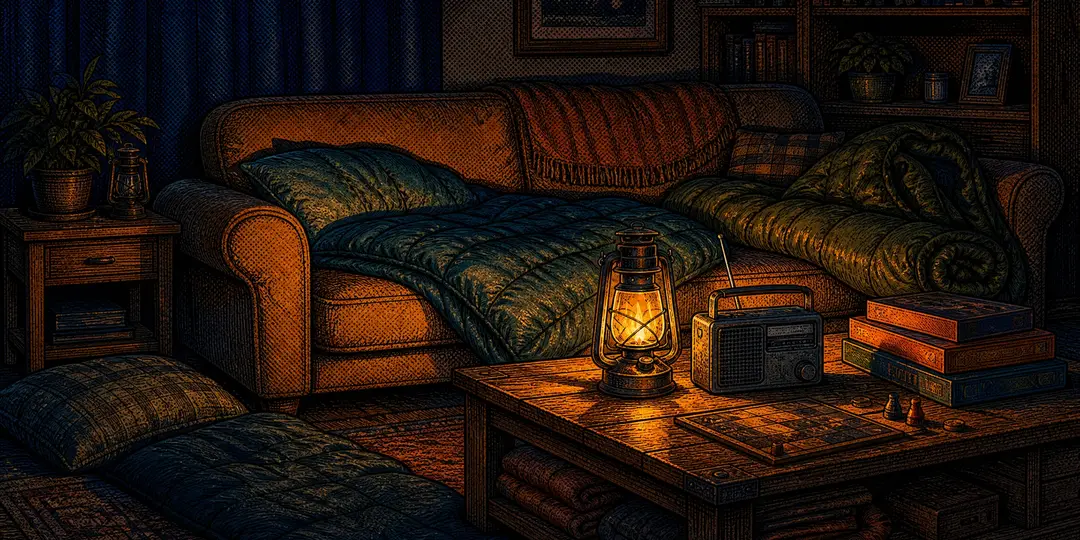
Because staying is the usual answer, most of your preparation should go into the house, not the car. Two weeks of water and food, a way to cook outdoors, light, a radio and a plan for heat or cooling turn a week-long outage into an inconvenience. Sheltering in place through a week-long outage walks through what that week is actually like, day by day, and the first 30 days is the order to buy it in.
Staying also means knowing when your stay is turning into a leave. Re-ask question two twice a day: a house that was fine on Monday may not be fine on Thursday if the heat is still off and the temperature is falling.
Write the trigger list tonight
The tree is for situations you haven’t imagined. The trigger list is for the ones you have. It is four to six lines, agreed on by the adults in the house, written on paper and taped next to the tree. Each line is a condition that ends the discussion. A typical list for a family in a wildfire-and-outage area:
We leave on any evacuation order for our zone, and on an evacuation warning if Grandma is staying with us.
We leave if we see smoke from the house or a fire is reported within 10 miles.
We leave if water is entering the ground floor and the road is still dry.
We leave if we smell gas and can’t shut it off, or the house is damaged.
We stay in an ice storm, a tornado warning or a power outage, unless the house drops below 50 °F and we can’t heat one room.
We go to Aunt Sarah’s, by Route 9, then Route 4; if that’s closed, the hotel in town on the second sheet.
Your list will differ; which emergencies actually apply to where you live tells you which hazards belong on it. Two things make it work. First, sign up for your county’s text alerts, because the trigger is usually an order you have to hear. Second, decide in advance who makes the call if the adults are apart; that is part of the meeting-point conversation.
What leaving looks like when it’s planned
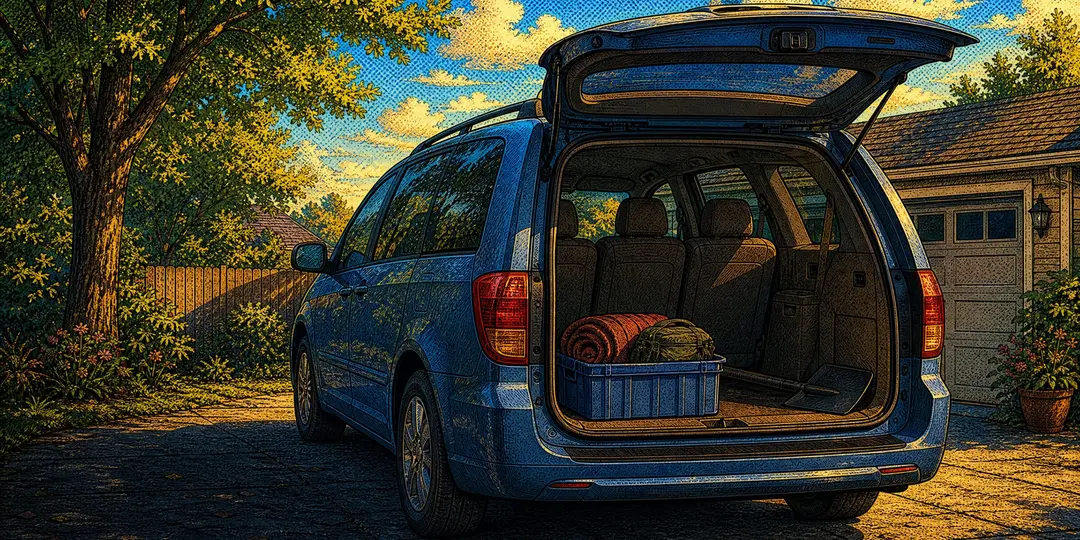
When the tree does say go, the difference between a calm departure and a chaotic one is about twenty minutes of preparation done months earlier. A car that is never below half a tank (the best bug out vehicle is the one you own explains why the family car is enough). One bag per person that can be picked up and carried, such as the 15 lb bug out bag. Copies of documents, medication, phone chargers, pet carriers. A destination that is expecting you, and two printed routes to it.
Most years you will use none of it, and the bag will sit by the door while you sit out another outage at home. That is the tree working, not failing.
Quick answers
Is it better to bug in or bug out?
For most households in most emergencies, bugging in (staying home) is better. The house has your water, food, beds, medication and neighbors, while the road has traffic, closed gas stations and everyone else who left. Leave when officials order an evacuation, when the house itself is unsafe, or early for hazards like wildfire and storm surge.
When should you evacuate for a wildfire?
Leave early, at the warning, if you have somewhere to go. Roads clog and close fast and smoke cuts visibility, so households that wait for flames or an official order end up in the traffic on a two-lane road. Fire agencies’ “ready, set, go” advice is built on leaving before the order, not after it.
Is it safe to drive through flood water?
No. The National Weather Service says about 12 inches (30 cm) of moving water can float most cars and 2 feet (60 cm) can carry off SUVs and pickups, and more than half of flood drownings happen in vehicles. You cannot judge depth or current from the driver’s seat. Turn around; if every route out crosses water, stay and go upstairs.
What is an evacuation trigger list?
An evacuation trigger list is four to six conditions, agreed on by the adults in the house and written down, that end the stay-or-go discussion: for example, any evacuation order for your zone, smoke seen from the house, or water entering the ground floor while the road is still dry. It also names where you would go and by which route.
Printable
Bugging out & mobility inventory checklist (PDF, 1 page). The car, the bag, the destination and a blank trigger list to fill in and tape next to the tree.
Shane is a disabled US Army veteran who served as an M1A1 tank crewman, then spent his career in technology and manufacturing supply chains, keeping parts moving through COVID. He, his wife Heather and their three kids have ridden out tornadoes, the February 2021 Texas freeze, the 2026 floods in Northeast Texas and power outages that lasted days. He started Prepping Expert to give families the plain, affordable, step-by-step version he wished he'd had.
Day by day through a week-long power outage at home: what runs out when, what the five basics do at each stage, and the two mistakes that make it dangerous.
The best bug out vehicle is the family car you already own, serviced and never below half a tank. The habits, checks and $100–200 kit that make it ready.





 4
Comments
No comments yet. Read the comment guidelines before posting.