


A portable power station is a lithium battery with an inverter and outlets, and choosing a power station comes down to four numbers on its spec sheet that decide whether it will do the job you are buying it for: watt-hours, continuous output watts, battery chemistry and recharge speed. Get those right and almost any reputable unit is fine. Get them wrong and the most expensive box on the shelf will still let the fridge go warm at 3 a.m.
This is a buying guide by category and specification. Model lineups in this market change every few months and prices move weekly, so instead of naming three models that will be discontinued by spring, it gives the spec to look for at three price points and what each tier actually runs. Check current prices before you buy, and see how we pick deals before trusting a “was” price. If you haven’t yet decided whether you need a power station, a generator or both, backup power for a normal house is the place to start.
How to choose a power station: four numbers
Watt-hours: how long
Capacity in watt-hours (Wh) is the size of the tank. A 1,000 Wh unit could, in theory, run a 100 W load for ten hours. In practice the inverter and the battery management take a cut, so plan on 80–90% of the rated figure when running household plugs, a little more from the USB and 12 V outlets. Every runtime figure in this guide assumes 85%.
Continuous watts: what it can start
The inverter rating is the most that can be drawn at once. It decides what the station can run, not for how long. A fridge draws 100–250 W running but needs a brief surge several times that to start its compressor; a sump pump needs more. Look for the continuous figure, not the “peak” or “surge” one, and give yourself headroom: a fridge wants at least 1,000 W continuous to start reliably, a sump pump or a microwave 1,500 W or more.
The inverter must be pure sine wave. All the reputable household units are, but cheap no-name units sometimes are not, and modified-sine power can upset CPAP machines, motors and some chargers.
Battery chemistry: LFP or NMC
- LFP (lithium iron phosphate, sometimes “LiFePO4”). Manufacturers typically rate it for 3,000 or more full cycles before it falls to 80% capacity. It is more thermally stable, which matters in something that sits in a closet. It is heavier for the same capacity.
- NMC (nickel manganese cobalt). Lighter, but typically rated for 500–1,000 cycles, and more sensitive to heat and abuse.
For a box that lives in the house for a decade, LFP is the right answer, and most of the market has moved to it. If an older NMC unit is on deep discount, the discount is the reason.
One caveat for LFP: most cells cannot safely be charged below freezing, 32 °F (0 °C). Some units have battery heaters; many simply refuse to charge in the cold. If yours will live in an unheated garage, read that line of the manual.
Recharge speed: how quickly it refills
Wall charging on current units ranges from about an hour for 0–80% to six hours or more on older or cheaper designs. Fast wall charging matters more than it sounds, because the realistic pattern in a long outage is a power station topped up during a generator’s morning run. Solar input is a separate rating, covered below.
The numbers that are mostly marketing
- “Peak” or “surge” watts quoted bigger than the continuous rating. Real, but only for a fraction of a second.
- “Lifting” or “boost” modes that run a kettle or heater at reduced voltage. Useful for heating elements; sold as if the unit had a bigger inverter. It does not.
- “Expandable to 10 kWh”, true only if you buy the extra batteries, which are priced like a second power station.
- “Charges a phone 80 times”: a phone battery is 12–20 Wh and charging loses some, so divide usable watt-hours by about 20 and you have the honest figure.
- Pass-through or “UPS” mode, meaning it powers devices while charging and switches over in an outage. Useful for a router or a CPAP. The switchover time varies by model, often in the tens of milliseconds, which some desktop computers notice. If you need it to behave like a true uninterruptible power supply, the spec sheet has to say so with a number.
- App control. Nice. Not a reason to pay more.
Three tiers, what they run and for how long
| Tier (typical price) | Capacity | Continuous output | Weight | Typical warranty |
|---|---|---|---|---|
| Small (~$300) | 250–500 Wh | 300–600 W | 7–14 lb (3–6 kg) | 2–5 years |
| Mid (~$800) | 1,000–1,500 Wh | 1,500–2,000 W | 25–40 lb (11–18 kg) | 3–5 years |
| Large (~$1,500) | 2,000–3,000 Wh | 2,400–3,600 W | 45–70 lb (20–32 kg), often on wheels | 5 years |
The ranges are representative of reputable LFP units in late 2026. Prices for the same capacity have been falling for several years, so if a tier’s spec costs noticeably less when you read this, that is the market, not necessarily a trap.
| What it runs (85% usable) | Small, ~300 Wh | Mid, ~1,000 Wh | Large, ~2,000 Wh |
|---|---|---|---|
| Phone charges (about 20 Wh each) | 12–13 | 40+ | 85+ |
| CPAP nights, humidifier off (about 300 Wh/night) | About 1 | About 3 | 5–6 |
| Full-size fridge (averages 50–80 W over a day) | Won’t start most | 10–16 hours | 20–34 hours |
| Router and two LED lamps (about 30 W) | 8 hours | About a day | 2+ days |
Your own figures will differ with the age of the fridge, the room temperature and the CPAP settings. A plug-in watt meter ($20–30) on the real appliance for a day replaces all of the guesswork.
The ~$300 pick: phones, lamps and a CPAP night
Look for 300–500 Wh of LFP, at least 300 W of pure sine output, a 12 V car socket output if your CPAP has a DC cord (DC is more efficient than running the CPAP’s own AC brick), USB-C ports of 60 W or more, and fast wall charging. This tier suits an apartment, a household that already owns a generator and wants quiet nights, or a single medical device. It will not run a full-size fridge.
The ~$800 pick: the fridge for a day
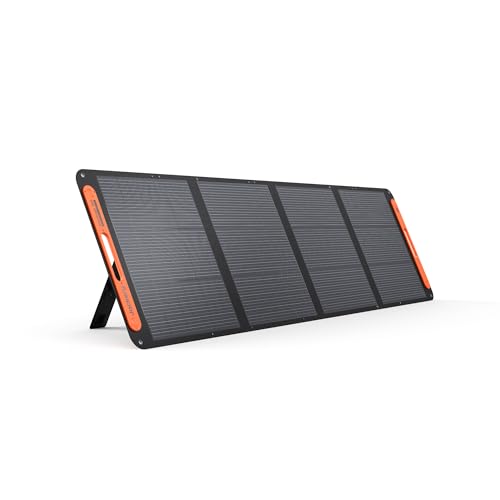
Look for 1,000–1,500 Wh of LFP, 1,500 W or more continuous so the fridge and a sump pump start reliably, wall charging to 80% in about an hour, and a solar input of at least 400 W. This is the tier most households should consider first if they are buying only one thing: it carries the fridge through an overnight outage, runs a CPAP for several nights, and recharges quickly from a generator’s morning run.
The ~$1,500 pick: the basics for two days
Look for 2,000–3,000 Wh of LFP, 2,400 W or more continuous, wheels and a handle, an expansion-battery port, and, if you want to run hardwired circuits, a manufacturer-supported transfer-switch or inlet option installed by an electrician. Above this size, the cost per watt-hour starts to approach a home battery system, and a generator becomes the cheaper route to multi-day power for most houses.



 4


Comments
No comments yet. Read the comment guidelines before posting.