A quiet supermarket parking lot at dusk, a family car with its trunk open beside a shopping cart of bags, the store’s lit entrance and a row of parked cars behind.
Everyday situational awareness is four small habits: know the exits, notice the normal, notice who is noticing you, and act when something feels off.
Shane RichardOct 16, 20268 min readGuide · Complete guide
Most of situational awareness happens in places like this: the thirty seconds between the store door and the car door.
Everyday situational awareness is not a state of alert. It is a handful of habits that take a second each, done at the moments that matter: walking into a building, walking across a parking lot, standing at an ATM, unlocking your front door. Practiced for a few weeks, they become automatic, and they mostly run in the background while you get on with your day.
The point of them is simple. Almost every piece of self-defense advice worth having comes down to noticing a problem early enough to walk away from it. Self-defense for ordinary people: avoidance first makes that case in full; this guide is the practical half of it.
Habit 1: know where the exits are
When you walk into a restaurant, movie theater, store or office you don’t know, take one look for the ways out. Not just the door you came in by, which is the one everyone will run for, but the second one: the fire exit by the restrooms, the kitchen door, the loading dock at the back of a store.
It takes two seconds and it pays off far more often in fires, gas leaks and crowd crushes than in anything to do with crime. Fire departments have long observed that people in a building fire tend to head for the entrance they used, even when a nearer exit is free.
Examples, in ordinary life:
Restaurant. Note the kitchen and the fire door. If you can, sit where you can see the entrance; it is more pleasant anyway.
Hotel. Count the doors from your room to the nearest stairwell, because in smoke you won’t see the signs. Travel security covers rooms in more detail.
Movie theater, stadium or concert. Find the nearest exit that isn’t the main one before the lights go down.
Your children. Make it a game: “Where are the two ways out of here?” Kids are good at it and it sticks.
Habit 2: learn the baseline of a place
Every place has a normal: the pace people walk at, the noise level, how they dress, where they look. A busy supermarket on a Saturday is loud and crowded and that is fine. A parking lot at 10 pm is quiet and that is fine too. The baseline is not about whether a place looks nice; it is about what is ordinary for that place at that time.
What you are looking for is the thing that doesn’t fit the baseline:
Someone not doing what everyone else is doing: standing in a parking lot not walking to a car, sitting in a vehicle with the engine running for a long time near an entrance.
A sudden change: a room going quiet, people moving away from one spot, everyone looking the same way.
Clothing that doesn’t fit the conditions, such as a heavy coat on a hot day, which is worth a second glance, not a conclusion.
Almost always, the thing that doesn’t fit has a dull explanation. You are not trying to diagnose it, only to notice it, so you can choose to give it some distance.
Two ways out: the front door everyone uses, and the fire exit by the kitchen. Finding the second one takes two seconds.
Habit 3: notice who is paying attention to you
Most people in public are absorbed in their own business. A person whose attention keeps coming back to you, who adjusts their pace or direction to match yours, or who appears again in a second place, stands out once you look up. The useful questions are plain:
Is anyone watching me who has no reason to?
Has the same person turned up in two places?
Is anyone closing distance in a way that doesn’t match where they seem to be going?
If the answer is yes, you don’t need to work out why. Change something: cross the road, go back into the store, walk toward other people, wait for the person to pass. If they adjust to match you again, that is information, and the next step is to go somewhere busy and call someone.
Phone-down moments
A phone takes your eyes, your ears (with earbuds) and one hand. That is fine on a train seat and a bad idea at the handful of moments where most opportunistic crime happens. Put the phone away for:
Leaving a store and walking to the car, until you are in and the doors are locked.
Using an ATM or getting money out of a bag.
The walk from the car to your front door, and the moment of unlocking it.
Getting into a rideshare or taxi; check the plate first.
Walking alone after dark, especially in a parking lot or garage.
Moment
The two-second habit
What it prevents
Entering a building
Find the second exit
Being stuck in a crush or smoke at the main door
Walking to the car
Phone away, keys out, look around once
Opportunistic theft; being surprised at the door
Getting in the car
Lock the doors, then sort the bags and phone
Someone opening the passenger door while you are distracted
Arriving home
Look at the street before you get out
Being followed in; missing a door left open
ATM
Choose one inside a building, cover the keypad
Skimmers, shoulder-surfing, being watched
Habit 4: trust the “something is off” feeling
Sometimes you won’t be able to say what is wrong. An elevator door opens and you don’t want to get in. A street feels different from usual. Someone is being friendly in a way that doesn’t sit right. That feeling is your brain matching patterns faster than you can name them, and it is worth acting on even when you can’t explain it.
Acting on it is cheap. Wait for the next elevator. Take the longer, busier route. End the conversation and walk away. Leave the store and come back later. None of it needs a reason or an apology, and the cost of being wrong is a minute of your time. The cost of overriding it out of politeness is the one that people regret.
"You don’t need a reason to wait for the next elevator. Acting early is cheap; being polite to a bad feeling isn’t."
Habit four, in one line
What not to do
Don’t live in a color code
Some training uses a color-coded scale of alertness, from relaxed and unaware through to ready to fight. As a teaching idea it is fine: it names the difference between being lost in a phone and paying attention. As a way of living, walking around in a permanent state of readiness, it is tiring, it makes you worse company, and it trains you to see threats in ordinary people. The aim is relaxed attention, the way a good driver watches the road without gripping the wheel.
Don’t go looking for confrontation
Noticing is for avoiding. If you notice someone behaving oddly, the response is distance, not a challenge. Don’t stare people down, don’t follow anyone to “see what they’re up to,” don’t intervene physically in a situation you could report instead. If something looks like a crime in progress or a person in danger, call 911 and give a clear description and location; that is the most useful thing almost anyone can do.
Don’t build it into fear for your children
Kids benefit from the same habits, taught as skills: find the exits, know who to ask for help (a uniformed employee, a parent with children), know your phone number by heart. They don’t benefit from a list of dangers. Teach the habit, not the threat.
Practicing everyday situational awareness for a month
Pick one habit a week. Week one, find the second exit everywhere you go. Week two, notice the baseline of three places you visit regularly. Week three, put your phone away for the five moments above. Week four, act on one “something’s off” feeling, however small, and notice that nothing bad happens when you do. By the end of the month you won’t be thinking about it, which is the point.
Situational awareness is noticing what is happening around you early enough to walk away from a problem. In everyday life it comes down to four habits: know where the exits are, learn what is normal for a place, notice who is paying attention to you, and act on the feeling that something is off. It is relaxed attention, not a permanent state of alert.
How long does it take to build situational awareness habits?
About a month, practicing one habit a week. Week one, find the second exit everywhere you go. Week two, notice the baseline of three places you visit often. Week three, put the phone away at the risky moments. Week four, act on one small “something’s off” feeling. After that the habits mostly run in the background.
When should you put your phone away in public?
Put the phone away at five moments: walking from a store to the car until the doors are locked, using an ATM, walking from the car to your front door and unlocking it, getting into a rideshare or taxi after checking the plate, and walking alone after dark. Those transitions are where most opportunistic crime happens.
What should you do if you think someone is following you?
Change something: cross the road, go back into a store, walk toward other people or wait for the person to pass. You don’t need to work out why. If they adjust to match you again, go somewhere busy and call someone. If it looks like a crime in progress, call 911 with a clear description and location rather than confronting anyone.
Shane is a disabled US Army veteran who served as an M1A1 tank crewman, then spent his career in technology and manufacturing supply chains, keeping parts moving through COVID. He, his wife Heather and their three kids have ridden out tornadoes, the February 2021 Texas freeze, the 2026 floods in Northeast Texas and power outages that lasted days. He started Prepping Expert to give families the plain, affordable, step-by-step version he wished he'd had.
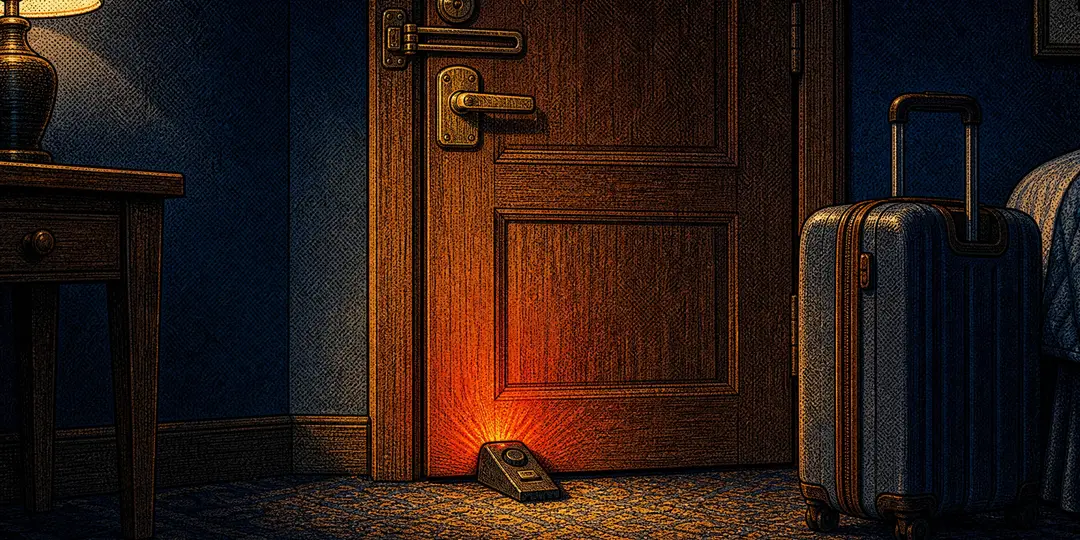
Travel safety tips that cover most real trouble: which hotel room to ask for, a $10–20 door wedge alarm, a five-minute rental check and a rideshare plate match.
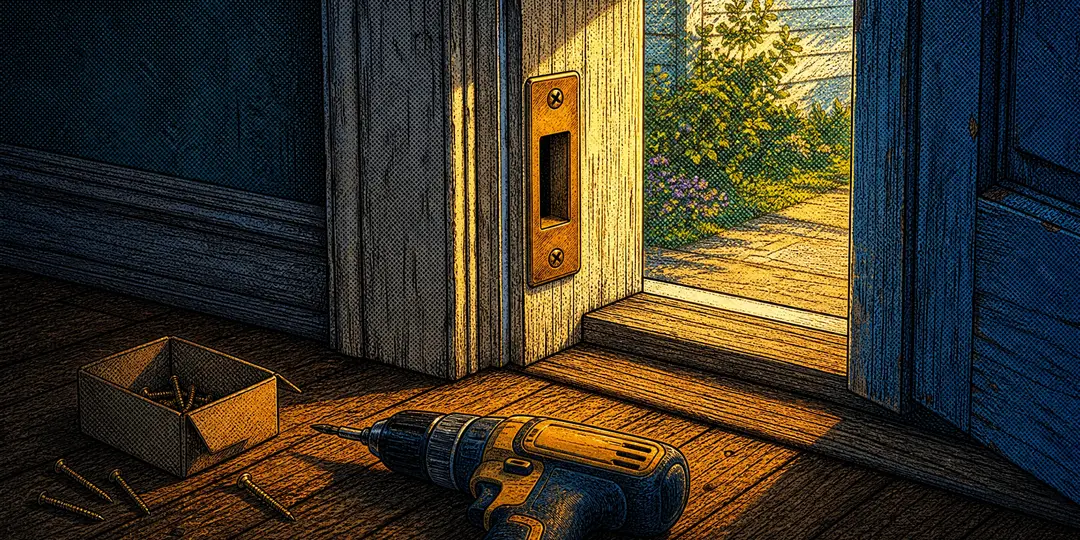
A budget home security checklist: about $200 of screws, bars and lights for how most break-ins actually happen, with prices, install notes and a renter version.
How to deter burglars without a weapon: motion lights at the doors, a dog that barks and a street that notices, with rough costs and the order to do it.
We use Google Analytics cookies to count visits and see which guides help. No ads, nothing sold. Cookie policy





 4

Comments
No comments yet. Read the comment guidelines before posting.