A living room floor at dusk with three sleeping bags laid on foam pads in a row, a smaller child’s bag at one end, folded blankets at the foot and a lantern on a side table, curtains drawn.
Sleeping bag temperature ratings explained: comfort, limit and extreme, why the pad matters as much as the bag, and how a family sleeps warm in a cold house.
Shane RichardOct 16, 20268 min readGuide · Complete guide
The cold-house setup: one room, bags on pads, the door closed and everyone in it.
Look for the comfort rating, buy bags whose comfort rating is around 20 °F (-7 °C) or lower for a winter outage, and put a pad under each one. Those three decisions do almost all the work. The rest of this guide explains what sleeping bag temperature ratings mean, why the pad matters as much as the bag, and how to set up a household to sleep warm in one room when the heat is off.
The scenario we have in mind is not a mountain. It is a house in an ice storm with no power for three days, indoor temperatures falling into the 40s °F (around 5–9 °C) and lower in an older or draftier house, and a family that needs to sleep.
Sleeping bag temperature ratings: the three numbers
Most reputable bags are rated to a European standard, first EN 13537 and now ISO 23537, which tests bags on a heated manikin in a cold chamber and turns the results into temperatures. The bag is tested on an insulating mat, with the “sleeper” wearing a base layer and a hat, so the ratings already assume you are doing those things. The label gives up to three numbers:
Rating
What it means
Use it for
Comfort
The temperature at which a standard adult woman, lying relaxed, sleeps comfortably
The number to buy by. Most people, of any sex, should use this.
Limit (lower limit)
The temperature at which a standard adult man, curled up, sleeps about eight hours without waking from cold
A warm sleeper’s number. Expect a cold, curled-up night here.
Extreme (risk)
The temperature at which a standard woman can survive about six hours with a risk of hypothermia
Ignore it for buying. It is a survival figure, not a sleep figure.
The comfort and limit figures are usually about 5–11 °F (3–6 °C) apart. Many brands put the limit rating in the bag’s name (“the 20”), which makes the bag sound warmer than it will feel to most people. Check which number the name refers to.
Why women’s and men’s numbers differ
The standard uses a woman for the comfort rating and a man for the limit rating because, on average, women sleep colder than men of the same size. Women-specific bags usually add insulation at the feet and torso and come in shorter lengths, so a woman’s bag and a men’s or unisex bag with the same name often have different comfort ratings. Read the comfort number, not the name. Individual variation is large: older people, people who are tired, hungry or unwell, and people on some medications often sleep colder than the label suggests.
Bags without a standard rating
Cheaper and children’s bags often carry a single temperature with no standard behind it, and those numbers tend to be optimistic. Treat an unrated “30 °F” bag as a comfortable bag at perhaps 45–50 °F (7–10 °C) and add layers or blankets below that.
The pad matters as much as the bag
A sleeping bag insulates by trapping air in its fill. Your body weight crushes the fill underneath you, so the bottom of the bag does almost nothing, and the floor pulls heat out of you by conduction. On a cold floor, a bag rated 20 °F can sleep like a bag rated 40 °F.
Pads are rated by R-value, a measure of resistance to heat flow: higher is warmer. Since 2020 most major makers rate pads to a common test standard, ASTM F3340, so R-values from different brands can be compared. As a rough guide for a household:
R 2–3: summer and a carpeted floor in a heated house
R 4–5: a cold house on a carpeted floor
R 5 and above: concrete, tile or a garage floor in winter
Two pads stack: their R-values add. A closed-cell foam pad under an inflatable or self-inflating pad is a cheap way to get a high total, and the foam pad can’t puncture. At home, bulky is fine. How pad types compare on a cold floor, and what they cost, is covered in sleeping pads for a cold floor.
The top of the bag does the insulating. Underneath, the fill is crushed flat, which is why the pad does the work below you.
Down or synthetic for a house
Synthetic
Down
Warmth when damp
Keeps much of its warmth
Clumps and loses most of its warmth unless treated
Packed size and weight
Bulkier and heavier
Much smaller and lighter for the same warmth
Lifespan
Loses loft over years of compression
Lasts many years if kept dry and stored loose
Washing
Easy, in a large front-loader
Possible, but fiddly and slow to dry
Price, comfort ~20 °F (-7 °C)
Roughly $60–180
Roughly $200–450
For a house, synthetic is the sensible default. A cold house during an outage often gets damp, with condensation on windows and walls, breath in a closed room and wet boots by the door. Synthetic bags handle that, cost less, wash easily and don’t mind being stored in a closet. Down makes sense if the same bags will be carried camping or in a bug out bag, where weight and pack size matter. Check current prices; bands move with the season.
For home use, choose a rectangular bag rather than a close-fitting mummy shape. Rectangular bags are easier for children and older people to get in and out of, they can often be zipped together, and they open flat as a quilt on milder nights.
The cold-house plan: one room, bags rated 20 °F, pads under them
A household that loses heat in winter should not try to keep the whole house warm. Pick one room and make it the bedroom for everyone.
Choose an interior room with the fewest outside walls and windows, on the ground floor if you have one, away from the garage.
Close it up. Shut the door, hang a blanket over it if it drafts, close curtains and cover windows at night.
Get everyone off the floor’s cold. A pad under every bag, rugs or blankets under the pads on hard floors.
Bags with a comfort rating around 20 °F (-7 °C) or better. That gives margin as the house cools over several days. A blanket over the top adds a few degrees.
Dress for bed. A dry base layer, socks and a hat. Change out of damp clothes before getting in. Eat something before sleeping; digestion produces heat.
Never heat the room with a grill, camp stove, generator or anything that burns fuel unless it is designed and rated for indoor use, and never without a working carbon monoxide alarm. Carbon monoxide kills people every winter in exactly this situation. Generators belong outside, well away from doors and windows.
Babies. Do not put an infant in a sleeping bag designed for adults or older children, or under loose blankets. Safe-sleep guidance from pediatricians is a firm, flat surface with no loose bedding; in a cold house, dress the baby in warm layers and a wearable blanket (“sleep sack”) of the right size, and keep them in the warm room. Ask your pediatrician for cold-weather advice before the season.
Children. A child in an adult bag has extra space to heat, so they sleep colder; a child-sized bag, or an adult bag with the spare length folded under or tied off, works better. Children may not tell you they are cold; check hands and feet at night.
Older people. Older adults lose heat faster and may not feel it, and some medications affect temperature regulation. Give them the warmest bag in the house, the best pad and the spot farthest from the outside wall. A rectangular bag is easier to get out of at night. If someone becomes confused, unusually sleepy, or shivers uncontrollably, or stops shivering while still cold, treat it as possible hypothermia and get medical help.
What to buy, by household size
A family of four preparing for a winter outage needs four bags with a comfort rating near 20 °F, four pads with a combined R-value of at least 4, and the blankets they already own. In synthetic, expect $300–700 for bags and $80–250 for pads, depending on quality. Spread it over a season if you need to: pads first, because a cheap pad under an old bag beats a new bag on a bare floor.
Quick answers
Which sleeping bag temperature rating should I go by?
Go by the comfort rating. On bags tested to the EN 13537 or ISO 23537 standard, comfort is the temperature at which a standard adult woman sleeps comfortably lying relaxed. The limit rating is a cold, curled-up night for a warm sleeper, and the extreme rating is a survival figure. Many brand names use the limit number, so check which one.
What sleeping bag rating do I need for a winter power outage?
For a cold house during a winter power outage, choose bags with a comfort rating around 20 °F (-7 °C) or lower, with a pad under each one. That leaves margin as indoor temperatures fall over several days. A blanket over the top adds a few degrees, and a dry base layer, socks and a hat help more than most people expect.
What R-value sleeping pad do I need on a cold floor?
An R-value of 4–5 suits a carpeted floor in a cold house; concrete, tile or a garage floor in winter needs R 5 or more. R-values of stacked pads add together, so a closed-cell foam pad under an inflatable or self-inflating pad is a cheap way to reach a high total. A bag on a bare floor sleeps far colder than its rating.
Is a down or synthetic sleeping bag better for home emergencies?
Synthetic is the sensible default for a house. A cold house during an outage often gets damp, and synthetic fill keeps much of its warmth when damp, washes easily and costs less: roughly $60–180 for a comfort rating near 20 °F, against $200–450 for down. Down makes sense if the same bags will be carried camping or in a bug out bag.
Picks that match the specs in this guide, from makers with a track record. We haven't tested them yet. As an Amazon Associate we earn from qualifying purchases, at no cost to you. Add what you need to my list, then send the whole list to your Amazon cart all at once. Prices and availability are accurate as of the date and time shown and are subject to change. The price and availability shown on Amazon.com at the time of purchase will apply.
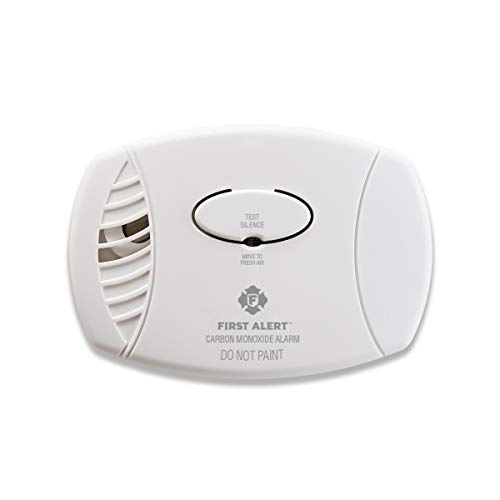
First Alert
First Alert CO400 battery CO alarm
Battery-operated carbon monoxide detector, single pack.
$21.99 on Amazon as of Nov 24, 7:06 a.m. CT
Good to know: Put one on every level and outside sleeping areas.
Shane is a disabled US Army veteran who served as an M1A1 tank crewman, then spent his career in technology and manufacturing supply chains, keeping parts moving through COVID. He, his wife Heather and their three kids have ridden out tornadoes, the February 2021 Texas freeze, the 2026 floods in Northeast Texas and power outages that lasted days. He started Prepping Expert to give families the plain, affordable, step-by-step version he wished he'd had.
Four kinds of emergency cooking stove compared on boil time, fuel cost, wind and simmer: which one a household should own, and why the rest are for hobbyists.
Emergency fuel storage for two weeks: how much propane, gasoline and stove fuel a household needs, how long each keeps, and where the fire code lets it live.
We use Google Analytics cookies to count visits and see which guides help. No ads, nothing sold. Cookie policy







 4



Comments
No comments yet. Read the comment guidelines before posting.