An 8×10 ft (2.4×3 m) tarp, about 50 ft (15 m) of cord and six stakes make five different shelters, each suited to a different kind of weather. If you are learning how to pitch a tarp, start with the A-frame: it sheds rain from both sides and goes up in ten minutes between two trees, two fence posts or a car and a tree. The other four are variations for wind, shade and cold.
A tarp earns its place in a household kit less for camping than for ordinary jobs: covering a hole in the roof after a storm, shading a yard in a power outage during a heat wave, and making a dry space beside the car on a long wait. This guide covers the sizes and materials, the cord, stakes and knots, and the five pitches.
Sizes and materials
| Size | Covers | Best household use |
|---|
| 6×8 ft (1.8×2.4 m) | One person, or a car door | Car kit, get-home bag |
| 8×10 ft (2.4×3 m) | Two people, or a picnic table | The general-purpose tarp; learn on this |
| 10×12 ft (3×3.7 m) | A family, or a small roof patch | Yard shade, a window or a section of roof |
| 12×16 ft and up (3.7×4.9 m) | A large roof patch or a carport | Storm damage; keep one in the garage |
Materials come in three grades:
- Polyethylene (the blue, green or brown hardware-store tarp): cheap, $10–40, heavy, noisy in wind, and it breaks down in sunlight within a season or two. Perfect for a roof patch or the garage. Thicker “heavy duty” versions last longer.
- Coated nylon or polyester (camping tarps): $40–150, light, quiet, packs small, with sewn tie-out points that don’t tear out. The one to carry.
- Canvas: heavy, durable, breathes, and doesn’t melt near a fire. Mostly for people who already camp with it.
Tarps and emergency shelters under $80 compares the options on price and durability.
How to pitch a tarp: the cord, stakes and knots
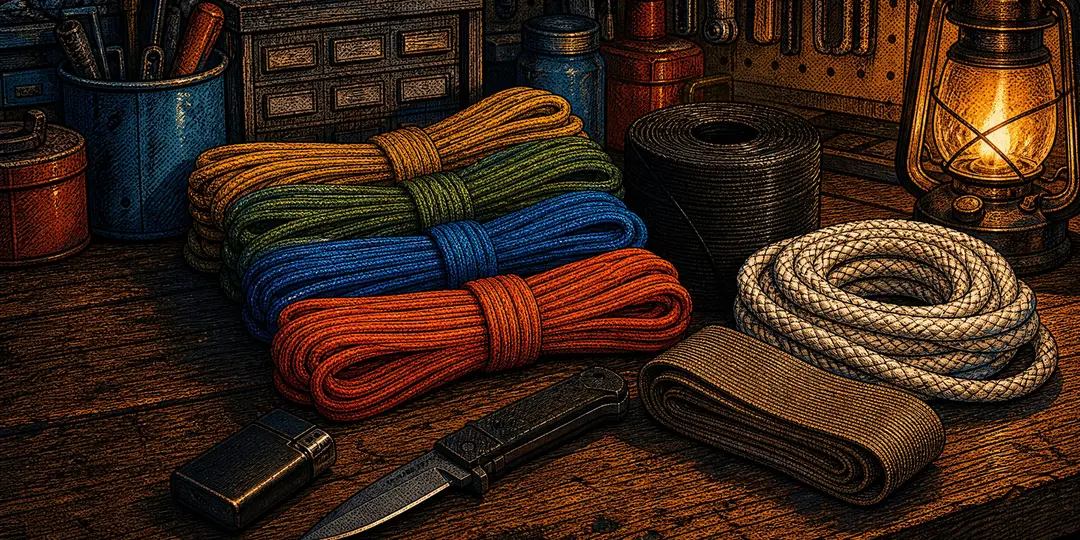
- Ridgeline: 30–50 ft (9–15 m) of paracord or bank line. It runs between two anchors and the tarp hangs over or under it.
- Guy lines: four 10 ft (3 m) lengths, tied permanently to the corners. Add two more for the side tie-outs if your tarp has them.
- Stakes: six to eight, 6–9 inches (15–23 cm) long. Aluminum Y-stakes hold in most ground; long steel nails or tent stakes work in hard ground. Sticks work if you have a knife and time.
- Two short poles if there may be no trees: trekking poles, a mop handle, or two lengths of PVC pipe.
Three knots cover every pitch here: a bowline to tie the ridgeline to the first tree, a trucker’s hitch to tension it at the second, and a taut-line hitch on each guy line so you can tighten it as the tarp stretches in rain. Six knots that cover 95% of what you’ll ever tie teaches them, and the trucker’s hitch, taught properly gets its own page because the ridgeline depends on it. Which cord to buy is in paracord, bank line and the cordage you actually need.
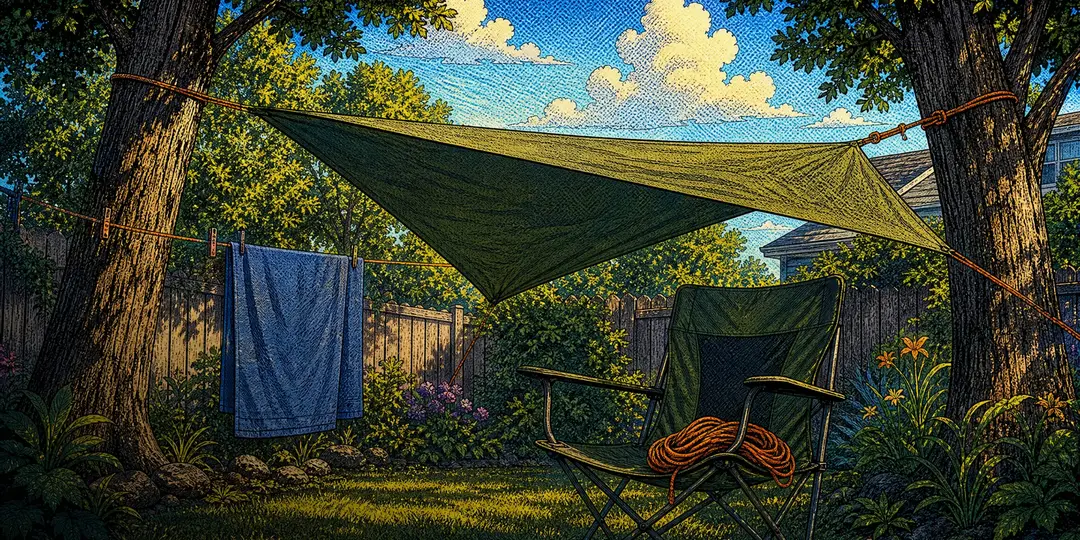
1. The A-frame: rain from above
The default pitch. It sheds rain on both sides and gives the most covered space for the size.
- Tie the ridgeline to the first tree at about chest height with a bowline.
- Run it to the second tree and tension it with a trucker’s hitch. It should be tight enough to pluck.
- Drape the tarp over the ridgeline, centered, so equal amounts hang each side.
- Stake out the four corners, pulling each guy line out at about 45 degrees from the corner.
- Tighten the guy lines with their taut-line hitches until the panels are smooth.
Use it for: steady rain with light wind; a dry space over a table or a car-side cooking area. Weak in: wind blowing through the open ends.
2. The lean-to: shade and one-sided wind
One long edge is tied high, the other staked low, like a sloped roof with one open side.
- Set the ridgeline as for the A-frame, a little higher, around head height.
- Tie one long edge of the tarp along the ridgeline (corners and the middle tie-out if there is one).
- Pull the opposite edge back and down and stake it, with the back of the shelter facing the wind.
Use it for: shade in a heat wave, a windbreak, the side of a car (tie the high edge to the roof rack or the open doors). Weak in: rain that changes direction.
3. The plow point: small, fast, one support
A quick one-person shelter that needs only one high point.
- Stake one corner firmly to the ground, pointing into the wind.
- Lift the opposite corner and tie it to a tree or the top of a pole at about head height.
- Stake the two remaining corners out and back, forming a triangular cone with the open end away from the wind.
Use it for: strong wind from one direction, one person, nowhere to run a ridgeline. Weak in: space; it fits one adult and a bag.
4. The diamond: light cover, quick
The tarp is turned on its diagonal so two corners sit on the ridgeline and two hang at the sides.
- Set a ridgeline between two trees at about chest height.
- Hang the tarp so the ridgeline runs from one corner to the opposite corner.
- Stake the two side corners out and down.
Use it for: quick cover over a hammock, a chair or a pile of gear; light rain. Weak in: coverage; there is less dry ground underneath than with an A-frame.
5. The closed-end A-frame: wind and cold
An A-frame with one end folded down to make a wall, so the wind can’t blow through.
- Set the ridgeline lower at the windward end than at the other.
- Hang the tarp so about 2 ft (60 cm) more extends past the ridgeline at the low end.
- Fold that extra material down and in, and stake its corners together to close the end.
- Stake out the remaining corners as for an A-frame.
Use it for: cold nights and wind-driven rain from one direction. Weak in: a wind that swings around; re-pitch it if that happens.
The household jobs: roof, shade and car
A damaged roof. After a storm, a tarp over a hole stops the water that does most of the damage. Photograph the damage for your insurer first. Stay off the roof in wind, rain or the dark, and if the pitch is steep or you aren’t comfortable on a ladder, call a roofer; many will tarp a roof for a fee. The working method is to run the tarp over the ridge so water can’t get under the top edge, and to fix it with wooden battens screwed through the tarp into the roof, not nails through bare plastic. After federally declared disasters the US Army Corps of Engineers sometimes runs a free temporary roofing program; watch for local announcements.
Shade. A lean-to on the sunny side of the house, or an A-frame over a picnic table, makes a cooler place to sit in a heat-wave outage. Leave a gap at the top for hot air to escape.
Beside the car. A lean-to tied to the roof rack or across two open doors gives a dry space for a long roadside wait or a night at an evacuation stop. It belongs in the car kit with its cord already attached.
Practice each pitch once in the yard on a dry day, timing yourself. The first A-frame takes half an hour; the fifth takes ten minutes. That difference is the whole value of practicing before you need it.
Quick answers
What size tarp is best for an emergency shelter?
An 8×10 ft (2.4×3 m) tarp is the most useful single size: it shelters two people or a picnic table and is the one to learn on. A 6×8 ft tarp suits a car kit or get-home bag, a 10×12 ft covers a family or a small roof patch, and a 12×16 ft or larger is for storm damage to a roof or carport.
What is the best tarp shelter for rain?
The A-frame is the best tarp pitch for steady rain with light wind, because it sheds water on both sides and gives the most covered space for the size. Its weak point is wind blowing through the open ends. For wind-driven rain from one direction, fold the windward end down into a wall to make a closed-end A-frame.
How much cord do you need to pitch a tarp?
About 30–50 ft (9–15 m) of paracord or bank line for the ridgeline, plus four 10 ft (3 m) guy lines tied permanently to the corners, and six to eight stakes 6–9 inches long. Three knots handle every pitch: a bowline at the first tree, a trucker’s hitch to tension the ridgeline, and a taut-line hitch on each guy line.
How do you put a tarp on a damaged roof?
Photograph the damage for your insurer first, and stay off the roof in wind, rain or the dark; if the pitch is steep or you aren’t comfortable on a ladder, call a roofer. The working method is to run the tarp over the ridge so water can’t get under the top edge, and fix it with wooden battens screwed through the tarp into the roof.






 4

Comments
No comments yet. Read the comment guidelines before posting.