


A tarp for emergency shelter is mostly a sheet of waterproof material with some way of tying it down, so what separates a good one from a bad one is dull: does it still keep water out after a season in the sun, do the corners hold when the wind pulls on them, and how much does it weigh to carry. Under $80 there are two sensible buys: a cheap poly tarp for the house and a light camping tarp or emergency bivy for the bag.
This guide compares the types by material, weight and price band, lists what to skip, and gives five checks you can make at home. Tested picks will be added later. If you are learning to pitch one, tarp shelters: five pitches and when to use each is the place to start.
What a household uses a tarp for
Most household tarp use is not camping. It is a roof patch after a storm, a cover for a broken window, shade or rain cover over the grill during an outage, a ground sheet, or a shelter beside the car. That matters, because the right tarp for a roof is the wrong tarp for a get-home bag.
- Roof and window patches need size and toughness; weight doesn’t matter. Many home insurance policies expect you to take reasonable steps to prevent further damage, such as tarping, so check yours and photograph the damage first. Stay off a wet or steep roof; a roofer or contractor is the safer call.
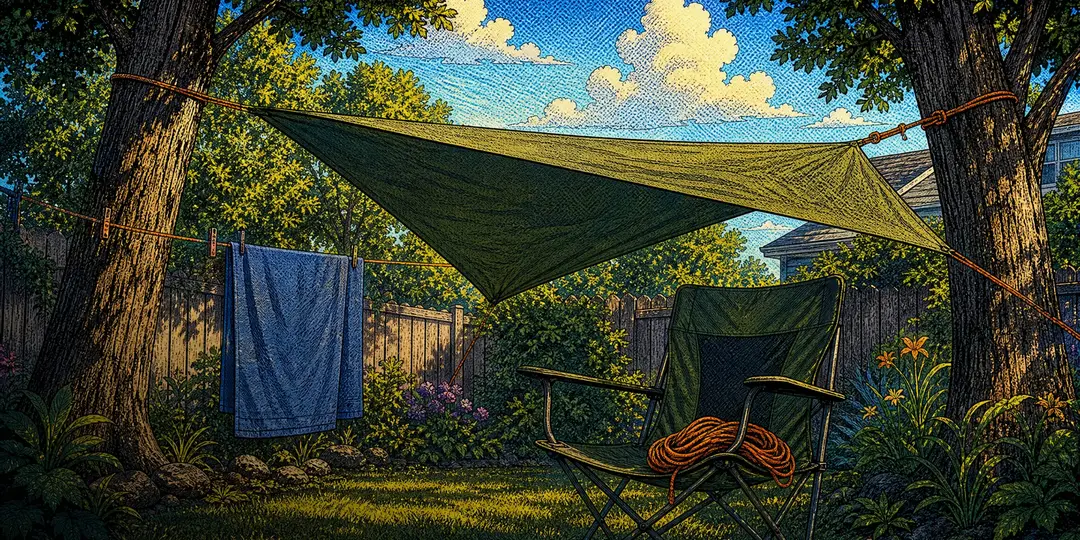
- Yard and outage use (shade, a dry place to cook, covering supplies) needs a mid-size tarp and cord.
- Bags and car kits need light weight and small pack size, and corners that survive wind.
How cheap tarps fail
The failure modes are well known, and they are what to look for when you buy:
- Sunlight. Polyethylene tarps break down under UV. The surface goes chalky, the fabric turns stiff and brittle, and one day it splits along a fold. A tarp that has spent a summer over a woodpile is not the one to put on a roof.
- Grommets. Most cheap tarps have metal rings pressed through a folded hem. Under a steady or gusty pull, the ring tears out of the fabric long before the fabric itself fails.
- Seams and pinholes. Woven poly is laminated; once the coating cracks, water wicks through the weave. Sewn camping tarps can leak at the stitching unless the seams are taped or sealed.
- Flapping. A loose tarp in wind wears itself out at the corners. Tension matters as much as the material, which is why a trucker’s hitch on the ridgeline is worth learning.
Tarps for emergency shelter, compared by type
| Type | Typical price | Material | Weight | Strengths | Weaknesses | Best for |
|---|---|---|---|---|---|---|
| Light-duty poly tarp, 8×10 ft (2.4×3 m) | $10–25 | Woven polyethylene, laminated | Heavy and bulky | Cheap; easy to find after a storm | Degrades in sun; pressed grommets tear out | Short jobs: roof patch, woodpile, ground sheet |
| Heavy-duty poly or vinyl tarp, 8×10 ft | $25–50 | Thicker poly, often UV-treated; or vinyl | Heavier still | Lasts longer outdoors; tougher hems | Too heavy to carry far | Longer roof and yard use |
| Coated camping tarp, about 8×10 ft | $40–80 | PU-coated polyester, or silicone-coated nylon or polyester | Roughly 1–2 lb (0.5–0.9 kg) | Light; sewn, reinforced tie-outs; packs small | Seams may need sealing; silnylon sags when wet | Bags, car kits, the yard |
| Emergency bivy (reflective sleeping sack) | $15–40 | Reflective coated fabric | Ounces | No pitching; keeps one person out of wind and wet | Condensation inside; one person only | The get-home bag and car |
| Tube tent | $5–15 | Thin plastic tube | Ounces | Very cheap | Needs a ridgeline; open at both ends; tears easily | Not much |
| Foil emergency blanket | $2–5 | Metallized plastic film | About 2 oz (60 g) | Tiny; reflects heat | Tears easily; not a shelter on its own | Inside a first aid kit, as a layer |
Size, thickness and color
Poly tarps are often sold by their cut size, and the finished size after hemming can be several inches smaller on each side. Thickness is usually given in mils: light-duty tarps are often around 5–6 mil, and heavy-duty ones roughly double that, though labels vary by maker. Lighter colors are cooler underneath in summer; darker ones are less conspicuous. Bright colors are easier to find in a garage and to spot from the air.
For camping tarps, some makers quote a hydrostatic head rating in millimeters: the height of a water column the fabric resists before leaking. Higher is more waterproof, but ratings aren’t always measured the same way, so treat them as a rough comparison within one maker’s range.
The two buys for most households
- For the garage: one large poly tarp, 10×12 ft (3×3.7 m) or bigger, for the roof or the yard. Buy it cheap, keep it out of the sun, and replace it when it gets brittle. A heavy-duty one is worth the extra if it will stay up for weeks.
- For the car and each bag: a camping tarp around 8×10 ft with cord already tied to the corners, or an emergency bivy if space is tight. The bivy is the one cheap emergency item that fits a get-home bag on its merits, because it works without anything to tie it to.
If you are choosing a whole bag around these, bug out bags under $150 covers what to look for in the pack itself.
What to skip
- “Military” or “survival” labeling at a premium. The fabric and the tie-outs are what you are paying for.
- Tube tents as the only shelter. They need a ridgeline, they are open at both ends, and thin plastic tears.
- Foil blankets sold as shelter. Useful as a heat-reflecting layer inside a bag or under a coat; not a roof.
- Old poly tarps for anything that matters. If it is chalky, stiff or cracked along the folds, use it as a drop cloth.
- Tarps with grommets only at the corners for anything bigger than a ground sheet. You need tie-outs along the edges to pitch it well.
- Buying a tarp without cord and stakes. A tarp you can’t tie down is a ground sheet. Paracord, bank line and the cordage you actually need covers the cord.



 4


Comments
No comments yet. Read the comment guidelines before posting.