A dim living room at dusk with an LED lantern glowing on the coffee table, two headlamps and a flashlight beside it, an unlit candle in a jar and a coil of battery string lights on the sofa arm.
A week without lights: lanterns, headlamps and candles compared
Emergency lighting for power outages: six kinds compared on useful runtime and daily use. The answer is a headlamp each, a lantern per room, no candles.
Shane RichardOct 16, 20268 min readReview · Complete guide
Six ways to light an evening without the grid. Two of them do almost all of the work.
For a power outage, a household needs two kinds of emergency light, and only two: a headlamp on every head and an LED lantern in every room where people sit together. Everything else, from flashlights to candles to the solar stakes along the path, is a supplement or a mistake. The set costs a family of four about $140–275, batteries included, and it turns a week of dark evenings from tense into tolerable.
This is a comparison by category, not a test of particular models: the categories differ from each other far more than the brands within them do. Below are the six kinds of light, what each is good for, how to judge runtime claims, and the set we would put in any house. The detail on picking a headlamp is in the headlamp is the only emergency light you’ll actually use.
How to judge an emergency light
Three questions matter, and they are not the ones on the packaging.
Runtime at a useful brightness. Packaging runtimes follow an industry standard (ANSI FL1) that measures until output drops to 10% of the starting brightness. A light that starts at 300 lumens and is “rated 20 hours” may spend most of those hours as a glow. What you want is how long it gives enough light to do the job: about 20–50 lumens to cook or read by from a headlamp, about 100 lumens from a lantern for a room. Look for the runtime on the low or medium mode, not the turbo one.
How it feels to live with. Does it make the room usable, or one person’s hands usable? Does it blind whoever you look at? Can a child turn it on in the dark? Can you put it down without it rolling off the table?
What it eats. The batteries it takes, how quickly, and whether you will have them on day five.
Try one lights-off evening
The cheapest test you will ever run: one ordinary weeknight, switch off the main breaker for the lighting circuits (or simply agree nobody touches a switch) from dinner to bedtime, and use only what is in the emergency box. Cook, do the dishes, put the kids to bed, find something in the garage. You will learn in three hours which lights get used, which batteries are dead, and where the lantern should live. Most households find they reach for the headlamps within ten minutes.
Six kinds of emergency light for a power outage, compared
Light
Best for
Typical useful runtime
Typical price
Verdict
Headlamp (AA/AAA)
Anything with your hands: cooking, the fuse box, a child, the dog
10–40 hours on low
$15–30
One per person
LED lantern
Lighting a room for a family
20–100+ hours on low
$20–45
One per gathering room
Flashlight
Throwing light outside: the yard, the street, the car
5–30 hours on medium
$20–45
One per household
Candle
Atmosphere
4–8 hours (pillar), at very low output
$1–10
Skip
Solar garden stake
A faint night-light in a hallway or bathroom
4–8 hours after a sunny day
$2–5 each
Cheap supplement
Battery string lights
Soft light in a kid’s room or along stairs
Dozens of hours on 2–3 AA
$8–20
Cheap supplement
Runtimes are typical of the category on its low or medium setting with fresh alkaline cells; individual products vary widely, so check the specific model’s published figures.
Headlamp: the one everyone uses
A headlamp points where you look and leaves both hands free, which is what every outage task needs. On a low mode of 20–50 lumens it runs for an evening or several on a set of AAA or AA batteries. Its weakness is that it lights one person’s view, not the room, and it blinds anyone you turn to face; a red mode or a habit of tilting the beam down fixes the second. The whole case for it is made in the headlamp guide.
LED lantern: the one that makes the room normal
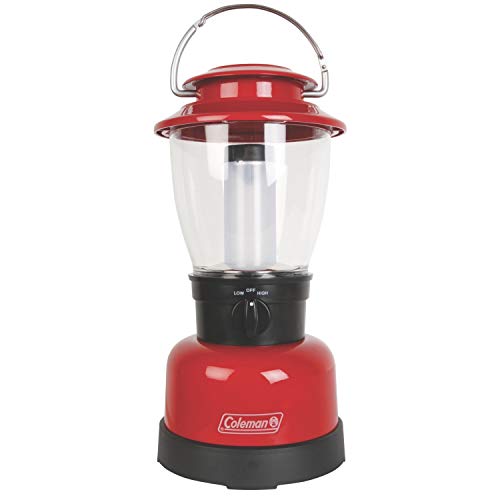
A lantern on the table is what makes an outage evening feel like an evening rather than an emergency. It lights everyone’s faces, lets kids play cards and lets the adults stop thinking about light. Look for one with a low setting around 100 lumens, a diffused globe so it doesn’t glare, a stable base and a hanging loop, running on AA or D cells. Many lanterns now include a built-in rechargeable battery and a USB port; that is fine as long as it can also run from ordinary batteries or you have a power bank to refill it.
Flashlight: the one for outside
A flashlight throws a beam. That is what you want to check the yard after a storm, walk to a neighbor’s, or look under a car, and it is less useful indoors than people expect. One good AA flashlight per household is plenty. What separates good from bad is covered in the flashlight buyer’s guide, and choosing an AA model is covered in AA flashlights for the emergency drawer.
One lantern on the table makes the room usable for everyone. The headlamps are for the moment someone gets up.
Candle: the one to leave out
A candle gives roughly the light its name suggests, about one candlepower, which is a small fraction of a lantern on low. It needs an open flame in a dark house full of tired people, children, pets and curtains. FEMA, the Red Cross and the CDC all advise flashlights rather than candles during outages, and NFPA figures show candles start several thousand US home fires a year. If you want the comfort of a flame, an LED candle does the job safely for a few dollars. If you already own candles, keep them as the last resort, in a jar, on a plate, with an adult in the room.
Solar garden stakes: the one that costs almost nothing
The cheap solar lights along a path can be pulled up and brought indoors at dusk, one per bathroom and hallway. They give a faint glow for a few hours after a sunny day and nothing after a cloudy one. As a free night-light that stops someone falling on the stairs, they are worth having. As a primary light, no.
Battery string lights: the one the kids like
A string of battery twinkle lights on two or three AA cells runs for a long time at low power and gives a soft, even light that a lantern doesn’t. They are good in a child’s room at bedtime and along the stairs. They are a supplement, and they should take the same batteries as everything else.
Batteries: one size, rotated
The most common failure is not a bad light. It is a good light with dead or leaking batteries, or the wrong size in the drawer. Three rules fix it.
One size. Choose AA for every headlamp, lantern, flashlight and radio you can. AAA headlamps are lighter but mean a second size. D-cell lanterns run for ages but take a third.
Twelve per person. For a family of four that is 48 AA cells, about $20–35. Store them in their packaging in a cool room, not in the lights.
Check twice a year. Put the check on the calendar with the smoke alarms: switch every light on, replace weak cells, and use the old ones in the TV remote.
Alkaline cells are cheapest and fine for most stored lights, but they can leak if left in a device for years. Lithium AA primaries cost more, store for far longer, work in a freezing garage and rarely leak, which makes them a good choice for the car and the go-bag. Low-self-discharge rechargeable NiMH cells are a good choice if you use your lights regularly and have a way to recharge them.
The set to own, and what it costs
Item
Quantity (family of four)
Cost
Headlamp, AA or AAA, with low and red modes
4
$60–120
LED lantern, about 100 lumens on low, AA or D
2
$40–90
AA flashlight
1
$20–40
AA batteries
48
$20–35
Solar stakes or string lights (optional)
2–4
$0–20
Total
$140–275
Where it lives matters as much as what it is. Each headlamp on a hook by each bed or by the back door; the lanterns and batteries in the home kit tote, somewhere you can reach in the dark. The home survival kit has the rest of that tote.
"A headlamp for every head, a lantern for every table, and no open flames in a dark house."
The lighting plan, in one line
What to skip
Candles as a plan. Covered above.
Hand-crank lights as a primary. Fine in a car; tiring and dim in a house for a week.
Rechargeable-only lights with no way to recharge. A lantern with a sealed battery is only as good as your power bank. If you own one, pair it with a power station or power bank.
Lumen races. A 1,000-lumen headlamp drains its batteries in an hour on high, and you will never use the high mode indoors.
Fuel lanterns indoors. Kerosene and propane lanterns produce carbon monoxide and are for outdoor use only.
Do the lights-off evening, buy what it shows you are missing, and put the battery check on the calendar. That is emergency lighting done.
Quick answers
What is the best emergency light for a power outage?
A headlamp for each person, plus an LED lantern for each room where the household gathers. The headlamp leaves both hands free for cooking, the fuse box or a child; a lantern giving about 100 lumens on low makes the room usable for everyone. One AA flashlight per household covers outdoor jobs like checking the yard.
Are candles safe to use during a power outage?
Not as a plan. FEMA, the Red Cross and the CDC all advise flashlights rather than candles during outages, and candles start several thousand US home fires a year. An LED candle gives the same comfort safely for a few dollars. If you already own candles, keep them as a last resort, in a jar, on a plate, with an adult in the room.
How many batteries should I store for emergency lights?
Twelve per person, all one size, ideally AA. For a family of four that is 48 AA cells, about $20–35. Store them in their packaging in a cool room rather than inside the lights, and switch on every light and replace weak cells twice a year, at the same time as the smoke alarm check.
How much does emergency lighting for a family cost?
About $140–275 for a family of four, batteries included: four headlamps ($60–120), two LED lanterns ($40–90), one AA flashlight ($20–40), 48 AA batteries ($20–35) and optional solar stakes or string lights. That set covers almost every outage evening without candles or fuel lanterns.
Printable
Supplies & stockpiling inventory checklist (PDF). Lines for headlamps, lanterns and batteries by size, with the date of the last check at the bottom.
Picks that match the specs in this guide, from makers with a track record. We haven't tested them yet. As an Amazon Associate we earn from qualifying purchases, at no cost to you. Add what you need to my list, then send the whole list to your Amazon cart all at once. Prices and availability are accurate as of the date and time shown and are subject to change. The price and availability shown on Amazon.com at the time of purchase will apply.
Black Diamond
Black Diamond Astro 300 Headlamp (AAA)
Runs on AAA, dimmable. Maker specs this model with red night-vision mode, lock mode, tilting head and IPX4.
No price from Amazon right now (checked Nov 24, 7:06 a.m. CT)
Shane is a disabled US Army veteran who served as an M1A1 tank crewman, then spent his career in technology and manufacturing supply chains, keeping parts moving through COVID. He, his wife Heather and their three kids have ridden out tornadoes, the February 2021 Texas freeze, the 2026 floods in Northeast Texas and power outages that lasted days. He started Prepping Expert to give families the plain, affordable, step-by-step version he wished he'd had.
Water bath vs pressure canning comes down to pH 4.6. Which side 25 foods fall on, the time each needs, why tomatoes are awkward, and how to check old recipes.
We use Google Analytics cookies to count visits and see which guides help. No ads, nothing sold. Cookie policy







 4



Comments
No comments yet. Read the comment guidelines before posting.