


The home kit is a 72-hour emergency kit in one plastic tote with a lid, about 60–70 quarts (57–66 L), that holds everything you would want to put your hand on in the first hour of an outage or a storm, in the dark, without searching the house. FEMA’s basic kit list has the same backbone: water, food, a radio, a flashlight, batteries, first aid, a whistle, masks, sanitation supplies, a wrench for the utilities, a can opener, local maps and a way to charge a phone. This version is that list, sized for a household of four and sorted so the tote stays liftable.
It is the week-four job in the first 30 days. If you have done weeks one to three, most of what goes in here you already own; this is about putting it in one place.
What goes in the tote, and what doesn’t
In the tote: the small, high-value items you need first and can’t find in the dark. Light, the radio, power, first aid, the paper documents, sanitation, a few tools, a day of snacks.
Next to the tote: the 72-hour water (12 gallons, 45 L, for four people) in jugs on the floor beside it, and a labeled box of three days’ no-cook food. Water weighs about 8.3 lb a gallon; put it in the tote and nobody can lift it.
Not in the tote at all: the two-week water supply, the pantry, the camp stove and fuel (fuel belongs somewhere ventilated and away from living space), and anything you use every week. The kit works because nobody borrows from it.
Cost: the $100 version and the $250 version
| Tier | What it covers | Typical cost, household of four |
|---|---|---|
| $100 | Four basic headlamps, a crank or battery weather radio, a store-bought first aid kit, batteries, sanitation supplies, emergency blankets, whistle, masks, copies of documents | $90–120 plus a tote you probably own |
| $250 | All of the above, plus a lantern, a 20,000 mAh power bank, a better radio, a multitool, a utility wrench, and a bleeding-control kit | $220–280 |
The extra $150 mostly buys charging and comfort: phones that stay alive for four days and a room you can see in. The bleeding-control kit is worth it only alongside a class; see IFAK vs boo-boo kit. Neither tier needs freeze-dried food, a solar generator or anything with a camouflage pattern.
Where it lives and when to check it
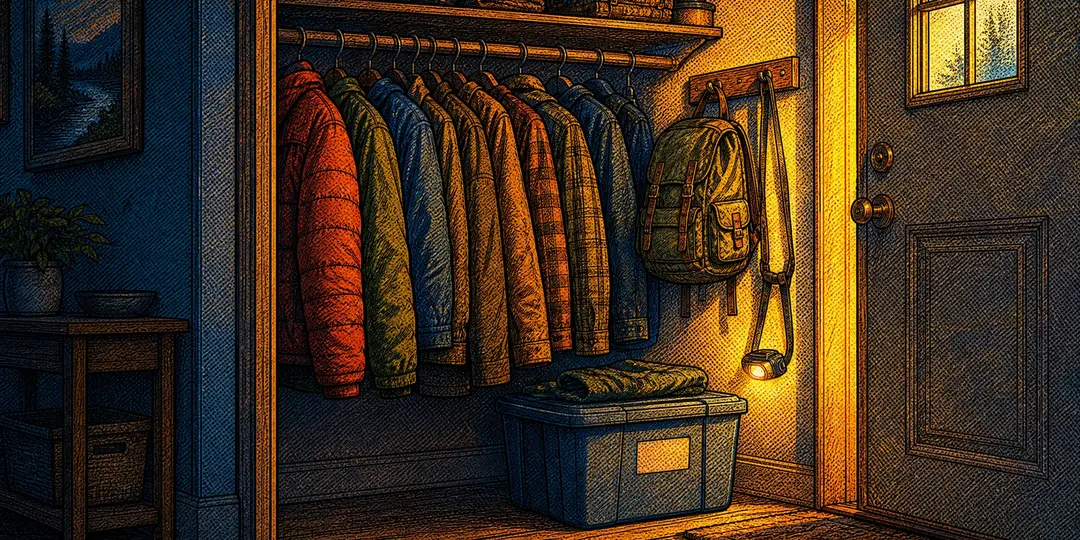
Hall closet near the main exit, at floor level, label facing out. Not the garage, not the attic, not behind the holiday decorations. Where to keep the home kit goes room by room.
Open it twice a year; the spring and fall clock changes are easy dates. Check battery dates, swap expired medicine, replace children’s spare clothes with the next size, and charge the power bank. Twenty minutes.
The 72-hour emergency kit list (household of four)
Light
- Headlamps — 4, one per person — hands-free light is the one you actually use
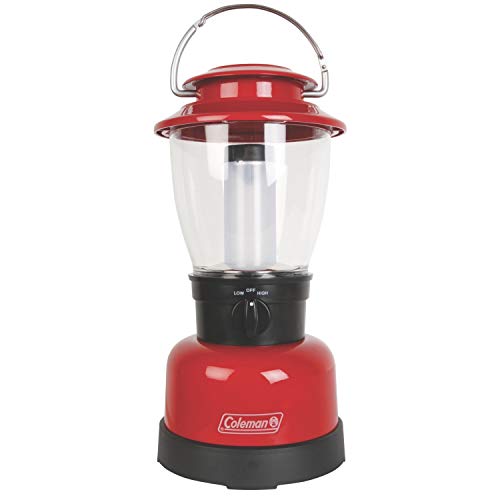
- Lantern — 1 (the $250 tier) — lights the room you gather in; a week without lights compares the types
- Spare batteries — one full change for every device, ideally one size — the most common kit failure is dead batteries
News and power
- Battery or hand-crank radio with NOAA weather alerts — 1 — evacuation orders when the phone network is down
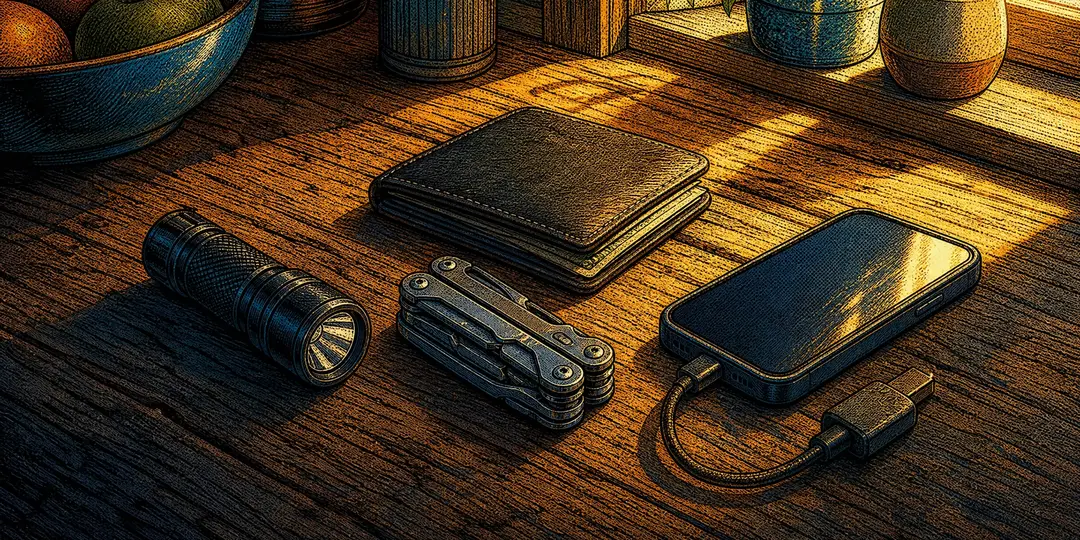
- Power bank — 1 × 20,000 mAh, charged (the $250 tier); a smaller one in the $100 tier — about four or five phone charges
- Charging cables — one for each phone type in the house — the power bank is useless without them
First aid and medicine
- First aid kit for minor injuries — 1 — cuts, burns, splinters, headaches
- Bleeding-control kit — 1 (the $250 tier), with training — for the rare serious injury
- Spare prescription medicines — whatever your pharmacist can arrange, ideally 7 days — the most likely reason a short outage turns serious
- Medicine list — one card per person — doses and allergies for a pharmacist or an ER
- Pain relievers and fever reducers for adults and children — one pack each — the small things you’d otherwise drive for
Documents and cash
- Copies of IDs, insurance, prescriptions, deed or lease — one set in a zip bag — see backing up your documents
- Contact card — one, with numbers and both meeting points — phones die
- Cash in small bills — $100–200 — card readers stop working in outages
- Local paper map — 1 — when phone maps don’t load
Warmth
- Emergency blankets — 4 — cheap, light, a warm layer for a cold night
- Hand warmers — 8 — comfort for children in a cold house
- Hats and gloves — one set per person — a cold house is mostly felt in the hands and head
Sanitation and hygiene
- Heavy-duty trash bags — 1 box — garbage, a toilet liner, waterproofing
- Toilet paper — 4 rolls — the one thing nobody remembers
- Wet wipes and hand sanitizer — 1 large pack, 1 bottle — washing when the water is off
- Menstrual products and diapers if used — a few days’ worth — hard to find in a hurry
Tools
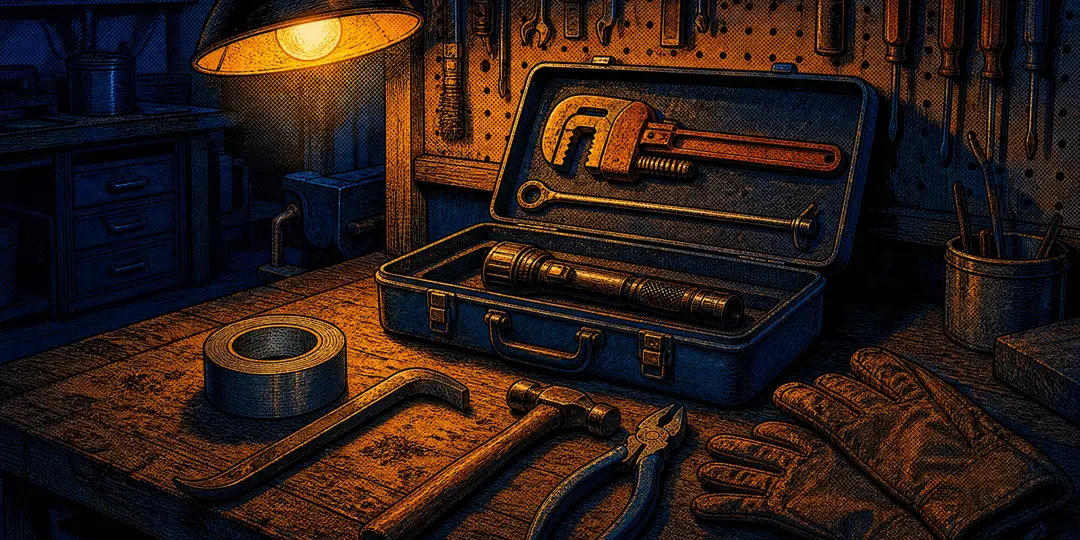
- Multitool or pliers — 1 — small repairs, opening things
- Utility wrench — 1 (the $250 tier) — to shut off the gas only if you smell gas or are told to; the utility turns it back on
- Duct tape — 1 roll — repairs, sealing, labels
- Work gloves — 2 pairs — clearing debris
- Dust masks (N95) — 4 — smoke, dust, cleanup
- Whistle — 1 — signaling for help
- Manual can opener — 1 — for the food box beside the tote
- Lighter and matches in a zip bag — 1 each — for the grill or stove outside
Food and water (in the tote)
- Snacks for one day — enough for everyone — the first meal before anyone opens the food box
- Water purification tablets or a filter — 1 pack — in case the stored water runs short
- Collapsible water container — 1 — for collecting water from a distribution point
Family-specific
- Baby formula, food and bottle — 3 days — first on the list if it applies
- Pet food, leash, vaccination record — 3 days — shelters often ask for the records
- A small comfort item and a deck of cards — 1 each — boredom is a real part of an outage
Quick answers
What should be in a 72-hour emergency kit?
A 72-hour emergency kit for home holds what you need in the first hours of an outage or storm: a headlamp per person, spare batteries, a battery or crank NOAA weather radio, a power bank and cables, a first aid kit, spare prescription medicine, document copies, small-bill cash, emergency blankets, sanitation supplies, basic tools, a whistle, N95 masks and a day of snacks.
How much water do I need for 72 hours?
For 72 hours, store 12 gallons (45 L) for a household of four: one gallon per person per day for drinking, cooking and basic hygiene. Keep the jugs on the floor beside the kit tote rather than inside it, because water weighs about 8.3 lb a gallon and a tote full of it is too heavy to lift.
How much does a 72-hour emergency kit cost?
A 72-hour emergency kit for a household of four costs about $90–120 in its basic form: headlamps, a radio, a first aid kit, batteries, sanitation supplies, emergency blankets, a whistle, masks and document copies. About $220–280 adds a lantern, a 20,000 mAh power bank, a better radio, a multitool, a utility wrench and a bleeding-control kit.
Where should I keep my emergency kit at home?
Keep the home emergency kit in a hall closet near the main exit, at floor level, with the label facing out, and tell everyone in the house where it is, babysitter included. Avoid the garage, the attic and anywhere behind seasonal storage. Open it twice a year to check batteries, medicine dates and children’s clothing sizes.
Printable
Kits & bags inventory checklist (PDF). The home kit, the get-home bag and the bug out bag on one page each, with checkboxes and a date line for the twice-a-year check.





 4
Comments
No comments yet. Read the comment guidelines before posting.