


For most households on a normal lot, the best backyard livestock for beginners is four hens: start with them, keep them for a year, and only then decide whether to add anything else. Hens are cheap, legal in many towns, forgiving of beginner mistakes, and they produce something every family uses every day. Rabbits, goats and bees can all work on a suburban or small-town lot, but each one asks for something specific: a willingness to butcher, a serious fence and a twice-daily schedule, or a tolerance for stings and for losing a hive over winter.
This guide compares them side by side, then spends a paragraph or two on what each animal actually demands of you, and finishes with the rules and the neighbors, which decide more of this than the animals do.
Backyard livestock for beginners: the comparison table
Figures are typical ranges for a small backyard setup. Costs are late-2026 US bands.
| Hens (4) | Meat rabbits (1 buck, 2 does) | Dwarf dairy goats (2) | Bees (1–2 hives) | |
|---|---|---|---|---|
| Space | Coop plus run, about 40–60 sq ft | Three hutches, a shed wall or garage corner | Shelter plus a fenced pen of several hundred sq ft | A corner a few feet square per hive, plus a flight path |
| Setup cost | $600–1,800 | $300–900 | $1,500–4,000 with fencing | $400–900 per hive with bees and gear |
| Running cost a year | $250–700 | $250–600 | $800–2,000 (hay, feed, vet) | $50–250 (mite treatment, replacement bees) |
| Daily time | 10–15 minutes | 10–20 minutes | 1–2 hours with milking | None; a few hours a month in season |
| Yield | About 80 dozen eggs a year | Meat, a litter several times a year | Milk for about 10 months a year after kidding | Little or none in year one; varies widely after |
| Noise | Quiet without a rooster | Silent | Bleating, especially in season | Silent |
| Typically allowed in towns | Often, with limits | Often, as pets | Rarely | Often, with setbacks |
Ducks and quail come up as alternatives to hens. Ducks lay well and are hardy but are messy around water and louder than hens. Quail are small, quiet and quick to lay, with small eggs; some towns treat them as poultry and some don’t mention them. Both are second-year experiments.
Hens: the one to start with
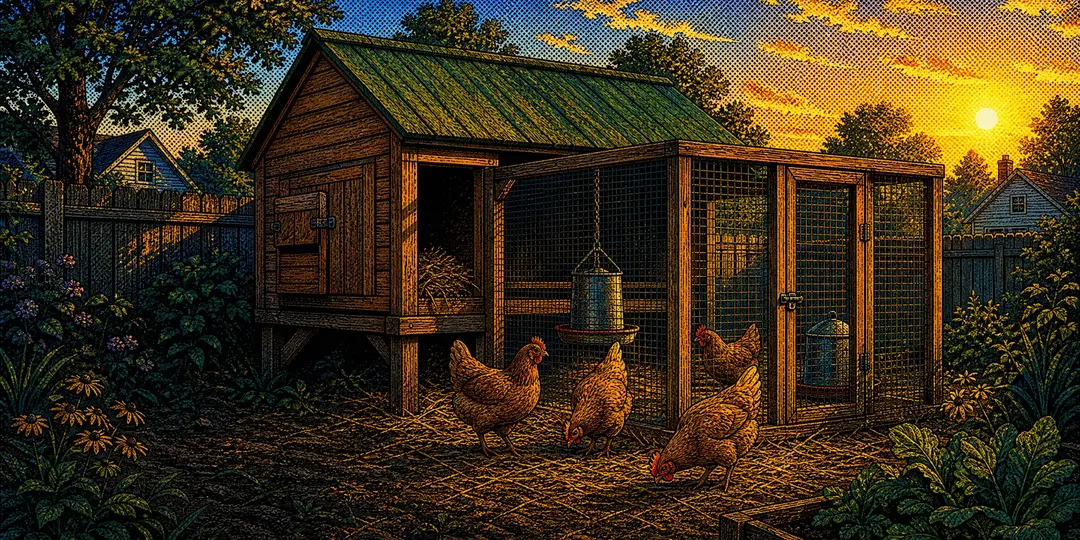
The full ledger is in four hens, one year: the honest cost. The short version: a sturdy coop and a predator-proof run are most of the setup cost, feed is about 30 pounds a month, and daily care is a few minutes plus an evening lock-up. They turn kitchen scraps and garden waste into eggs and compost. They forgive late feeding, a missed cleaning and a cold snap. And when you get it wrong, the consequences are usually a dirty coop, not a dead animal. That is why they come first.
Meat rabbits: efficient, quiet and a real decision
A trio of meat rabbits (one buck, two does) of a breed like New Zealand or Californian can produce a litter several times a year per doe, typically six to ten kits, reaching butchering weight at around ten to twelve weeks. For the space and feed involved, it is one of the most efficient sources of meat a small lot can produce, and rabbits are silent, which the neighbors appreciate.
What rabbits demand:
- Processing. This is the deciding question. If you won’t kill and dress a rabbit yourself, or don’t have someone nearby who will, don’t start. Rabbits bred for meat that become pets multiply quickly.
- Shade and cool air. Rabbits handle cold well and heat badly. In hot climates they need shade, airflow and frozen water bottles in summer, and they can die in a heat wave.
- Clean hutches. Wire-floored hutches with resting mats, droppings cleared often. The manure is one of the few that can go straight on the garden without composting.
- Separate housing. Bucks and does live apart and meet only for breeding.
Legally, rabbits are often treated as pets and are allowed where poultry isn’t, but slaughter on residential property can be restricted. Check.
Goats: the most demanding small animal
Goats are charming, clever and the animal most likely to make a beginner regret the whole project. On a normal lot that means a dwarf breed such as Nigerian Dwarf, and it means at least two: goats are herd animals and a single goat is a loud, unhappy goat.
What goats demand:
- Fencing. Goats climb, squeeze, lean and test. Woven-wire fencing about four feet high, solid posts and gates that latch properly. Budget most of the setup cost for this.
- Milking, if you want milk. A doe gives milk after she kids, so dairy means breeding every year, deciding what to do with the kids, and milking once or twice a day, every day, for around ten months. A Nigerian Dwarf doe averages a little over a quart a day across the lactation, more at peak. Vacations need a trained milker.
- Ongoing care. Hay year-round, mineral supplements, hoof trimming every month or two, vaccinations, and parasite monitoring with a vet who will see goats. Large-animal vets are scarcer in suburbs than dog vets.
- Noise. Some goats are vocal, especially when bored, in heat or when they see you with a bucket.
Goats are rarely allowed in town limits; a few cities permit miniature breeds with a permit and strict numbers. If your zoning says no, it is no.



 4


Comments
No comments yet. Read the comment guidelines before posting.