Homesteading for beginners: start a bed, a barrel and a compost bin; skip goats, an orchard and bees. A month-by-month first year on a normal lot, with costs.
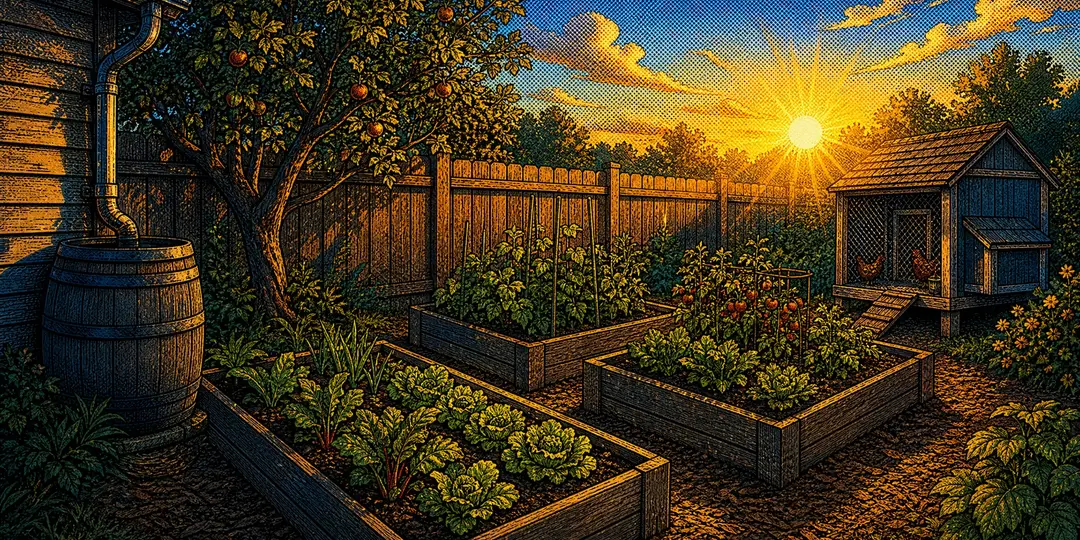
The whole first year in one frame: a bed, a barrel and a bin. Everything else can wait for year two.
The first year of homesteading for beginners on a normal lot has one purpose: to learn your ground. Where the sun falls, how the soil drains, what the slugs eat, how much watering you will really do in July. Three projects teach you that cheaply and pay back in the same season: a raised bed, a rain barrel and a compost bin. Three popular projects don’t, and they are the ones to skip for now: goats, an orchard and bees.
This guide is a month-by-month plan for that first year in a temperate climate, roughly USDA hardiness zones 5 to 7, with costs. Shift the months a few weeks earlier in warmer zones and later in colder ones. The bigger picture of what a normal lot can produce is in the pillar, homesteading on a normal lot.
Homesteading for beginners: the three to start, and what they cost
Start
What it teaches
Cost
Time
One 4×8 ft raised bed
Sun, soil, watering, pests, what your family eats
$100–250 for lumber or a kit; $80–200 for soil and compost to fill it; $30–60 for seeds and starts
A weekend to build; 2–4 hours a week in season
One rain barrel on a downspout
How much your roof sheds, how fast it fills, how much the garden drinks
$60–150 for the barrel and diverter; $20–40 for blocks or a stand
An afternoon
One compost bin
Your household’s waste stream, and how to make soil
$0–120 depending on DIY or bought
Ten minutes a week
All in, about $300–800, much of it once. If money is tight, a single bed and a homemade pallet compost bin get you most of the learning for under $200. Before any of it, check your town’s rules and your HOA; the pillar covers those checks.
January and February: plan on paper
Sun map. On a sunny day, note where the sun falls at 9 a.m., noon and 3 p.m. The bed goes where all three overlap, near a tap and close enough to the kitchen that you’ll walk past it.
Soil test. Even for a raised bed, test the ground underneath and any soil you plan to use. Your county’s cooperative extension service offers soil tests, often for $15–40, and will tell you pH and nutrients. In older neighborhoods, ask about a lead test too, especially if the bed is near an old painted house.
Seeds. Pick five or six crops your household already eats. For a first bed: lettuce, spinach, peas, bush beans, one or two tomato plants, a zucchini, herbs. Order seeds in January, before the popular ones sell out.
Rules. Read the HOA covenants and the town code for raised beds, rain barrels and compost. It takes an hour and saves a letter from the board later.
March and April: build and plant cool crops
Build the bed in March. Untreated lumber or a metal kit, 10–12 inches deep, filled with a mix of topsoil and compost. Avoid old railroad ties and wood of unknown treatment.
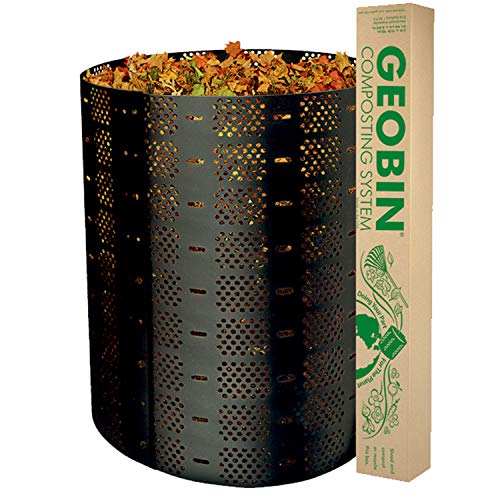
Set up the compost bin at the same time, in a spot that is easy to reach in winter. Kitchen scraps (no meat or dairy), leaves, grass clippings and shredded cardboard go in.
Plant cool crops as soon as the soil can be worked, usually a few weeks before your last frost date: peas, spinach, lettuce, radishes. Your extension service publishes a local planting calendar.
Raise the barrel on blocks so a watering can fits under the tap. It sounds trivial and is the most common first-year fix.
May to July: the warm season
After your last frost date, plant the warm crops: tomatoes, peppers, beans, zucchini, basil. Buy tomato and pepper plants as starts in year one rather than raising them from seed indoors; seed-starting is a good year-two project.
Mulch the bed with straw or shredded leaves to hold moisture. Water at the base of plants in the morning, from the barrel first, the tap second.
Harvest the cool crops as they bolt in the heat, and replant the gap with beans.
Keep a notebook. Dates planted, dates harvested, what the pests ate, how often the barrel ran dry. This is the year’s most valuable output.
August to October: harvest and plan for year two
Harvest tomatoes, beans and zucchini, probably more zucchini than you want. Sow a fall round of lettuce, spinach and radishes in late summer.
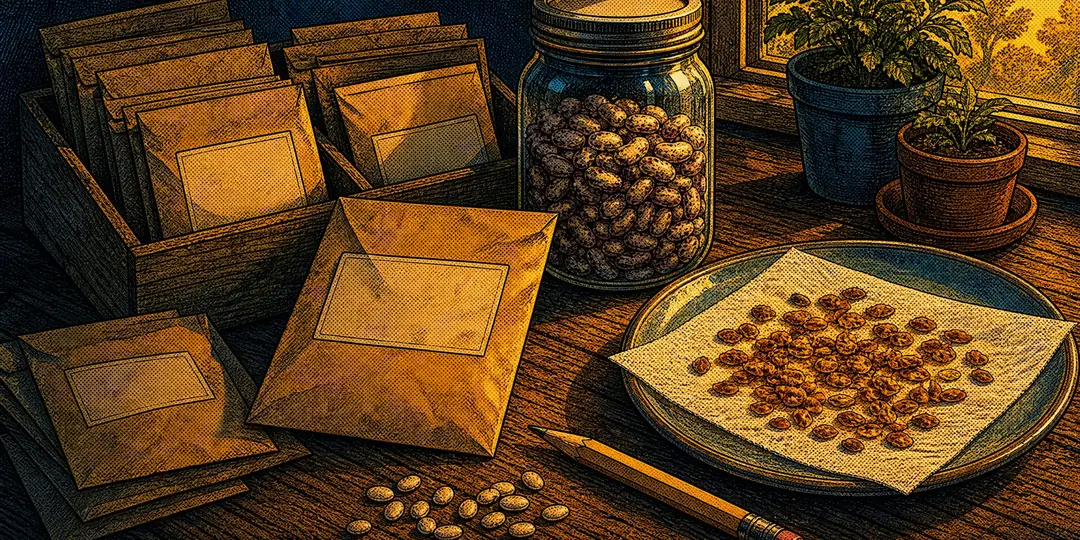
Save some seed from open-pollinated beans, peas or tomatoes; seed saving and storage explains which ones are easy.
Plant garlic in October for next summer. Feed the compost with fallen leaves; it is the best free material you will get all year.
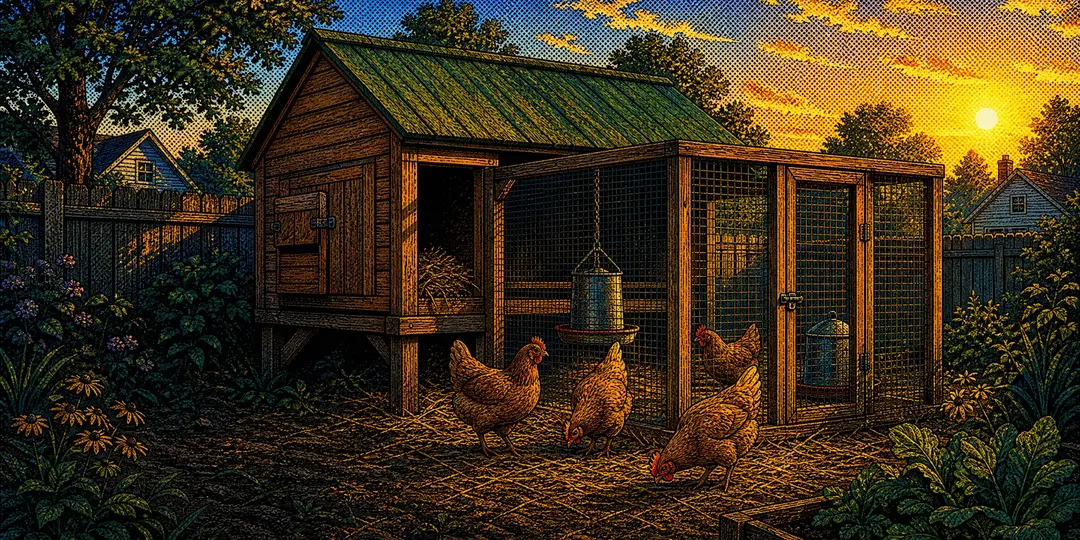
Decide about hens. By fall you know whether you have the time and the interest for a daily commitment. If you do, plan the coop over the winter for spring chicks or pullets. Four hens, one year: the honest cost is the reading for that decision.
November and December: put it to bed
Drain and disconnect the rain barrel before the first hard freeze, or it can split. Store it upside down or indoors.
Cover the bed with leaves or compost. Turn the compost one last time.
Read the notebook and write the plan for year two: where a second bed goes, which crops earned their space, and which ones to drop. Calorie crops for a small yard is the natural next step if you want the garden to do more than salads.
The three to skip, and when they make sense
Goats
Goats are herd animals and need at least two. They need sturdy fencing (they are escape artists), shelter, hoof trimming, a vet who sees goats, and, if you want milk, milking twice a day, every day. Many suburban codes don’t allow them at all. When they make sense: after a year or two with hens, on a lot where the rules allow them, with someone in the household who has time every morning and evening. Spend a season helping someone who keeps goats first. Rabbits, goats and bees: which small livestock fits your space compares them.
An orchard
Fruit trees are a five-to-twenty-year decision. They need the right spot for sun and drainage, the right varieties for your climate and pollination, and pruning and pest management you can’t learn from a catalog. Trees planted in the wrong place in year one are hard to move. When they make sense: in year two or three, once the sun map and a year of soggy corners have told you where they belong. Start with one or two dwarf trees or berry bushes, which fruit sooner.
Bees
Bees need equipment, a colony and, most of all, knowledge: inspections, disease and mite management, winter preparation. New beekeepers commonly lose colonies in their first winters. Neighbors with allergies and local rules also matter. When they make sense: after a year of a beekeeping class or a local club, ideally with a mentor, and with neighbors who are on board.
"Year one is for learning the ground. Goats, trees and bees all need you to know it first."
The first year, in one line
What you have at the end of year one
One productive bed, a barrel that waters it, a bin turning scraps into soil, a notebook of dates and failures, and a clear idea of whether you want to do more. Most households that start this way are still homesteading in year three. Many that start with goats, a dozen trees and a hive in the first spring aren’t. The slow version is the one that lasts.
Quick answers
What should a beginner homesteader start with?
Start with one 4×8 ft raised bed, one rain barrel on a downspout and one compost bin. Together they cost about $300–800, much of it once, and they teach you your sun, soil, watering and waste stream in the first season. If money is tight, a single bed and a homemade pallet compost bin cover most of the learning for under $200.
Should I get goats in my first year of homesteading?
No, skip goats in the first year. Goats are herd animals, so you need at least two, plus sturdy fencing, shelter, hoof trimming, a vet who sees goats and, for milk, milking twice a day. Many suburban codes don’t allow them. Consider them after a year or two with hens, where the rules allow, ideally after a season helping someone who keeps goats.
When should I plant my first vegetable garden?
Plant cool crops such as peas, spinach, lettuce and radishes as soon as the soil can be worked, usually a few weeks before your last frost date. Plant warm crops such as tomatoes, peppers, beans and zucchini after the last frost date. Your county’s cooperative extension service publishes a planting calendar for your area.
How much does a garden soil test cost?
A soil test from your county’s cooperative extension service often costs $15–40 and reports pH and nutrients. Test the ground under a raised bed as well as any soil you plan to bring in. In older neighborhoods, especially near an old painted house, ask the extension service about a lead test too.
Printable
Living self-reliant inventory checklist (PDF, 1 page). The first-year bed, barrel and bin, with the month-by-month jobs to check off.
Picks that match the specs in this guide, from makers with a track record. We haven't tested them yet. As an Amazon Associate we earn from qualifying purchases, at no cost to you. Add what you need to my list, then send the whole list to your Amazon cart all at once. Prices and availability are accurate as of the date and time shown and are subject to change. The price and availability shown on Amazon.com at the time of purchase will apply.
Good Ideas
Good Ideas Rain Wizard 50 Gallon Rain Barrel, Flat Back
Opaque 50-gallon barrel with a brass spigot near the base, and a flat back that sits close to the house wall.
No price from Amazon right now (checked Nov 24, 7:06 a.m. CT)
Good to know: Full, it weighs over 400 lb: set it on a level, solid stand. Check your state and HOA rules first.
Shane is a disabled US Army veteran who served as an M1A1 tank crewman, then spent his career in technology and manufacturing supply chains, keeping parts moving through COVID. He, his wife Heather and their three kids have ridden out tornadoes, the February 2021 Texas freeze, the 2026 floods in Northeast Texas and power outages that lasted days. He started Prepping Expert to give families the plain, affordable, step-by-step version he wished he'd had.
Homesteading on a quarter acre: what a suburban lot really produces in vegetables, eggs, fruit and rainwater, what it costs, and what cuts grocery bills.
How to save seeds: beans, peas and tomatoes are easy, squash needs care. Drying, storage, how long seed keeps, and why a seed vault isn’t the shortcut.






 4
Comments
No comments yet. Read the comment guidelines before posting.