


Weapons and self-defense law in the US is set mostly by the states, then adjusted by cities and counties, and it changes every legislative session. Any table that copies the details for fifty states is out of date somewhere by the time it is published. So instead of another table of self-defense laws by state, this page does something more useful and less impressive: it explains the five areas that vary, what questions to ask in each, and where to find the current, official text for your state.
Nothing here is legal advice. For a decision that matters, such as carrying a firearm or a knife in a particular city, or what happened after you used force, speak to a lawyer licensed in your state.
The five areas that vary
1. Self-defense doctrine
This is the law of when force is justified at all, and it applies whatever tool you use, including your hands and pepper spray. The questions to ask:
- Duty to retreat. Do you have to leave safely if you can before using deadly force outside your home? Many states have “stand your ground” laws that remove that duty in places you have a right to be; others keep a duty to retreat outside the home.
- Castle doctrine. Nearly every state removes or reduces the duty to retreat inside your own home, but the details differ: whether it covers the porch, the car, the yard, a guest.
- Proportionality and reasonableness. Everywhere, force must be reasonable and proportionate to the threat as a reasonable person would see it. Deadly force is for a threat of death or serious injury.
- Civil liability. Some states give immunity from civil lawsuits after a justified use of force; others don’t.
The practical point for an ordinary household is the same in every state: leaving is always legal and almost always the best outcome. Self-defense for ordinary people: avoidance first is built on that.
2. Firearm possession and carry
The questions: what license or permit you need to buy and own; whether the state allows carrying a handgun without a permit (many now do for adults), requires a permit, or issues permits on conditions; which places are off-limits (schools, courthouses, government buildings, bars, private property that posts a sign); how a firearm must be transported in a car; and which other states recognize your permit. Storage law matters as much as carry law for a family: many states have child-access prevention laws that make an adult liable if a child gets hold of an unsecured gun. Before your first firearm and safe storage with kids in the house cover that side.
3. Knives
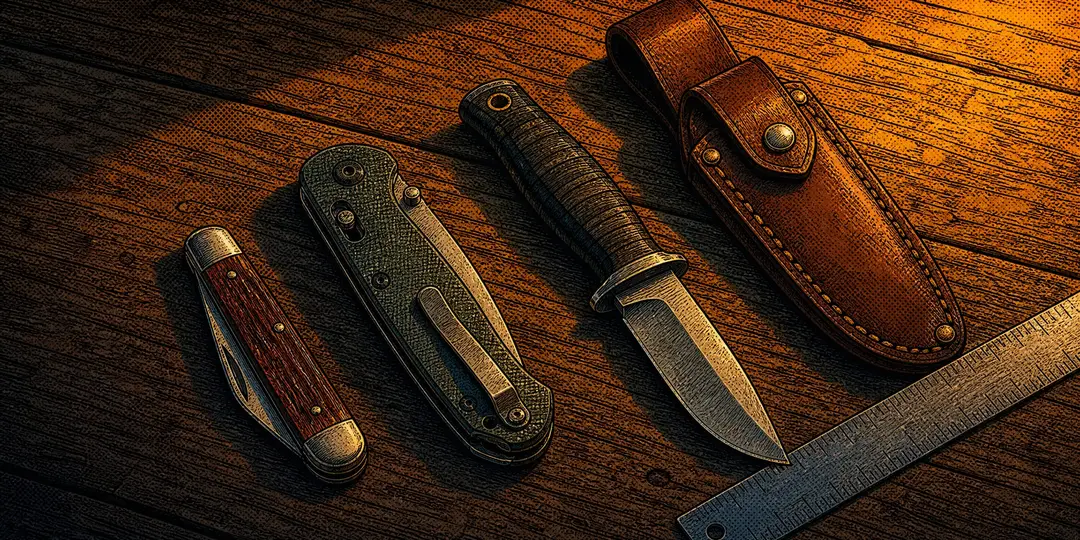
Blade-length limits, restrictions on particular types (automatic or switchblade, balisong, daggers, gravity knives), concealed versus open carry, and whether the state preempts city ordinances. This is the area where cities differ most from their states. Knife carry laws by state goes through it in detail.
4. Pepper spray and stun devices
Pepper spray is legal for adults in every state; the variations are where you can buy it, canister size, minimum age and prohibited places. Stun guns and probe-firing devices are legal in most states with age and felony restrictions, and some cities add their own rules. Details are in pepper spray, tasers and body armor: what works and what’s legal.
5. Body armor
Legal for most adults. Federal law bars possession by people convicted of a violent felony, and a few states restrict sales or require in-person purchase: New York has limited sales to listed professions since 2022, and Connecticut requires sales to be made in person. Many states add penalties for wearing armor during a crime.
Federal rules that sit on top
Federal law applies everywhere regardless of state rules: who is prohibited from possessing firearms, the Gun-Free School Zones Act, the ban on weapons in federal facilities (with a narrow exception for pocketknives with blades under 2.5 in / 6.4 cm), TSA rules for aircraft, and the Federal Switchblade Act on interstate sale of automatic knives. National parks follow the law of the state they are in for firearms, but park buildings are federal facilities.
Self-defense laws by state: where to read the current text
For every state, two sources answer most questions:
- The official state code, published free on the state legislature’s website (search “[state] legislature statutes”). Search the code for the terms in the table below: “justification” or “self-defense,” “weapon,” “knife,” “chemical spray,” “body armor.” Read the definitions section first; most disputes are about what counts as a dagger or a concealed weapon.
- The state attorney general’s website. Many AGs publish plain-language guides to carry permits, reciprocity and self-defense law, and some publish formal opinions on unclear points. State police sites handle permit applications in many states.
Then check your city or county code (usually on the municipality’s website or a code-hosting service it links to) if your state doesn’t preempt local weapons rules.
| State | Official code to search | Where weapons and self-defense mostly sit |
|---|---|---|
| Alabama | Code of Alabama | Title 13A (criminal code) |
| Alaska | Alaska Statutes | Title 11 (criminal law) |
| Arizona | Arizona Revised Statutes | Title 13 (criminal code) |
| Arkansas | Arkansas Code | Title 5 (criminal offenses) |
| California | California Penal Code | Justification and the deadly weapons parts of the Penal Code |
| Colorado | Colorado Revised Statutes | Title 18 (criminal code) |
| Connecticut | General Statutes of Connecticut | Title 53a (penal code), Title 53 (other weapons offenses) and Title 29 (permits) |
| Delaware | Delaware Code | Title 11 (crimes) |
| District of Columbia | DC Code | Title 7, chapter 25 (firearms control) and Title 22 (criminal offenses) |
| Florida | Florida Statutes | Chapters 776 (justifiable force) and 790 (weapons) |
| Georgia | Official Code of Georgia | Title 16 (crimes and offenses) |
| Hawaii | Hawaii Revised Statutes | Chapters 134 (firearms) and 703 (justification) |
| Idaho | Idaho Statutes | Title 18 (crimes) |
| Illinois | Illinois Compiled Statutes | 720 ILCS 5 (Criminal Code) and 430 ILCS (firearm licensing) |
| Indiana | Indiana Code | Title 35 (criminal law) |
| Iowa | Iowa Code | Chapters 704 (force) and 724 (weapons) |
| Kansas | Kansas Statutes | Chapter 21 (crimes) |
| Kentucky | Kentucky Revised Statutes | Chapters 503 (justification) and 527 (weapons) |
| Louisiana | Louisiana Revised Statutes | Title 14 (criminal law) |
| Maine | Maine Revised Statutes | Title 17-A (criminal code) |
| Maryland | Code of Maryland | Criminal Law and Public Safety articles |
| Massachusetts | General Laws of Massachusetts | Chapters 140 (licensing) and 269 (weapons offenses) |
| Michigan | Michigan Compiled Laws | Chapter 750 (penal code) and Act 372 of 1927 (firearms) |
| Minnesota | Minnesota Statutes | Chapters 609 (criminal code) and 624 (weapons) |
| Mississippi | Mississippi Code | Title 97 (crimes) |
| Missouri | Revised Statutes of Missouri | Chapters 563 (justification) and 571 (weapons) |
| Montana | Montana Code Annotated | Title 45 (crimes) |
| Nebraska | Nebraska Revised Statutes | Chapter 28 (crimes) |
| Nevada | Nevada Revised Statutes | Chapters 200 (crimes against the person) and 202 (weapons) |
| New Hampshire | New Hampshire Revised Statutes | Chapters 627 (justification) and 159 (weapons) |
| New Jersey | New Jersey Statutes | Title 2C (criminal code) |
| New Mexico | New Mexico Statutes | Chapter 30 (criminal offenses) |
| New York | New York Penal Law | Articles 35 (justification), 265 and 400 (weapons, licensing) |
| North Carolina | North Carolina General Statutes | Chapter 14 (criminal law) |
| North Dakota | North Dakota Century Code | Titles 12.1 (criminal code) and 62.1 (weapons) |
| Ohio | Ohio Revised Code | Title 29 (crimes), chapter 2923 (weapons) |
| Oklahoma | Oklahoma Statutes | Title 21 (crimes and punishments) |
| Oregon | Oregon Revised Statutes | Chapters 161 (justification) and 166 (weapons) |
| Pennsylvania | Pennsylvania Consolidated Statutes | Title 18 (crimes), chapters 5 and 61 |
| Rhode Island | General Laws of Rhode Island | Title 11 (criminal offenses) |
| South Carolina | South Carolina Code of Laws | Title 16 (crimes and offenses) |
| South Dakota | South Dakota Codified Laws | Title 22 (crimes) |
| Tennessee | Tennessee Code | Title 39 (criminal offenses) |
| Texas | Texas Penal Code | Chapters 9 (justification) and 46 (weapons) |
| Utah | Utah Code | Titles 76 (criminal code) and 53 (permits) |
| Vermont | Vermont Statutes | Title 13 (crimes) |
| Virginia | Code of Virginia | Title 18.2 (crimes and offenses) |
| Washington | Revised Code of Washington | Title 9A (criminal code) and chapter 9.41 (firearms) |
| West Virginia | West Virginia Code | Chapter 61 (crimes) |
| Wisconsin | Wisconsin Statutes | Chapters 939 (general) and 941 (weapons) |
| Wyoming | Wyoming Statutes | Title 6 (crimes) |
Self-defense rules in a few states also come from court decisions rather than only the code; the AG guide or a local lawyer will point you to them.
How to read a statute without a law degree
- Start with definitions. Most weapons chapters open with a definitions section. Whether your pocketknife is a “dirk,” whether your spray is a “weapon,” and what “concealed” means are all settled there.
- Look for the exceptions. Many prohibitions list exceptions (for your home, your vehicle, hunting, work) a few sections later.
- Check the date. Official sites show the version in force and often note recent amendments. If a summary you found is older than the last legislative session, assume it may be wrong.
- Check the city. If the state doesn’t preempt local rules, a city ordinance can be stricter. Large cities are where this usually bites.
- When it matters, ask. A thirty-minute consultation with a local criminal defense lawyer costs less than any fine.

 4


Comments
No comments yet. Read the comment guidelines before posting.