


With children in the house, the rule for safe gun storage is short: every firearm locked, unloaded when not in immediate adult use, with ammunition stored separately and keys and codes out of reach. The same rule, scaled down, applies to prescription medicines, cleaning chemicals and anything else that can kill a child in a minute. This guide covers the storage options with prices, what the research says about children and guns, how to talk about it at each age, and the question every parent should ask before a playdate.
If you are still deciding whether to own a firearm at all, read Before your first firearm: training, storage and the law first. Storage law varies by state; this is not legal advice.
Why “hidden” isn’t storage
Children know a house better than the adults do. They open every drawer, climb onto closet shelves, find keys and watch codes being entered. Surveys of parents have found that many believe their children don’t know where a household gun is kept, while their children report that they do.
Researchers have also tested what children do when they find one. In controlled studies in the US, children and young teenagers were left in a room where a real but disabled handgun had been placed among toys, and were observed. Most of them touched or handled it, several pulled the trigger, and few left the room or told an adult, including many who had received gun-safety teaching beforehand. The lesson for parents is not that teaching is useless; it’s that teaching can’t replace a lock.
The other group at risk is teenagers. A teenager in a crisis with access to an unlocked firearm faces a much higher risk of suicide, and many teens know the code or where the key is. Storage that keeps them out is as important as storage that keeps out a toddler.
Safe gun storage with kids: options and prices
| Option | Rough cost | What it does | Watch for |
|---|---|---|---|
| Cable lock | Free–$20 | Runs through the action so the firearm can’t be loaded or fired | Doesn’t stop theft; free from many police departments through Project ChildSafe |
| Trigger lock | $10–25 | Covers the trigger | Only on an unloaded firearm; less secure than a cable lock on some models |
| Lockbox | $30–80 | Small locked case for one handgun | Light; bolt it down or it can be carried off |
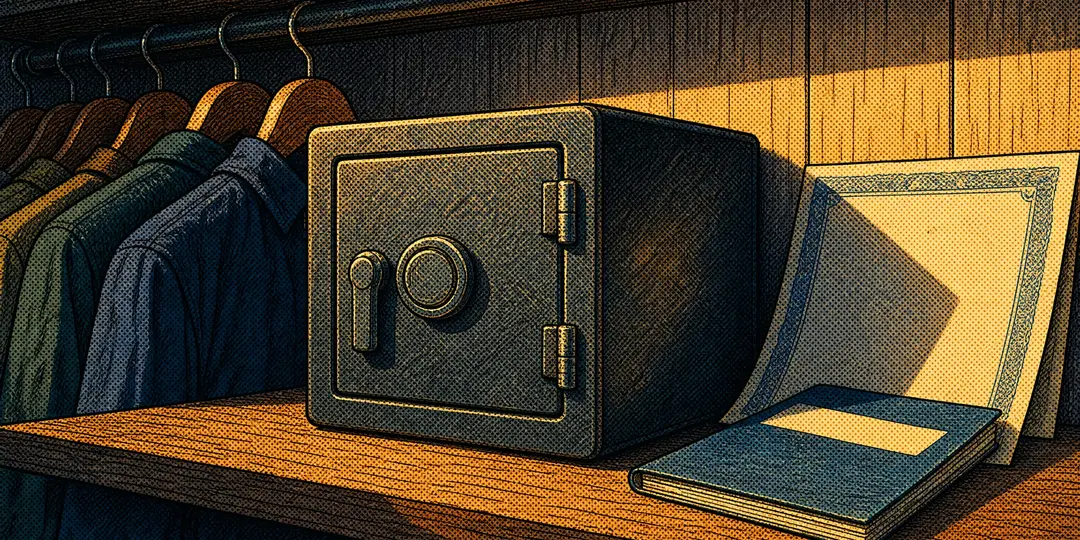
| Quick-access safe | $100–300 | Keypad, key or biometric safe for one or two handguns, opens in seconds | Bolt it to a floor or wall; change the default code; test the backup key |
| Full-size gun safe | $500–2,000+ | Several firearms and long guns, plus documents | Floor space, weight, installation |
| Off-site storage | Varies | A range, gun shop or relative holds firearms temporarily | Check state law on transfers first |
The habits that make the hardware work:
- Unloaded and locked whenever the firearm isn’t on an adult’s body or in their direct control. A loaded gun on a nightstand is not stored.
- Ammunition in a separate locked place where practical.
- Keys and codes: keep the key on your own key ring, never in a drawer; don’t use birthdays as codes; enter codes out of sight; change them if a child might have seen.
- Check after visitors. Guests’ bags and coats may contain firearms or medications; ask visitors to keep them locked in the car or a safe.
- Bolt it down. A quick-access safe that isn’t bolted can be carried away by a burglar or opened in the garage with a pry bar.
Around half of US states and DC have child access prevention laws that can hold adults responsible if a child gets hold of an unsecured firearm; some require locked storage in every case. Check your state attorney general’s site; our state-by-state reference points to each one.
Talking to kids, by age
Talk about it calmly and often, without making firearms either frightening or fascinating. The talk adds to the locks; it never replaces them.
Ages 3–6: one simple rule. “If you see a gun, don’t touch it, leave the room, and tell a grown-up.” Practice it like a fire drill, with a toy standing in. Small children can’t reliably tell real from toy guns, so the rule applies to anything that looks like one.
Ages 7–11: the same rule, with reasons. Real guns can look like toys; TV and games show guns that don’t act like real ones; the rule applies at friends’ houses too. Ask them to tell you if a friend shows them a gun, and promise they won’t be in trouble for telling.
Ages 12 and up: honesty about the risks, including suicide, and an open door. Teenagers should know they can call you from anywhere and you will come, no questions that night. If a teen is struggling, the safest step is to move firearms out of the home temporarily, and the 988 Suicide & Crisis Lifeline (call or text 988) is available to them and to you.
The question to ask before a playdate
The American Academy of Pediatrics estimates that about a third of US homes with children have a firearm, so the household your child visits may have one. Ask, in the same breath as allergies and pets:
“Is there an unlocked gun in the house where the kids will be playing?”
Most parents take it well when it’s asked as routine. If you own firearms, offer the answer first: “We have one, and it’s locked in a safe.” If the answer is uncertain, invite the children to your house instead.


 4

Comments
No comments yet. Read the comment guidelines before posting.