A wicker basket on a sunny lawn edge holding a few young dandelion leaves, a few broad plantain leaves and a small cup of ripe blackberries, a field guide lying open beside it.
Foraging for beginners: three plants to learn and ten to leave alone
Foraging for beginners: three hard-to-mistake edibles to learn first, ten poisonous plants and lookalikes to leave alone, and where you may legally pick.
Shane RichardOct 16, 20269 min readGuide · Complete guide
A beginner’s first basket: three plants, picked from a lawn and a hedge you know haven’t been sprayed.
Foraging for beginners starts with three plants: dandelion, blackberry or raspberry, and broadleaf plantain. They grow across almost all of the US, they are distinctive once you know what to look for, and none of them has a dangerous lookalike that a careful beginner is likely to pick by mistake. Learn the ten below as well, because they are why every other wild plant should wait until you have a field guide, a local expert and a lot more practice.
One honest point up front: foraging is a hobby and a pleasure, not a food supply. Wild greens and berries are mostly water and fiber. USDA figures put raw dandelion greens at about 45 calories per 100 g, so a full pound (450 g) is roughly 200 calories. Your pantry feeds the family in an emergency; the two-week pantry is the plan. This is the side dish.
The rule: name it three ways before you eat it
Before anything wild goes in your mouth, you should be able to do three things without hesitating:
Name it, by its common and scientific name, from a reputable regional field guide.
Match at least three independent features against that guide: leaf shape and arrangement, stem, flower, fruit, smell, sap, habitat, season. Not one feature. Not “it looks like the picture.”
Name its dangerous lookalikes, and say exactly how you told them apart.
If any of the three fails, it doesn’t get eaten. No exceptions for “probably,” and no relying on an app, a video or this article alone. Plant ID apps are useful for suggesting what to look up; they are wrong often enough that they should never be the last word. The best teacher is a person: many state extension services, native plant societies and nature centers run guided plant walks.
Plant 1: dandelion
ID: a flat rosette of leaves growing from one point at ground level, each leaf deeply toothed and hairless. Each flower sits alone on a hollow, leafless stem that bleeds white milky sap when broken. Yellow flowers turn into the familiar round seed head.
Lookalikes: cat’s ear has hairy leaves and branched, solid stems; chicory and wild lettuces are similar. None of these are seriously dangerous, which is exactly why dandelion is a good first plant, but the habit of checking the stem and leaves is the lesson.
Season and use: the leaves are least bitter in early spring, before flowering, and again after frost in the fall. Use young leaves raw in salad or cook older ones like spinach. Flowers can be battered and fried. Roots can be roasted.
Plant 2: blackberry and raspberry
ID: thorny or bristly arching canes; compound leaves with three to five toothed leaflets; white or pale pink five-petaled flowers; fruit made of many small round beads (drupelets) clustered together. Raspberries come off hollow, like a thimble. Blackberries keep their white core.
Lookalikes: the aggregate “cluster of beads” shape is the tell. There is no poisonous aggregate berry in North America that a beginner is likely to mistake for these. What children grab instead are other berries growing nearby, so teach them the bead shape and the thorny cane.
Season and use: summer to early fall depending on region and species. Eat raw, freeze, or make jam. This is the plant most families should start with.
Plant 3: broadleaf plantain
The lawn weed, not the banana-like fruit. ID: a low rosette of broad, oval leaves with strong parallel veins running from base to tip; tear a leaf across and the veins pull out as stringy threads. Thin flower spikes rise from the center, covered in tiny greenish flowers, later seeds. Narrowleaf plantain has long, lance-shaped leaves with the same veins.
Lookalikes: some poisonous plants (false hellebore, lily of the valley) also have parallel veins, but they grow as upright shoots in woods and wet ground, not flat rosettes in a lawn. Another reason to pick plantain only from lawns and path edges you know.
Season and use: spring to fall. Young leaves raw or cooked; older leaves are tough and better cooked. Even this one, learn from a guide or a person before eating it.
Dandelion, blackberry and plantain, with the features that identify them: the hollow, milky stem, the beaded fruit, and the stringy parallel veins.
The ten to leave alone
These are the plants and groups that cause most serious wild-plant poisonings in North America, or that are confused with popular edibles. Learn to recognize them so you can avoid them, not so you can pick around them.
Leave alone
Mistaken for
Why the confusion happens
Water hemlock
Wild carrot, wild parsnip, angelica
Umbrella-shaped white flower clusters and carrot-like roots in wet places. Widely described as the most toxic plant in North America; a small amount can be fatal.
Poison hemlock
Wild carrot (Queen Anne’s lace), wild parsley
Same umbrella flowers and fern-like leaves. Hairless stems with purple blotches; wild carrot is hairy. Extremely toxic. Common along roadsides and ditches.
Death camas
Wild onion, edible blue camas
Grass-like leaves and a bulb. It doesn’t smell of onion, but a crushed onion nearby can fool your nose.
False hellebore
Ramps, hostas, skunk cabbage shoots
Broad, pleated spring leaves in wet woods, right where ramps grow. Highly toxic.
Lily of the valley
Ramps (wild leeks)
Similar smooth spring leaves in woodland. No garlic smell, but garlic on your hands from the last plant masks the difference.
Foxglove
Comfrey, borage, mullein leaves
First-year foxglove is a rosette of soft, hairy leaves. Contains heart-affecting compounds.
Moonseed
Wild grapes
Similar vine, leaves and dark berry clusters. Moonseed has one crescent-shaped seed per berry and no forked tendrils.
Pokeweed
Elderberries, wild grapes, young greens
Dark purple berry clusters that tempt children. All parts are toxic raw; the traditional cooked greens need careful preparation and are not for beginners.
Nightshades (bittersweet, black nightshade)
Currants, blueberries, cherry tomatoes
Shiny red or black berries at child height in hedges and gardens.
Wild mushrooms, especially amanitas
Meadow mushrooms, puffballs, many edibles
Death cap and destroying angel cause most fatal mushroom poisonings. No home test or rule of thumb works. Leave all mushrooms to experts.
Two more to know, because they hurt on contact: wild parsnip and giant hogweed have sap that causes severe burns and blisters when skin is then exposed to sunlight. Wear long sleeves and gloves around any carrot-family plant, and if the sap gets on skin, wash it off and keep the area out of the sun.
The pattern in that list is the lesson. Most of the dangerous confusions involve the carrot family (any plant with umbrella-shaped flower clusters), bulbs and spring shoots in woodland, and berries that are not aggregate. For a beginner, that whole territory waits.
If anyone eats something they shouldn’t, call Poison Help at 1-800-222-1222 (it reaches your local poison center) or 911 if they are having trouble breathing or are unresponsive. Keep a sample of the plant.
Where you may pick, and where you shouldn’t
Legally, the rules vary by landowner:
Your own yard and land where you have the owner’s permission are the simplest places to start.
National parks generally prohibit gathering unless the individual park permits it, and some allow small amounts of specific fruits or nuts. Check the park’s rules before picking.
National forests and BLM land often allow personal-use gathering of small quantities of berries and nuts; some products need a permit. Ask the local ranger district.
State, county and city parks vary widely and many prohibit removing any plant. Check before picking.
Protected and rare plants are off-limits everywhere, and overharvesting popular plants like ramps is a real problem. Take a little, from plentiful patches.
Practically, where a plant grows matters as much as what it is:
Pesticides and herbicides. Lawns, golf courses, parks, farm field edges, roadsides, railroad tracks and power-line corridors are often sprayed. If you don’t know a patch hasn’t been treated, don’t eat from it.
Busy roads. Roadside plants collect exhaust and road runoff. Pick well away from traffic.
Dog-walking routes. Pick above leg height, away from path edges, and wash everything.
Water. Plants from polluted ditches and storm drains carry what is in the water.
Foraging for beginners: how to start
This season, learn the three. Pick them in your own yard or a friend’s, check each against a regional field guide every time, and eat a small amount the first time in case of an individual reaction. Next season, add a few from the list in wild edibles by season: a regional starting list, ideally after a walk with someone local who knows them.
It is a good hobby to do with kids, as long as the rule is absolute: they bring it to an adult and nobody eats anything wild without an adult’s yes. If you want the broader context of skills worth learning, the survival skills that matter, in order explains why this one sits further down the list than first aid. And for anything medicinal, natural remedies: what the evidence supports is a separate and more cautious conversation.
Quick answers
What wild plants are safest for beginners to forage?
Dandelion, blackberry or raspberry, and broadleaf plantain are the safest wild plants for a beginner to learn first. They grow across almost all of the US, are distinctive once you know the features, and none has a dangerous lookalike a careful beginner is likely to pick by mistake. Check each one against a regional field guide every time.
Can I trust a plant ID app before eating a wild plant?
No. A plant identification app is useful for suggesting what to look up, but apps are wrong often enough that they should never be the last word before eating a wild plant. Confirm the name in a reputable regional field guide, match at least three independent features, and name the dangerous lookalikes. A guided walk with a local expert is better still.
Which poisonous plants look like wild carrot?
Water hemlock and poison hemlock both look like wild carrot (Queen Anne’s lace), with umbrella-shaped white flower clusters and fern-like or carrot-like parts. Both are extremely toxic, and water hemlock is widely described as the most toxic plant in North America. Beginners should leave every carrot-family plant alone and wear gloves near them, because wild parsnip and giant hogweed sap also burns skin.
Is it legal to forage in national parks and forests?
National parks generally prohibit gathering plants unless the individual park permits it, and some allow small amounts of specific fruits or nuts. National forests and BLM land often allow personal-use gathering of small quantities of berries and nuts, though some products need a permit. Check the park’s rules or ask the local ranger district before picking anything.
What should I do if someone eats a poisonous plant?
Call Poison Help at 1-800-222-1222, which reaches your local poison center, or call 911 if the person is having trouble breathing or is unresponsive. Keep a sample of the plant they ate so the poison center or medical staff can identify it. Do not wait for symptoms before calling.
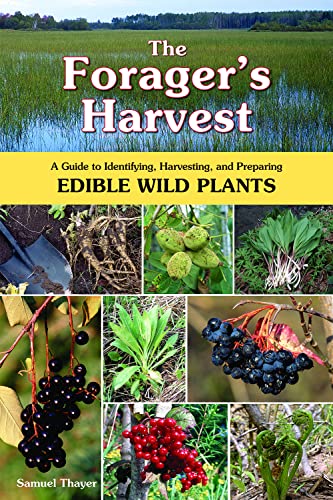
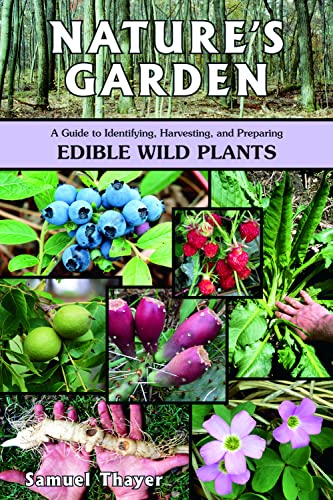
The books this guide recommends. Most libraries have them too. As an Amazon Associate we earn from qualifying purchases, at no cost to you. The first button opens the print edition; Kindle opens the e-book. Print copies can go on my list; Kindle books are bought on Amazon directly. Prices and availability are accurate as of the date and time shown and are subject to change. The price and availability shown on Amazon.com at the time of purchase will apply.
Houghton Mifflin Harcourt
Peterson Field Guide: Edible Wild Plants, Eastern/Central N. America
The Peterson field guide the article names for edible plants of eastern and central North America.
Black Friday Deal
$17.68$28.00 on Amazon as of Nov 24, 7:06 a.m. CT
Good to know: Never eat a plant on a book's word alone; confirm it with a local expert or guided walk.
Shane is a disabled US Army veteran who served as an M1A1 tank crewman, then spent his career in technology and manufacturing supply chains, keeping parts moving through COVID. He, his wife Heather and their three kids have ridden out tornadoes, the February 2021 Texas freeze, the 2026 floods in Northeast Texas and power outages that lasted days. He started Prepping Expert to give families the plain, affordable, step-by-step version he wished he'd had.
Wild edibles by season for six US regions: a handful of common plants each, an honest confusion-risk rating, and the regional field guide to check against.






 4
Comments
No comments yet. Read the comment guidelines before posting.