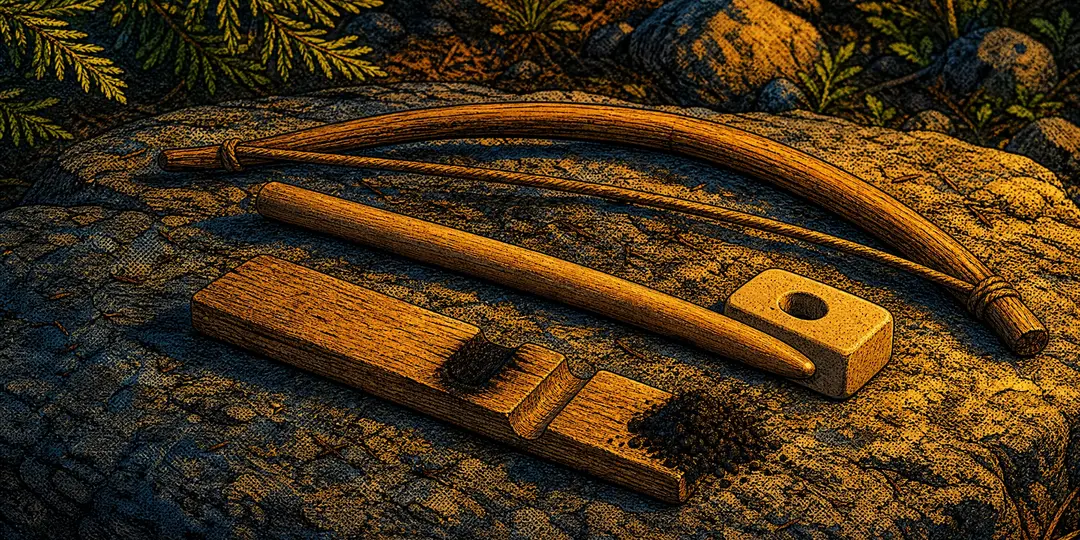
A wooden workbench with a coil of twisted plant-fiber cord, a bow drill set with a cedar fireboard and spindle, a sharpened digging stick and a few flint flakes on a leather pad.
Primitive tools: what's worth learning and what's a party trick
Which primitive skills are worth learning: cordage and simple tools earn their time, the bow drill builds confidence, and flint knapping is a hobby.
Shane RichardOct 16, 20266 min readGuide · Complete guide
An afternoon’s primitive work on one bench. Some of it you will use again; some of it is for the shelf.
Primitive skills are good for you, and most of them are not good for emergencies. That is not a criticism. Learning to twist cordage from plant fiber, make fire with a bow drill or shape stone teaches patience, attention and how materials behave, and those transfer to everything. But a household preparing for a week-long outage gets more readiness from a $3 lighter than from a weekend of knapping, so it pays to be clear about which primitive skills are worth learning before you spend the time.
Below is our ranking, from the skill most worth an afternoon to the ones that are mostly for fun, with what each teaches and what to carry instead. When you want to try the top three, making cordage, a digging stick and a bow drill is the hands-on project.
Primitive skills worth learning: the ranking at a glance
If you only learn one primitive skill, make it reverse-wrap cordage: two bundles of fiber, each twisted one way and wrapped around each other the other way, so the tension locks the whole thing together. It takes about an hour to get a usable foot of it, and you can practice at the kitchen table with jute twine or raffia picked apart into fibers.
The direct use is modest; you will almost always have real cord. The indirect use is large. Once you understand twist and lay, you understand why paracord’s outer sheath slips, why bank line holds a knot better, and why some knots work in some cord and not others. That makes the cordage you actually carry and the six knots worth knowing easier to use well.
Worth the time: simple wooden tools
A digging stick, a set of tent stakes, a pot hanger, a toggle: these are knife exercises with a useful result. They teach the cuts that matter (stop cuts, notches, points), how green and seasoned wood differ, and how to work safely with a blade, which is the skill that actually prevents injuries outdoors.
They are also honest about what “primitive” means in practice. You will be using a steel knife and probably a saw. That is fine. The skill is in choosing the stick and shaping it, not in pretending the knife isn’t there. If you are choosing a knife for this, choosing a survival knife covers what matters.
Knife practice with a result: stakes, toggles and a pot hanger, all from one green branch in an afternoon.
A confidence skill: the bow drill
The bow drill is the primitive skill most people want to learn, and it is worth learning once. Getting your first ember from two pieces of wood and a bootlace is a memorable afternoon, and it teaches more about fire (dry, non-resinous wood; dust; airflow; heat) than any amount of lighter use.
It is also unreliable. It needs the right wood, dry conditions, a good deal of physical effort and practice that fades quickly if you stop. Wet weather, cold hands or the wrong species can defeat an experienced person. In a real situation where you need fire, a lighter works in seconds and a ferro rod works when wet, and both belong in every kit. Treat the bow drill as proof to yourself that you understand fire, then carry the easy options. Fire starting from scratch covers the tinder and kindling that every method depends on.
"Learn the bow drill once, so you understand fire. Then carry two lighters and a ferro rod."
The practical version
A hobby: flint knapping and containers
Flint knapping, shaping stone by striking or pressing off flakes, is a deep, satisfying craft with a long learning curve. It is also the skill on this list most likely to hurt you: flakes are sharper than steel, and the dust from some stone is harmful to breathe. If you take it up, wear safety glasses and a leather pad and gloves, work outdoors, and sweep up the debris. Do not do it with children nearby.
Its emergency value is close to zero. Any situation where you can find good knappable stone and have hours to work it is a situation where a knife would have been easier to bring. Enjoy it as a hobby and leave it off the preparedness list. The same goes for bark containers, baskets and coal-burned bowls: lovely work, slow, and replaced in any real use by a steel pot.
Primitive weapons: a short, firm note
Bows, atlatls and similar tools are traditional crafts and, in some states and seasons, legal hunting methods with their own license and rules. They are not self-defense tools, and making or carrying them may be regulated where you live. If you are interested in hunting with them, the route is a hunter education course, the state regulations and a club; see the small-game hunting basics. This site does not cover building them.
What to do with this list
Spend a Saturday on the top three: an hour on cordage, an afternoon carving stakes and a digging stick, and a session with a bow drill kit. Then take what transfers (patience, a feel for materials, safer knife habits) and put the time saved into the skills that do more for a household, starting with the survival skills that matter, in order. Come back to the rest when you want a hobby.
Quick answers
What is the most useful primitive skill to learn?
Twisted cordage is the most useful primitive skill. About an hour gets you a usable foot of reverse-wrap cord, and you can practice at the kitchen table with jute twine picked apart into fibers. The direct use is modest, but understanding twist and lay makes you better with the paracord and bank line you actually carry.
Is the bow drill worth learning for survival?
Learn the bow drill once, as a confidence skill. It teaches wood selection, persistence and how fire behaves, but it is unreliable: it needs the right dry wood, real effort and practice that fades, and wet weather or cold hands can defeat an experienced person. For real emergencies, carry two lighters and a ferro rod.
Is flint knapping a useful survival skill?
Not for emergencies. Flint knapping is a deep, satisfying hobby that takes months to years to learn, but its emergency value is close to zero, because a knife is far easier to bring. It is also the riskiest primitive skill: flakes are sharper than steel, so wear safety glasses, gloves and a leather pad, and work outdoors away from children.
How long does it take to learn primitive skills?
It depends on the skill. Twisted cordage takes an hour or two to basic competence, simple wooden tools an afternoon, lashings and improvised shelters a weekend, and the bow drill several sessions to weeks. Flint knapping takes months to years. One Saturday covers the three most useful: cordage, carved stakes and a first bow drill session.
Printable
Skills inventory checklist (PDF, 1 page). Mark which skills you have practiced, how recently, and which are hobby versus household.
Picks that match the specs in this guide, from makers with a track record. We haven't tested them yet. As an Amazon Associate we earn from qualifying purchases, at no cost to you. Add what you need to my list, then send the whole list to your Amazon cart all at once. Prices and availability are accurate as of the date and time shown and are subject to change. The price and availability shown on Amazon.com at the time of purchase will apply.
Light My Fire
Light My Fire Swedish FireSteel Army
Large ferro rod rated for thousands of strikes, sparks when wet.
Shane is a disabled US Army veteran who served as an M1A1 tank crewman, then spent his career in technology and manufacturing supply chains, keeping parts moving through COVID. He, his wife Heather and their three kids have ridden out tornadoes, the February 2021 Texas freeze, the 2026 floods in Northeast Texas and power outages that lasted days. He started Prepping Expert to give families the plain, affordable, step-by-step version he wished he'd had.
Twelve DIY emergency preparedness projects ranked by readiness per hour of work, with time, cost and difficulty, plus the ones to skip without a workshop.
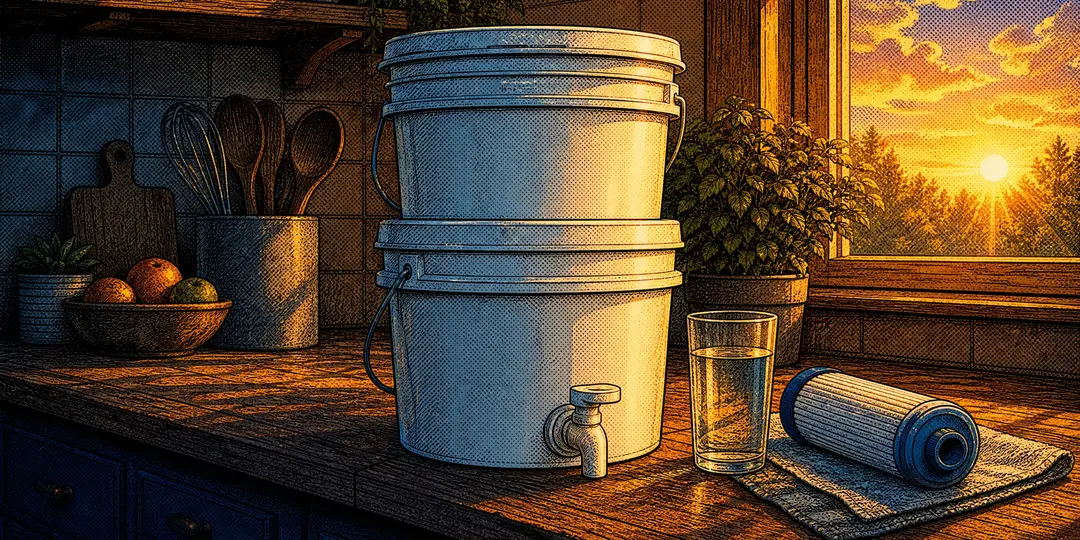
A DIY bucket water filter from two food-grade buckets and one element: $30–40 in parts, an hour to build. Steps, flow, upkeep, and what it won’t remove.
We use Google Analytics cookies to count visits and see which guides help. No ads, nothing sold. Cookie policy






 4
Comments
No comments yet. Read the comment guidelines before posting.