


IFAK vs first aid kit is the wrong choice to make: keep two kits, not one big one. The boo-boo kit is for what happens every week in a house with kids: cuts, scrapes, splinters, small burns, a fever at 2 a.m. The IFAK (individual first aid kit) is for the rare, serious injury where the next three minutes matter: heavy bleeding from a fall through glass, a kitchen accident, a car crash. Mixing them fails both ways. The tourniquet ends up under forty bandages where you can’t find it, and the bandages get used up from a kit you need to be complete.
Store-bought kits are good at bandages and poor at everything else. They rarely include anything for serious bleeding, the tape is weak, the dressings are small and the tweezers don’t grip. What to add to a store-bought first aid kit is the upgrade path if you already own one.
The one rule for bleeding-control kit
A tourniquet you don’t know how to use is a strap. Buy the training with it. The Stop the Bleed course, run by hospitals, fire departments and community groups across the country, takes about two hours and is often free; a Red Cross first aid and CPR class covers the rest. Read Stop the bleed: the first three minutes before the class, and wilderness and home first aid for what to learn next.
Two cautions. Buy tourniquets from a recognized medical supplier, not the cheapest marketplace listing: counterfeit tourniquets are common and fail under load. And don’t practice on the one you carry; buy a trainer or practice on a classmate’s in the course.
Medication: what can go in a kit
Over-the-counter medicines are fine in the boo-boo kit: pain and fever reducers, an antihistamine, an antidiarrheal, hydrocortisone cream. Keep them in their original packaging so the dose and expiration date stay with them, and keep children’s versions separate from adult ones; dosing for kids goes by weight or age, and a pediatrician or pharmacist can tell you the right amount.
Prescription medicines belong in their pharmacy-labeled containers. In some places the law expects that, and it’s what anyone helping you will look for. A few days’ supply of a daily prescription can go in a get-home or go-bag; ask your pharmacist how it should be stored, because heat in a car ruins some medicines. Medication supply: how to build a 90-day buffer legally covers the bigger stockpile, and an epinephrine auto-injector or rescue inhaler goes wherever the person who needs it goes.
Where each kit lives, and the check schedule
| Kit | Where | Why there | Check |
|---|---|---|---|
| Boo-boo kit | Kitchen cabinet, high enough to be out of small children’s reach | Most household injuries happen in or near the kitchen; bathrooms are humid and spoil adhesives and tablets | Every 6 months, and restock after every use |
| IFAK, home | With the home survival kit, or a hall closet near the main exit | Reachable in the dark, grabbed on the way out | Every 6 months |
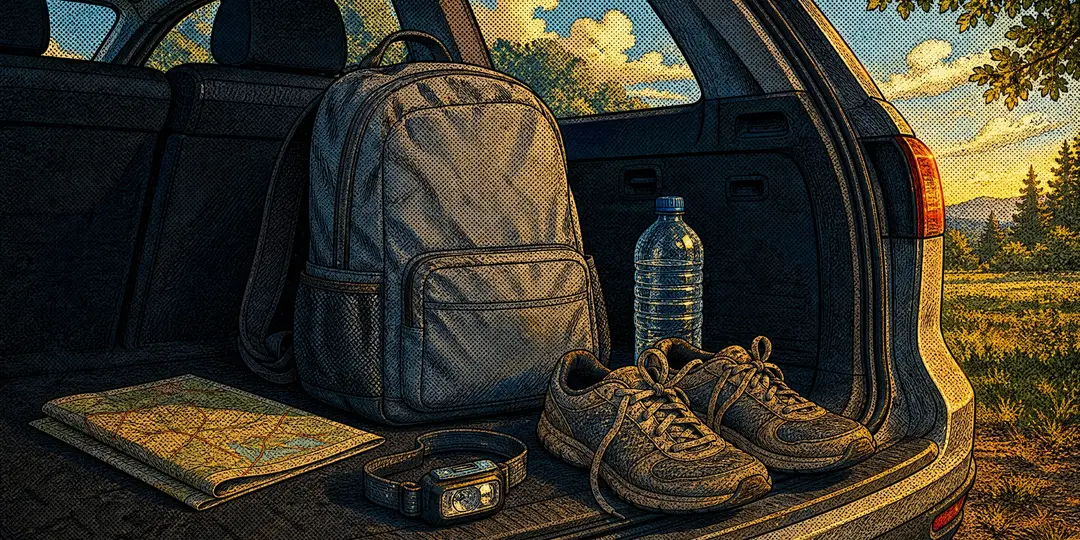
| IFAK, car | Cabin, glove box or seat-back pocket, not under the spare tire | Crashes and roadside injuries; you may not be able to reach the trunk | Every 6 months; heat ages adhesives faster |
| IFAK, bag | Top or outside pocket of the get-home or bug out bag | Found by feel, not by unpacking | When you rotate the bag |
Put the check on the same calendar reminder as the pantry rotation. Look for expired medicines, dried-out ointments, cracked tourniquet buckles, open sterile packs and anything used and not replaced. Kids raid boo-boo kits; assume something is missing.
IFAK vs first aid kit: the two lists
Prices are typical ranges for decent-quality items in late 2026. Quantities are for a household of four.
The boo-boo kit (kitchen) — about $60–90
- Adhesive bandages, assorted including large and knuckle shapes — 40–60 — $5–8 — the daily job; skip the tiny round spots
- Sterile gauze pads, 4 × 4 in (10 × 10 cm) — 10–20 — $5–8 — bigger scrapes and burns
- Roll gauze, 3 in — 2 rolls — $4–6 — holds a dressing on an arm or leg
- Medical tape, cloth or paper — 2 rolls — $4–6 — the tape in most kits doesn’t stick
- Elastic bandage, 3 in — 1–2 — $4–6 — sprains and holding dressings
- Antibiotic ointment or petroleum jelly — 1 tube — $4–6 — keeps small wounds moist and covered
- Hydrocortisone 1% cream — 1 tube — $4–6 — bites, stings, rashes
- Blister dressings and a small roll of strong tape — 1 pack — $6–10 — new shoes, long walks
- Tweezers with fine pointed tips — 1 — $8–12 — splinters and ticks; the kit tweezers won’t grip
- Small scissors or trauma shears — 1 — $5–10 — cutting tape and clothing
- Nitrile gloves in the right sizes — 10 pairs — $5–10 — clean hands, and latex-free for allergies
- Digital thermometer — 1 — $10–15 — fevers in the night are the most common kit use
- Instant cold packs — 2–3 — $4–8 — bumps and sprains when the freezer is off
- Saline eye wash or sterile saline pods — 1 — $5–8 — grit in eyes, rinsing wounds
- Pain/fever reducer (adult and child versions), antihistamine, antidiarrheal — 1 each — $15–25 — check the dates twice a year
- A printed list of family medications, allergies and doctors’ numbers — 1 — free — for whoever is helping
The IFAK (car and bag) — about $70–150 each
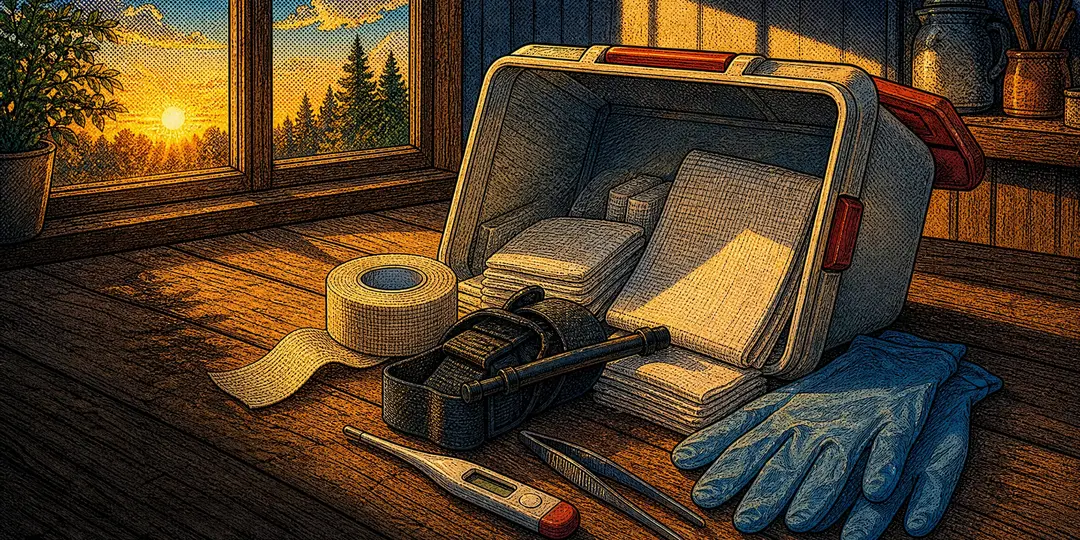
- Windlass tourniquet from a recognized supplier — 1 — $30–45 — the one item that controls limb bleeding a bandage can’t
- Pressure (emergency) bandage, 4–6 in — 1–2 — $8–12 each — wraps and holds pressure on a wound with one hand
- Compressed or hemostatic gauze — 1–2 packs — $5–10 plain, $35–60 hemostatic — packing a wound; plain gauze works with firm pressure, hemostatic helps more
- Nitrile gloves — 2 pairs — $2 — first thing out of the pouch
- Trauma shears — 1 — $5–10 — getting to the wound through clothing
- Permanent marker — 1 — $1 — writing the time a tourniquet went on
- Vented chest seals — 1 pair — $10–20 — optional; only if your training covered them
- Emergency blanket — 1 — $3–5 — shock and cold
- A pouch that opens fully and is marked as first aid — 1 — $15–30 — so anyone can find and open it



 4
Comments
No comments yet. Read the comment guidelines before posting.