Prepper Black Friday Deals
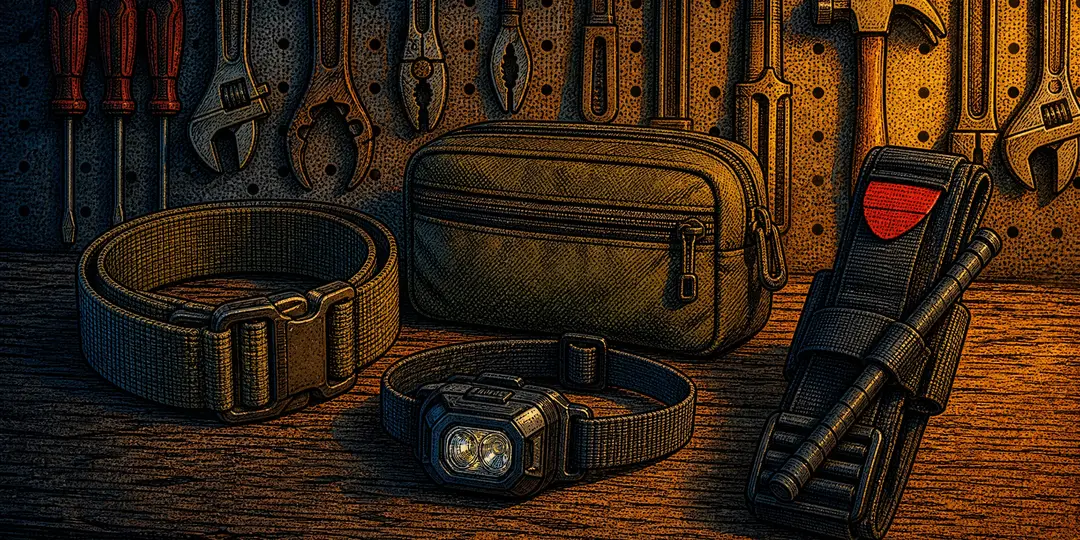
Six items laid out on a workbench in daylight: a coiled nylon belt, a zippered admin pouch, a headlamp, a tourniquet in a red-tabbed holder, a pair of work gloves and a plain daypack.
Tactical

Tactical gear that's worth it for civilians

The six pieces of tactical gear worth it for civilians in a normal household, what to look for and pay for each, and the much longer list that is costume.

Shane RichardOct 16, 20268 min readReview
Six items from the tactical aisle that pass the plain-box test. Everything else on the shelf mostly doesn’t.

Of all the tactical gear sold to civilians, six things are worth a place in an ordinary house: a stiff belt, an admin pouch, a headlamp, a proper tourniquet in a holder, a well-built daypack and a pair of work gloves. Together they cost roughly $150–300. Almost everything else sold under the label is a costume, and the money is better spent on water, a pantry and a deadbolt.

This is a buying guide by category and spec, not a hands-on test of particular models. Each item below has to pass the test set out in what tactical means on this site, plus the build-quality checks we apply to all gear in how we test gear. Prices are bands for decent examples at the time of writing; check the current price before buying.

The test every item has to pass

  1. The plain gray box. Would you buy it if it came with no branding, no camo and no webbing loops? If not, you are paying for the look.
  2. A household job. It must solve something that happens in a normal house, car or commute: carrying, finding, seeing, bleeding control, handling rough material.
  3. Build you can check in the store. Dense stitching with bar-tacks at stress points, a branded zipper that runs smoothly, buckles that don’t creep, a warranty longer than a year.
  4. Cheaper alternatives considered. If the hardware-store version does the same job for less, buy that.

Six pieces of tactical gear for civilians that earn their place

ItemTypical priceWhy it earns its placeWhat to check
Stiff work belt (1.5 in / 38 mm)$30–70Holds up pants and a tool or light all day; doubles as a strapTwo-layer webbing, metal buckle that doesn’t slip
Admin / organizer pouch$15–40Makes a car kit or go-bag findable in the darkZipper quality, labeled sleeves, bright interior
Headlamp$25–60Hands-free light for every outage and roadside repairCommon battery size, simple low mode, red light
Tourniquet + holder$30–60 togetherBleeding control that a trained adult can apply one-handedRecognized model, authorized seller, holder that releases cleanly
Daypack (20–30 L)$60–150Get-home bag, school drop-off, hiking, actually used weeklyPadded hip belt or sternum strap, heavy base fabric
Work gloves$15–35Clearing debris, handling broken glass, cold-weather workLeather or synthetic palm, cuff that stays on

A stiff belt

The best thing the tactical world made for civilians is a belt. A 1.5 in wide belt with two layers of dense webbing, or a stiffener sewn in, holds up loaded work pants, carries a knife or light without sagging, and doubles as a strap for a splint or a bundle of gear. Look for a metal or high-grade polymer buckle that holds under a hard pull. Skip the 2 in duty belts with built-in loops for a holster; they are for police, and they won’t fit through normal belt loops.

An admin pouch

An admin or organizer pouch is a zippered case with elastic loops and sleeves inside. It is the single cheapest improvement to any kit: the car kit, the get-home bag, the go-bag. Batteries, a pen, the spare phone cable, the paper copies of your documents, all where you can see them. Choose a bright-colored interior so you can find things by headlamp. You don’t need one with a webbing back; a plain zippered toiletry organizer often does the same job for less.

A headlamp

A headlamp earns its place because it leaves both hands free, which matters more than any brightness figure. Look for one that runs on AA or AAA batteries (or charges by USB and also takes them), has a low mode that lasts days, and has a red mode for checking on children without waking the house. The full case is in the headlamp is the only emergency light you’ll actually use.

A tourniquet in a holder

This is the item that came from military medicine and genuinely belongs in a household kit, with two conditions. First, buy a recognized model: the CAT (Combat Application Tourniquet) and the SOF Tactical Tourniquet Wide are long-established designs on the recommended lists used by military and Stop the Bleed training. Buy from an authorized seller; counterfeits are common on marketplaces, and a fake can snap when you tighten it. A real one runs $30–40; check the current price. Second, learn to use it. A short Stop the Bleed class teaches it, often free.

The holder ($10–25) is what keeps it reachable: on a bag strap, in the car door pocket, by the front door. Choose one that opens with a single pull. Never buy a used tourniquet or carry a training one as a real one; training models are usually marked blue.

A daypack you actually use

A 20–30 L (1,200–1,800 cu in) daypack built to military-surplus standards will outlast three school-brand bags. Heavy base fabric, a padded back, a sternum strap, zippers that don’t catch. The catch is weight: heavily built packs are often 3–4 lb (1.4–1.8 kg) empty before you put anything in them. If you will carry it on a long walk home, a lighter hiking pack may be the better buy. Bug out bags under $150 covers what to look for in one. Pick a muted color that doesn’t say “military” in a school pickup line.

Work gloves

Gloves are the most-used item on this list and the least glamorous. Clearing storm debris, carrying broken glass, changing a tire in sleet: a pair of leather or synthetic-palm work gloves does all of it. The tactical versions with hard knuckles add cost and reduce dexterity; a good pair from the hardware store is as good or better. Keep one pair in the car and one with the home kit.

A tourniquet in an open nylon holder attached to the shoulder strap of a plain gray daypack, the red tab of the tourniquet visible, resting on a wooden bench.
The tourniquet is worth carrying only where you can reach it with one hand, and only once you’ve learned to use it.

The costume list

These sell well and do little for a household. Some are fine as hobbies; none are preparedness.

  • Plate carriers and armor vests. Body armor has a narrow use and sits very low on a family’s list; the non-lethal and armor pillar explains why. A carrier with no plates in it is a fancy vest.
  • Drop-leg rigs and chest rigs. Designed for carrying magazines for a job. Nothing in a household kit needs to be on your thigh.
  • Flashlights with strike bezels. The crenellated head is sold as a defensive feature; it mostly tears pockets. Buy a light for its battery life and interface. See the flashlight buyer’s guide.
  • “Tactical” pens. An ordinary pen in an aluminum body with a pointed end, sold as a weapon. Some airports and courthouses will confiscate it; it writes no better.
  • Credit-card knives and multi-tool cards. Flimsy tools in a wallet. A small, decent pocketknife is better at every job.
  • Huge sawback “survival” knives. The saw spine rarely saws, and the size can cause legal problems. Choosing a survival knife covers what to buy instead.
  • Cheap marketplace tourniquets. The most dangerous item on this list, because they look identical to the real thing and fail when tightened.
  • Morale patches, skull logos, flag shemaghs. Decoration. Fine on a hobby bag; they add nothing to a kit and can draw attention in a shelter or a crowd.
  • Night-vision gear. Expensive, fragile and useless for any of the things a power outage actually needs. A headlamp costs a hundredth as much.

How to spend $200 on this aisle

If you have $200 earmarked for this kind of gear, spend it in this order:

  1. A recognized tourniquet and holder, from an authorized seller: about $50. Then book the class.
  2. A headlamp for each adult: $25–60 each.
  3. Two pairs of work gloves: about $40.
  4. An admin pouch for the car kit: about $25.
  5. If anything is left, a stiff belt.

The pack can wait until your current bag wears out. And if the $200 is the whole preparedness budget, spend it on water and food first; prepping on a budget gives that order.

Quick answers

What tactical gear is actually worth buying for a household?

Six items: a stiff work belt, an admin pouch, a headlamp, a recognized tourniquet in a holder, a well-built 20–30 L daypack and a pair of work gloves. Together they cost roughly $150–300. Plate carriers, drop-leg rigs, strike-bezel flashlights, tactical pens and most other gear sold on looks do little for a normal household.

Which tourniquet should a civilian buy?

Buy a recognized model such as the CAT (Combat Application Tourniquet) or the SOF Tactical Tourniquet Wide, long-established designs used in military and Stop the Bleed training. Buy from an authorized seller, because counterfeits sold on marketplaces can snap when tightened. Expect about $30–40, check the current price, never buy one used, and take a Stop the Bleed class to learn to use it.

Is a tactical pen worth buying?

No. A tactical pen is an ordinary pen in an aluminum body with a pointed end, sold as a weapon. It writes no better than a normal pen, and some airports and courthouses will confiscate it. For a household, the money is better spent on a headlamp, work gloves or a real tourniquet and the class that teaches you to use it.

How should you spend $200 on tactical gear?

Spend it in this order: a recognized tourniquet and holder from an authorized seller (about $50, then book a class), a headlamp for each adult ($25–60 each), two pairs of work gloves (about $40), an admin pouch for the car kit (about $25), then a stiff belt if money is left. If $200 is your whole preparedness budget, buy water and food first.

Read next

Stop the bleed: the first three minutes. A tourniquet only helps if you know how to use it; this is what the free class teaches.

Gear for this guide

Picks that match the specs in this guide, from makers with a track record. We haven't tested them yet. As an Amazon Associate we earn from qualifying purchases, at no cost to you. Add what you need to my list, then send the whole list to your Amazon cart all at once. Prices and availability are accurate as of the date and time shown and are subject to change. The price and availability shown on Amazon.com at the time of purchase will apply.

  • Maxpedition

    Maxpedition Padded Fatty Pocket Organizer (0260)

    5 x 2 x 7 in padded organizer pouch with MOLLE.

    No price from Amazon right now (checked Nov 24, 7:06 a.m. CT)

    See buying options
  • Mechanix Wear

    Mechanix Wear Leather Cow Driver gloves

    Cowhide leather driver work glove from Mechanix.

    $21.99 on Amazon as of Nov 24, 7:06 a.m. CT

    View on Amazon
  • 5.11

    RUSH24 2.0 Backpack, 37 L

    37 L (2,275 cubic inches), 3.85 lb (1.74 kg) empty, water-repellent 1050D nylon, 20 by 12.5 by 8 inches. A padded laptop sleeve, a rear hydration compartment, a front admin pocket, a sternum strap, side compression straps and MOLLE webbing for add-on pouches.

    $112.00 on Amazon as of Nov 24, 7:06 a.m. CT

    Sold by Marketplace Valet®, not Amazon

    Good to know: No hip belt in the box (5.11 sells one separately), and it's heavy before you pack it. Keep the loaded weight near 15 lb (6.8 kg) for most adults.

    View on Amazon

Share this with someone who’d use it

Some links on this page may be affiliate links; see our affiliate disclosure. Nothing here is medical or legal advice; check your local regulations.

Corrections

None yet.

Shane Richard

Written by

Shane Richard

Shane is a disabled US Army veteran who served as an M1A1 tank crewman, then spent his career in technology and manufacturing supply chains, keeping parts moving through COVID. He, his wife Heather and their three kids have ridden out tornadoes, the February 2021 Texas freeze, the 2026 floods in Northeast Texas and power outages that lasted days. He started Prepping Expert to give families the plain, affordable, step-by-step version he wished he'd had.

Comments

No comments yet. Read the comment guidelines before posting.

Popular guides

Topics

Tags

The weekly checklist

One preparedness job by email every Sunday. Five minutes.

You might also like

More in Tactical →
ChecklistOct 16, 20265 min

The five-minute account lockdown

Five settings secure your online accounts in about five minutes each: password manager, two-factor on email and bank, printed recovery codes and a credit freeze.

The weekly checklist

One thing to do this week. Five minutes, every Sunday.

A single preparedness task by email, in the order we'd do them. No launches, no discounts, unsubscribe in one click.

Before you go

Take the one-page household checklist with you.

Forty lines. Check off what you have, circle what you don't, do one circled item a week. We'll email the PDF and the Sunday checklist; drop either any time.

Done

You're on the list.

First email lands Sunday. Check your spam folder once, then it'll behave.

We store your address and nothing else. Privacy