


A home emergency tool kit is less about tools than about knowing where your shutoffs are and having the right wrench hanging beside each one. A burst pipe that runs for an hour while you search for the water main does more damage than most storms. This guide finds the three shutoffs, tells you when to use each (and when not to), and lists the short set of tools worth keeping together.
The home emergency tool kit starts with three shutoffs
Do this in daylight, with nothing going wrong. Bring the whole household, including teenagers.
Water
Where: usually where the main line enters the house, in a basement, utility room, garage or a crawlspace, often near the water heater. There may also be a curb valve at the meter box near the street, which needs a long meter key.
When: a burst pipe, a broken water heater, or when the city warns of contamination and you want to keep dirty water out of the pipes and water heater.
How: turn it clockwise until it stops. Old gate valves can be stiff or break; if yours won’t turn, have a plumber replace it with a quarter-turn ball valve. That is one of the best $150–300 jobs in the house.
Tag it. A bright luggage tag on the valve saves minutes.
Gas
Where: at the gas meter outside. The valve is a rectangular tab on the pipe before the meter.
When: only if you smell gas, hear it hissing, see a broken line, or are told to by the gas company or officials. Turning it off isn’t a precaution for every storm.
How: a quarter turn with a wrench, so the tab is crosswise to the pipe. Hang an adjustable or purpose-made gas shutoff wrench on the meter pipe or the nearest wall with a zip tie.
The important part: once the gas is off, don’t turn it back on yourself. The gas company has to check the system and relight the pilot lights. In a widespread disaster, that can take days, which is the reason not to shut it off unless you need to.
If you smell gas inside: get everyone out, don’t use light switches, phones or anything that sparks inside, and call the gas company or 911 from outside.
Electricity
Where: the main panel, usually in the garage, utility room or basement. The main breaker is the large one at the top, usually labeled with the amperage.
When: before flooding reaches outlets, when there’s a burning smell or sparking, or when told to. Ready.gov’s general advice is to turn off individual circuits first, then the main.
Never stand in water to reach the panel. If the panel is in a flooded area, leave it and call the utility.
Label the breakers while you’re there. It takes an hour with a lamp and a helper.
The ten tools
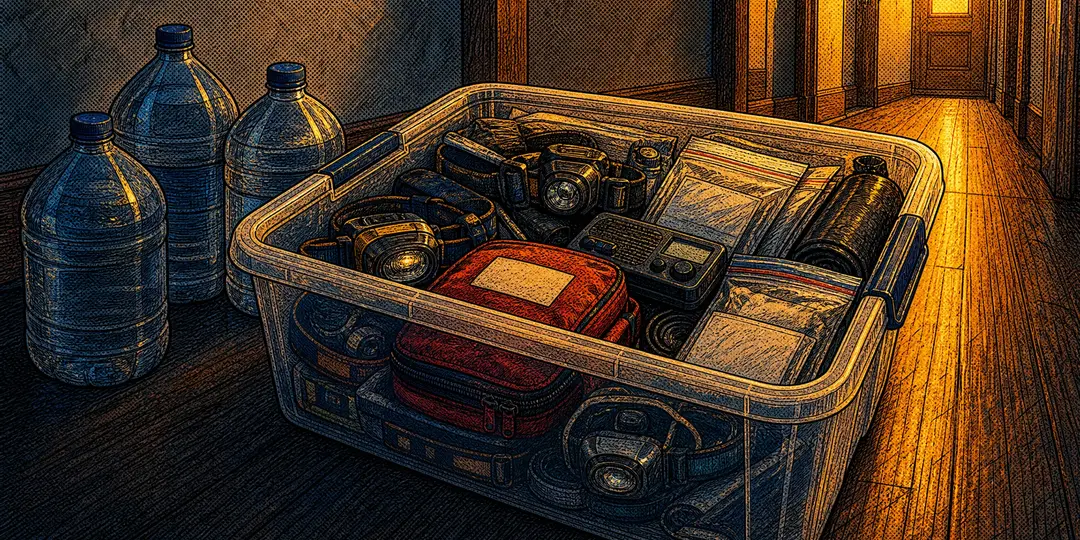
Most of these are already in a garage. Put them in one box, near the door to the garage, and don’t borrow from it.
| Tool | Why | About |
|---|---|---|
| Gas shutoff wrench (or adjustable wrench) | The gas meter valve | $10–15 |
| Water meter key | The curb valve, if you have one | $10–20 |
| Flashlight or headlamp, plus spare batteries | Panels and valves live in dark corners | $15–30 |
| Work gloves | Glass, nails, broken siding | $10 |
| Pry bar | Stuck doors, fallen debris | $10–20 |
| Hammer and a box of screws and nails | Boarding a window, fixing a gate | Usually owned |
| Pliers and a multi-bit screwdriver | Everything else | Usually owned |
| Duct tape and a roll of plastic sheeting | Covering a broken window, sealing a room | $15–25 |
| Utility knife | Cutting tarp, plastic, carpet | $8 |
| A tarp and rope | A temporary roof patch | $20–30 |
Add a fire extinguisher in the kitchen and one in the garage if you don’t have them, and test the smoke and carbon monoxide alarms at the same time. If you run a generator, CO alarms are not optional.
A multi-tool is handy in the car and the go-bag (everyday carry), but it doesn’t replace a real wrench at the meter.
Write it on one page
Put a sheet in the kit and on the fridge with:
- where each shutoff is, with a phone photo,
- the gas company and water utility emergency numbers,
- the electrician and plumber you’d call, and
- “Don’t turn the gas back on yourself.”
Tape a copy inside the electrical panel door. Add it to the one-page household readiness checklist while you’re at it.
Practice once
Turn the water off at the main and on again, so you know it works and how stiff it is. Don’t practice on the gas; just make sure everyone can find the valve and the wrench. Show the kids the main breaker and explain it, the same as you’d show them where the home kit lives.
Quick answers
Where is the main water shutoff valve in a house?
Usually where the main water line enters the house: in a basement, utility room, garage or crawlspace, often near the water heater. Many homes also have a curb valve in the meter box near the street, which needs a long water meter key. Find yours before an emergency, test that it turns, and tag it so anyone can find it.
When should you turn off the gas to your house?
Only if you smell gas, hear it hissing, see a damaged line, or are told to by the gas company or local officials. Use a wrench to turn the valve at the meter a quarter turn. Once it is off, don’t turn it back on yourself: the gas company must check the system and relight pilots, which can take days after a big disaster.
What tools should be in a home emergency kit?
A gas shutoff wrench, a water meter key if you have a curb valve, a flashlight with spare batteries, work gloves, a pry bar, a hammer with screws and nails, pliers and a screwdriver, duct tape and plastic sheeting, a utility knife and a tarp with rope. Keep them in one box near the garage door, plus fire extinguishers and working smoke and carbon monoxide alarms.
How do you turn off the electricity in an emergency?
Go to the main panel and switch off the individual circuit breakers, then the large main breaker at the top, Ready.gov advises. Never stand in water or touch the panel with wet hands; if the panel area is flooded, leave it and call the utility. Have an electrician check anything that was under water before turning power back on.

 4
Comments
No comments yet. Read the comment guidelines before posting.