This is opinion: an editorial on how this site uses one word, and why.
On this site, “tactical” is the name of a section, not a compliment. So what is tactical gear? Here, it means a category of gear that grew out of military and police supply: belts, pouches, packs, lights, medical holders. We do not mean better, tougher or more serious. If a product is good, we will say it is good because of how it is made. If its main selling point is the word on the box, we will say that too.
What tactical gear is, and where the word went
Tactics are what you do in the moment; strategy is the plan behind it. The word belonged to soldiers and police, and the gear cataloged under it was built for people who carried loads for a living and needed to find things fast.
Over the last few decades the label moved from those catalogs to the general retail aisle, and its meaning drifted on the way. In a store today, tactical usually means some combination of black or coyote-brown nylon, rows of webbing loops, a skull or a flag patch, and a higher price than the same item without them. Pens, flashlights, pants, phone cases and kitchen knives all come in a tactical version. Almost none of them do anything differently from the plain one.
That is fine as fashion. Plenty of people like the look, and outdoor clothing has borrowed from uniforms for a century. It becomes a problem when the label is sold as preparedness: when buying the look is presented as getting ready, and the money that should have gone on water, a first aid class or a deadbolt goes on a plate carrier.
The gear that is good because it is well made
Some kit that came out of this world is excellent, and it is excellent for ordinary reasons.
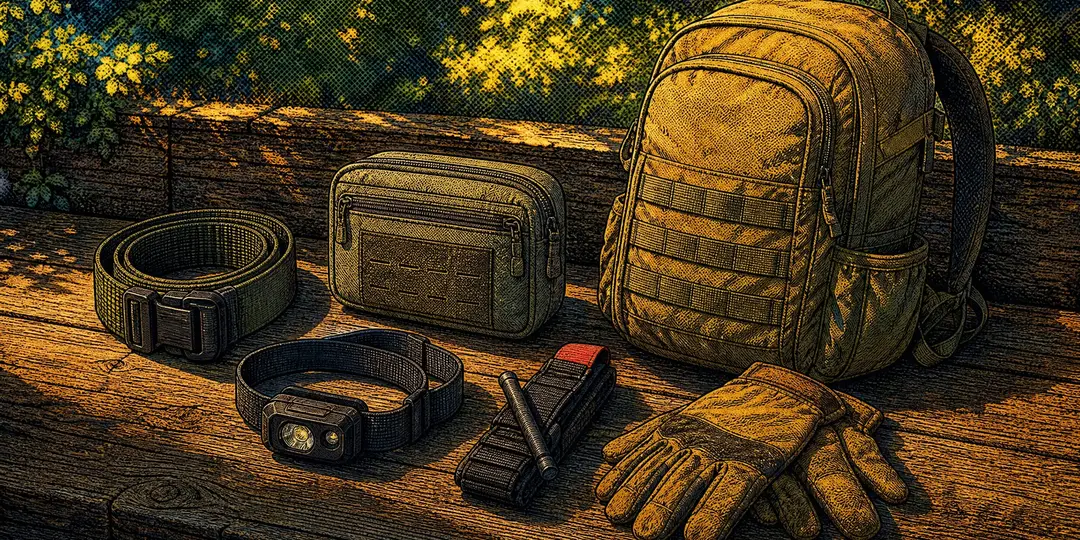
- A stiff, well-stitched belt that holds up work pants and a tool all day is good because the webbing is dense and the buckle doesn’t slip.
- A zippered pouch with labeled pockets is good because you can find the spare batteries in the dark, not because it attaches to a vest.
- A headlamp with a simple interface is good because it leaves your hands free and runs for days on a set of batteries.
- A tourniquet in a holder on a bag strap is good because bleeding control is a real skill with a real tool, and the holder makes it reachable.
None of those need the word. All of them would pass if you peeled the label off, which is the test we use: would you buy this if it came in a plain gray box with no marketing? If yes, the category doesn’t matter. If no, you were buying the costume. Tactical gear that’s worth it for civilians applies that test item by item, with prices.
"Would you still buy it in a plain gray box? If not, you were buying the costume."
The test this section uses
What this section covers
- Durable gear. Packs, belts, pouches, lights and cases built to last years of ordinary use, judged by stitching, materials, zippers and warranty, the same way we judge all gear.
- Organization. How to make a car kit, a get-home bag or a first aid kit findable under stress: pouches, labels, color coding, where things go.
- Medical carry. Tourniquets, bleeding-control kits and how to keep them reachable, always alongside the advice to take a class.
- Honest takedowns. Products sold on the label whose plain equivalent is cheaper or better.
What it doesn’t
- Military cosplay. Plate carriers, drop-leg rigs, night-vision mounts and loadouts for imagined firefights. A family in a three-bedroom house does not need them, and the money is better spent elsewhere.
- Weapons as a hobby. Firearms appear on this site only at the level of training, safe storage and the law. We don’t review accessories, modifications or builds.
- Fantasy scenarios. If a product only makes sense after a chain of events that has never happened, it belongs in a movie, not on your shelf.
- The vocabulary. You won’t find gear described as battle-proven, combat-ready or for when things go bad. Those phrases sell; they don’t inform.
Why it matters for a normal household
The households we write for have limited money and limited shelf space. Every dollar spent on looking ready is a dollar not spent on being ready, and the things that make a family resilient are mostly dull: stored water, a pantry, a plan, smoke alarms, a deadbolt, two adults who know how to stop bleeding. The tactical aisle rarely sells any of those.
So the section exists, because the category exists and some of what is in it is good. It will mostly tell you which few things to buy, and talk you out of the rest. Self-defense for ordinary people: avoidance first is the better starting point for anyone who came here looking for safety rather than gear.
Quick answers
What does tactical mean on gear?
On a store shelf, tactical usually means black or coyote-brown nylon, rows of webbing loops, a patch, and a higher price than the same item without them. The word originally described gear built for soldiers and police who carried loads for a living and needed to find things fast. Most tactical pens, flashlights and phone cases do nothing differently from the plain version.
Is tactical gear worth buying for a household?
Some of it is, for ordinary reasons: a stiff, well-stitched belt, a zippered pouch with labeled pockets, a headlamp with a simple interface, and a tourniquet in a holder. The test is whether you would still buy the item if it came in a plain gray box with no marketing. If not, you were paying for the look rather than the gear.
Does a normal family need tactical gear to be prepared?
No. What makes a family resilient is mostly dull: stored water, a pantry, a plan, smoke alarms, a deadbolt, and two adults who know how to stop bleeding. Plate carriers, drop-leg rigs and loadouts for imagined firefights are not part of household preparedness, and every dollar spent on looking ready is a dollar not spent on being ready.




 4

Comments
No comments yet. Read the comment guidelines before posting.