


Most buy-it-for-life gear for a household isn’t expensive. It is the mid-priced version of a plain thing, from a maker that publishes its specs and repairs what it sells, running on a battery or fuel you can buy anywhere. This list covers the nine categories where buying once pays off for a family preparing for outages and storms, gives the spec that separates the version that lasts from the one that doesn’t, and puts a price band on each. It also says where spending more buys nothing.
This is a buyer’s guide by category and spec, not a list of named products. When we’ve tested specific models, they will be added here, under the rules in how we test gear.
What makes gear buy-it-for-life
Five things predict whether a piece of gear is still working in ten years. Check them before the price.
- Wear parts you can replace. Batteries, bulbs, O-rings, buckles, sheaths and stove seals wear out. If the maker sells them, or they are a standard size, the product outlives them.
- A common battery or fuel. AA cells, standard propane or butane canisters and denatured alcohol will still be on shelves. Proprietary packs and odd sizes are how good gear becomes landfill.
- A simple mechanism. Fewer modes, fewer moving parts, fewer things to break. A single switch outlasts a menu.
- A repair or replacement policy in writing. A clear warranty and a maker that publishes a repair address are signs it expects the product to last.
- Use. Gear that is used gets maintained. Gear that sits sealed for five years has rubber that degrades and batteries that leak, whatever it cost.
The buy-once list, by category
Each category has a household job, and the bar is set by that job, not by the most impressive spec. The bands are what a sound version usually costs, not the price of any particular product; check current prices before you buy.
| Category | The household job | The spec that makes it last | Typical price band |
|---|---|---|---|
| AA flashlight | Light for each person in a dark house | Runs on alkaline and NiMH; a low mode that lasts a night; a switch that works in gloves | $20–45 |
| Headlamp | Hands-free light for cooking, kids and stairs | Common battery; a red or very low mode; a replaceable strap | $20–50 |
| EDC flashlight | The light in your pocket when the power goes out at work | Doesn’t switch on in a pocket; IPX7; easy to recharge or re-battery | $20–60 |
| Fixed-blade knife | Kindling, cord, food, opening things | Full tang; a named steel; a sheath that holds it upside down | $25–60 |
| Whetstone | Keeping every knife in the house working | Combination coarse/fine stone, flat and wide enough | $15–35 |
| Sleeping pad | Insulation from a cold floor in a cold house | A stated R-value; closed-cell foam can’t puncture | $20–150 |
| Daypack | Carrying about 15 lb (6.8 kg) on foot | Padded hip belt; large zippers; a repair warranty | $60–150 |
| Tarp | Rain and wind cover in a yard or a car stop | Reinforced tie-outs; pitches several ways | $20–80 |
| Camp stove | Hot food and water when the kitchen is dead | Fuel you can store and buy easily; few seals | $25–80 |
A household that buys a sound version of each has covered light, cutting, sleeping warm, carrying, shelter and cooking. For one adult, the nine come to roughly $225–770 at the bands above. Each extra person mainly adds a light or two and a sleeping pad.
Light
The light that lasts runs on a battery you already stock, has a low mode that gets through a night, and has a switch that works with cold hands. The flashlight buyer’s guide explains why those three matter more than lumens. For the drawer, see AA flashlights for the emergency drawer; for the pocket, choosing an EDC flashlight. Most families end up using a headlamp more than either.
Cutting
A fixed blade in the $25–60 band from an established maker, with a named steel, will outlast its owner if it is sharpened and dried. The stone matters as much as the knife. Fixed-blade knives under $60 covers what to check.
Sleeping warm
A closed-cell foam pad is the closest thing to indestructible on this list: nothing to puncture, nothing to leak. Inflatable pads are warmer and smaller but need a patch kit. Sleeping pads for a cold floor explains R-value.
Carrying and shelter
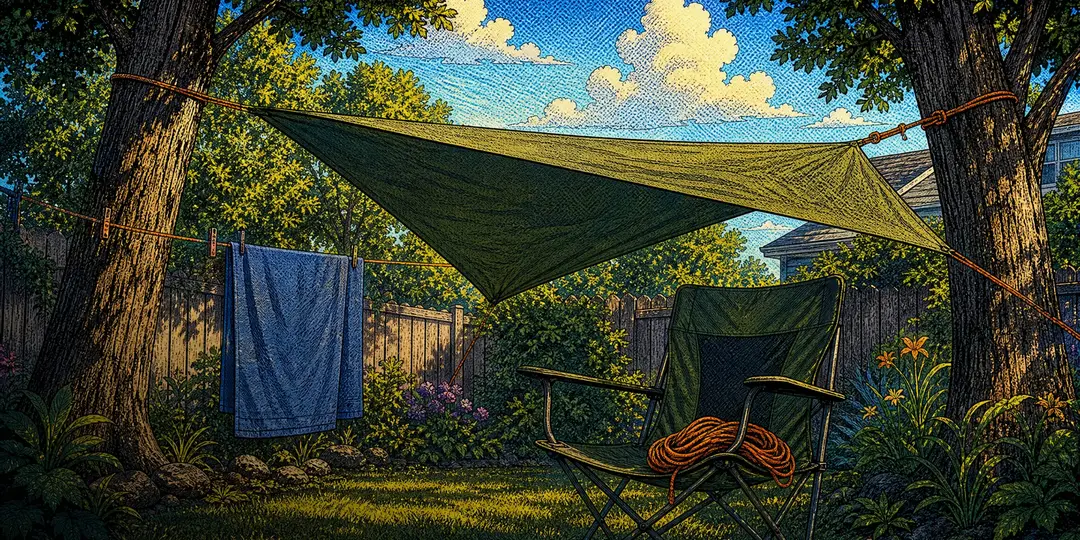
A plain hiking daypack from an outdoor brand outlasts most bags sold for emergencies, and gets used in between; see bug out bags under $150. A tarp with reinforced corners and tie-outs lasts years; see tarps and emergency shelters under $80.
Cooking
The stove that lasts is the one with the fewest seals and the most available fuel. Survival stoves compared sets out the trade-offs between canister, alcohol, twig and solid fuel.
Where paying more doesn’t buy longer life
“Lifetime warranty” on a $10 product. Read what it covers. Many exclude normal wear or require you to pay return shipping worth more than the item.
Survival-branded versions of ordinary things. A “survival” tarp, knife or bag usually costs more than the plain version and lasts no longer.
All-in-one gadgets. A crank radio-flashlight-charger-compass-whistle does each job worse than a separate radio and a separate light, and when one part breaks the whole thing goes.
Sealed batteries in gear you store. A light or radio with a non-replaceable pack is fine for daily use, but in a closet the pack ages whether you use it or not.
Premium materials past the mid-range. Titanium bodies, exotic knife steels and ultralight fabrics are pleasant, not longer-lived, for a household that uses gear a few times a year.
Anything “tactical” for a household. Night-vision, body armor and most gear sold on that word are on no list of ours. Tactical gear that’s worth it for civilians covers the few exceptions.
What isn’t on the list, on purpose
Some categories never get a buy-once entry because the answer isn’t a product. Water storage is any food-grade container you can lift. A first aid kit is a store-bought kit plus the additions in what to add to a store-bought first aid kit, and its contents expire whatever you paid. Cordage is a few hanks of the right kinds, explained in paracord, bank line and the cordage you actually need. Generators and power stations are big enough decisions to have their own power station buyer’s guide.
Check it yourself: signs a product will last
In the store or on the listing:
- Look for spare parts. Can you buy a replacement sheath, strap, O-ring or seal kit from the maker? If yes, it is designed to be kept.
- Read the warranty text, not the badge. What does it exclude, and who pays shipping?
- Check the stitching and hardware. On a bag, bar-tacked stress points and a large main zipper. On a knife, a handle that doesn’t move on the tang. On a light, threads that run smoothly.
- Check the battery or fuel against what you already stock.
At home, within the return window:
- Use it for the job you bought it for, at least twice. Light a stove outside on a cold morning; sleep a night on the pad on a hard floor; carry the pack loaded.
- Do the boring maintenance once (sharpen, clean, recharge, refold) so you know you will.
- Write the date on it and add it to your inventory.
Buying from this list sensibly
- Do the basics first. Water, two weeks of food, a light each and a plan come before any gear. The first 30 days sets the order, and prepping on a budget stretches it over a tight month.
- Check what you own. A light you already have that runs on AA and has a low mode is fine. Don’t replace working gear for a better spec.
- Buy one, use it, then buy more. A household of four needs four lights, but buy one first and live with it for a month.
Quick answers
What emergency gear is worth buying once and keeping?
The emergency gear most worth buying once is a mid-priced version of a few plain things: an AA flashlight and a headlamp per person, a fixed-blade knife with a whetstone, a sleeping pad, a daypack, a tarp and a camp stove. Each lasts years if its wear parts are replaceable and it runs on common batteries or fuel.
How much does a buy-it-for-life emergency kit cost?
A buy-it-for-life set of household emergency gear costs roughly $225–770 for one adult at sound mid-range prices, covering light, cutting, sleeping warm, carrying, shelter and cooking. Each extra person mainly adds lights and a sleeping pad. Water, food and a plan come before any of it, and none of it needs the premium version.
Is expensive survival gear worth it?
Expensive survival gear is usually not worth it for a household. Past the mid-range, extra money buys premium materials, lighter weight or a “survival” label rather than longer life. A mid-priced product with replaceable parts, a common battery or fuel and a written repair warranty will last as long for a family that uses gear a few times a year.
How can you tell if gear will last?
Gear will usually last if the maker sells spare parts, it runs on a common battery or fuel, the mechanism is simple and the warranty is in writing with clear exclusions. Then use it for its real job twice within the return window. Gear that is used and maintained outlasts expensive gear left sealed in a closet.
Printable
Gear inventory checklist (PDF, 1 page). What you own, where it lives and when you last tested it, so you buy only what is missing.



 4
Comments
No comments yet. Read the comment guidelines before posting.